


Indoor hibiscus needs a bright position, a pot that drains and watering adjusted to its actual growth. Begin with the name: this advice concerns tropical Hibiscus rosa-sinensis, often sold as Chinese hibiscus or rose of China. A garden shrub carrying the name hibiscus may have different requirements. A familiar flower shape alone does not establish that two plants can spend winter in the same place.
For an apartment in Ukraine, the main difficulty is often the combination of reduced winter light, heating and a cold window. Treat these as separate conditions. A warm room does not automatically provide enough light for flowering, and a sunny window does not ensure that the roots remain warm overnight. Feeding cannot replace either requirement.
Choose the plant and its permanent position together
Before buying, ask for the botanical name and consider the space available beside your brightest suitable window. Look at the whole plant, including the underside of leaves, shoot tips and pot surface. Choose with transport in mind: tropical foliage should not be left exposed to freezing air while other purchases are completed. Arrange its indoor position before bringing it home.
A plant that has just moved from a nursery, shop or summer balcony faces different light and humidity. Avoid changing its position repeatedly while trying to interpret every dropped leaf. Select a workable location, check moisture and inspect its condition. Record which conditions changed before deciding that a new fertilizer or immediate repotting is the answer.
Provide light without a sudden change of exposure
Very bright light supports flowering. Look at the light reaching the leaves rather than the appearance of the room: an interior corner can seem bright to a person yet be unsuitable for sustained flowering. A western or southern window can be useful, but the plant must be accustomed gradually to stronger exposure, especially after spending time farther from the glass.
Keep curtains, deep window recesses and nearby buildings in mind when assessing the position. In summer, a move outdoors requires gradual adjustment and suitable warmth. Start with protected conditions rather than immediately placing indoor foliage in strong sun. In autumn, bring the plant inside before cold weather arrives; use the actual forecast, not a fixed date for every Ukrainian region.
Separate warmth from radiator heat
Hibiscus is sensitive to cold and abrupt environmental changes. Avoid an opening entrance door, a draught from ventilation and direct heat from a radiator. Check the location at night as well as during a sunny afternoon. Leaves touching cold glass and a pot standing in a chilly recess can face conditions quite different from the room's general temperature.
Ventilation is useful, but direct cold air should not strike the plant. Move it out of the airflow while a nearby window is open, keeping the replacement position as bright and stable as practicable. In a home with variable heating, observe the actual growing space rather than assuming that the thermostat reading describes every part of the windowsill.
Water the root ball, then let excess water leave
Keep the growing medium reasonably moist during active growth without leaving it saturated. Check beneath the surface before watering. The outside of a decorative container tells you little about moisture around the roots. A small pot in warm bright conditions and a larger pot in a cool winter position will not need water at identical intervals.
Use a pot with drainage holes and allow water to reach the root ball, with excess draining away. Empty water collected in the saucer or outer pot. Do not solve a wilting plant by repeatedly adding water without checking the medium first: both a dry root ball and a persistently wet one require attention, but their next steps differ.
Adjust winter care to slower growth
As light and growth decrease, allow the upper layer of the medium to dry more between waterings. This is a change in observation, not a rule to abandon the plant or leave the whole pot dry. Check regularly and adjust to its position, leaf area and warmth. A calendar alarm can remind you to inspect; it should not force an automatic watering.
Keep the plant away from radiators and draughts during winter. Grouping suitable plants can help their immediate environment, but crowding should not prevent inspection or air movement. If a humidity tray is used, keep the pot above standing water. Do not compensate for dry heated air by leaving roots permanently immersed in a filled outer container.
Understand flowers, buds and fallen leaves
An individual hibiscus flower is short lived. A flower closing and falling after opening is different from unopened buds dropping repeatedly. Check which stage is affected before changing care. Low light, unsuitable temperature, drafts and irregular moisture can contribute to bud loss; there is no single fertilizer that diagnoses this pattern from a photograph.
Some leaf loss can accompany a move between conditions. Examine the remaining leaves and new growth as well as what has fallen. Sudden widespread decline, persistent wilting or visible pests deserve closer assessment. Photograph the whole plant and a clear close view of the affected area, and note recent moves, watering and feeding when asking for advice.
Repot and prune for a specific purpose
Choose a well-drained houseplant growing medium when repotting is needed. Plan routine work around renewed growth rather than disturbing a struggling plant simply because it has arrived home. Check the existing root ball and container first. A larger outer pot alone does not improve drainage, particularly when the original pot remains inside it and collected water is hidden.
Pruning can keep the plant manageable and encourage branching. Think about the desired shape before shortening shoots, and recognise that removing growth can also remove flower buds and delay the next display. Routine shaping is best planned near the return of stronger growth. Do not combine severe pruning, root disturbance and additional feeding as an automatic response to leaf drop.
Inspect for pests before buying a treatment
Examine shoot tips and both leaf surfaces for insects or fine webbing. Aphids, spider mites and whitefly can occur on indoor hibiscus. Keep a suspect plant apart from the rest of the collection while identifying the problem. A curled or yellow leaf alone does not establish a particular pest, and fertilizer is not a pest treatment.
Use clear photographs or a specimen for identification when the cause is uncertain. If a plant-protection product is needed, check that its current permitted use covers the plant and setting. Avoid household mixtures and unverified combinations of treatments. Cleaning and inspection are part of care; they do not justify promising that a plant will be free of every pest.
Nutrition for a healthy indoor hibiscus
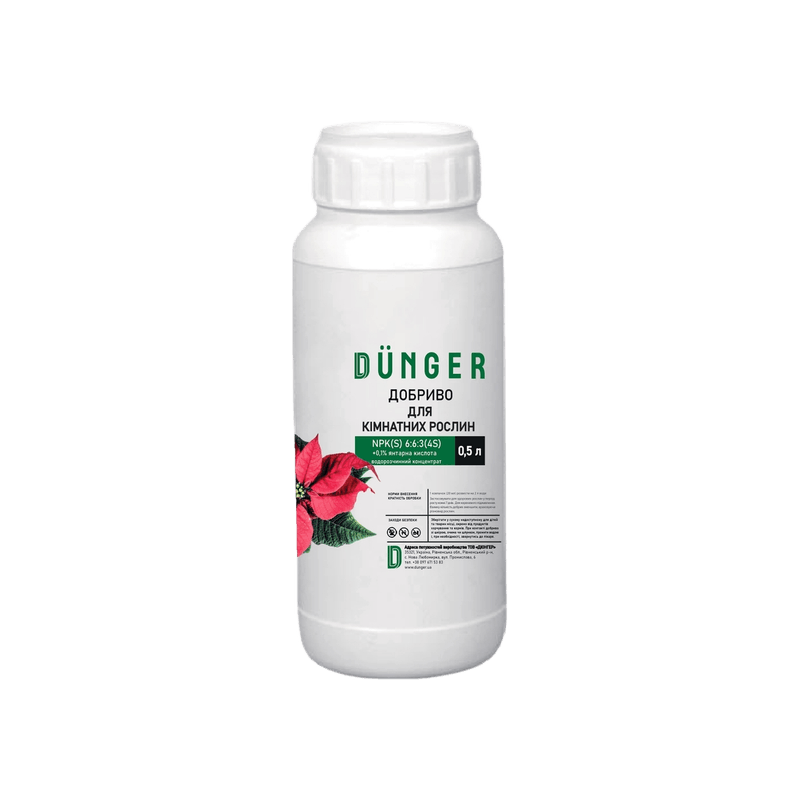
Complex fertilizer for house plants
For a healthy hibiscus during growth, consider the houseplant complex for root feeding. It is not a treatment for pests or waterlogged roots. Follow this concentrate’s own instructions.
It is used for healthy plants during the growing period every 7 days. Dilute 20 ml of concentrate (1 cap) in 2 liters of water, feed the plant after watering, taking into account the size and age. In winter, reduce the concentration of fertilizer.
Do not exceed the recommended doses of fertilizer, as this can lead to injury or death of plants. Do not use with other fertilizers. Under no circumstances should plants be fertilized when the soil is dry.
1 cap (20 ml)/2 litres of water
The pack is a 0.5 L bottle of concentrate. The winter instruction does not give a separate numerical reduced concentration; do not invent one. When growth slows, assess light and conditions instead of automatically continuing the summer feeding pattern.
Plan nutrition around a healthy growing plant
Compare the indoor plant fertilizer range by intended use and instructions. Check what the potting medium already contains and what has been applied previously. A yellow leaf, a missed flower or a recent move does not on its own prove a nutrient shortage. First correct an unsuitable light or watering situation.
In My Garden, you can prepare a zone, crop, measurements and product plan for the collection. Keep the intended product and plant group clear when comparing bottles. Before ordering, confirm the selected pack and quantity; a concentrate volume is not the volume of prepared watering solution. Follow the chosen product's own instructions rather than transferring a cap measure from another bottle.
For a mixed indoor collection, plan begonia care and peace lily care separately. Sharing a shelf is not a reason to transfer hibiscus light and watering requirements to every other plant.
Frequently asked questions
Tropical Hibiscus rosa-sinensis needs protection from cold and frost. Plan indoor accommodation before autumn cold arrives. A garden hibiscus label is not sufficient evidence that this particular plant is hardy. Identify the species and judge the actual outdoor conditions.
Check light, temperature changes, draughts and root-ball moisture first. Inspect for pests as well. The normal short life of an opened flower is a different event. Do not increase fertilizer automatically before finding which conditions changed around the time bud drop began.
Use regular checks rather than a fixed water allowance. Warm bright growth and cool low-light winter conditions differ. Check the medium and drainage, water when needed and empty collected water. A reminder is useful for inspection, while the plant's actual condition determines watering.
The product instructions prohibit use with other fertilizers. Follow that restriction and use it only under the stated conditions for healthy plants. Do not add an extra feed to treat bud loss, pests or a persistently wet root ball.


