


Choose a peace lily potting mix that holds useful moisture after watering while allowing excess water to escape and air to remain around the roots. Its ingredients, structure and behaviour in your pot matter more than colour or a flowering-plant label. A prepared houseplant mix can be suitable when it meets those requirements. It should not become a dense, persistently wet mass after watering.
What the mix must do around the roots
Roots need both water and air. Moist compost and compost standing in water provide different conditions. A moisture-loving plant does not need a sealed pot filled with heavy earth. Follow the entire route taken by water: through the surface, the rootball, the drainage holes and finally the saucer. Even a suitable mix cannot compensate for a blocked outlet or a decorative container that remains full after watering.
Soil that performs well in a garden bed behaves differently inside a container. For a straightforward purchase, start with a prepared potting medium rather than collecting outdoor soil and guessing how to adjust it. Judge the intended use and ingredients, then watch the mix in use. The amount of dark material does not tell you how much air reaches the roots or whether water has actually penetrated the centre.
Reading the ingredients on a bag
Common ingredients include peat, coconut coir, prepared bark and perlite. Fine or fibrous materials generally hold more water, while coarser structural particles help maintain pore space. Seeing perlite in an ingredient list does not establish that every mixture containing it suits every container. Proportions, particle sizes and the structure of the complete product matter. Avoid choosing a bag solely because it contains an ingredient promoted as essential.
Check the plants and growing method for which the product is intended. Coarse bark sold for epiphytic orchids is not a direct replacement for a moisture-retaining houseplant medium. A product intended for plants that prefer rapid drying also needs consideration beyond the word airy. With a general-purpose product, check whether its stated uses include indoor foliage plants and read the preparation instructions before deciding whether any modification is needed.
Find out whether fertilizer is already included. A mix with an initial nutrient charge needs different feeding decisions from an uncharged medium. Do not automatically add several products while repotting. Keep the label so you can check the ingredients and feeding guidance later, after the bag has been discarded. A pH figure printed for a fertilizer does not describe the pH of the potting mix in which your peace lily grows.
The container changes how the mix behaves
A much larger pot is not a useful investment simply because the plant may eventually grow into it. Unoccupied compost around a small rootball can remain wet too long. Match the container to the roots you actually find, increasing its size modestly when necessary. Inspect the plant before buying a large volume of mix. The size of its leaves does not reveal the amount of rooted compost inside the current pot.
Plastic, unglazed clay and glazed decorative containers retain moisture differently. Container height and unobstructed outlets also matter. A decorative pot without holes can hold an inner growing pot that does have drainage. Check the bottom after watering and empty collected water. A thick layer of stones cannot replace an outlet: water still needs somewhere to leave the container, rather than merely collecting below the roots.
Deciding whether replacement is necessary
Buying a new peace lily does not automatically mean it needs immediate repotting. First inspect the rootball and the existing mix. Densely circling roots, very little loose medium and a marked change in drying speed can justify a closer look. One visible root at a drainage hole does not describe the whole root system. Support the plant, gently remove the pot and decide from the actual condition.
Organic components decompose over time, changing the structure. Extra fertilizer will not restore air spaces to compacted, poorly draining compost. Arrange routine repotting around the beginning of active growth. In a Ukrainian home, consider actual light, temperature beside the window and signs of new growth rather than applying a fixed date. Damaged roots or persistent saturation call for investigation of the problem instead of simply waiting for the usual season.
Preparing the mix and repotting
Prepare a clean container, the chosen medium and a place where water can drain away. Moisten dry mix according to its manufacturer's directions, gently fluffing it rather than making a wet paste. Wear gloves when handling peace lilies, and keep the plant out of reach of children and pets because its sap is irritating. Support the rootball instead of pulling on leaves or flower stems.
Position the rootball on the prepared medium and fill the surrounding spaces. Firm lightly with your fingers so the plant is supported, leaving room below the rim for watering. Avoid compressing the mix into a hard block. Water, allow drainage and inspect the outer pot. Changing the mix, greatly increasing pot size and adding several fertilizers together makes it harder to understand whether each intervention was necessary.
Checking the first watering
Water appearing quickly in the saucer does not prove that the whole rootball has become moist. Very dry compost can resist wetting, allowing water to run through particular channels. Check accessible mix within the pot and its weight, rather than looking only at the surface. Slow, even wetting is more useful than assuming that immediately escaping water demonstrates excellent drainage.
Decide when to water again from the condition of the medium. A fixed weekday cannot account for a radiator, a cool windowsill or a position deeper inside the room. Drying may slow when growth slows. Do not deliberately leave the plant wilted for long periods, but do not top up a still-wet pot either. Broader peace lily care helps connect your substrate choice with the light and watering conditions.
Feeding after checking the mix and plant
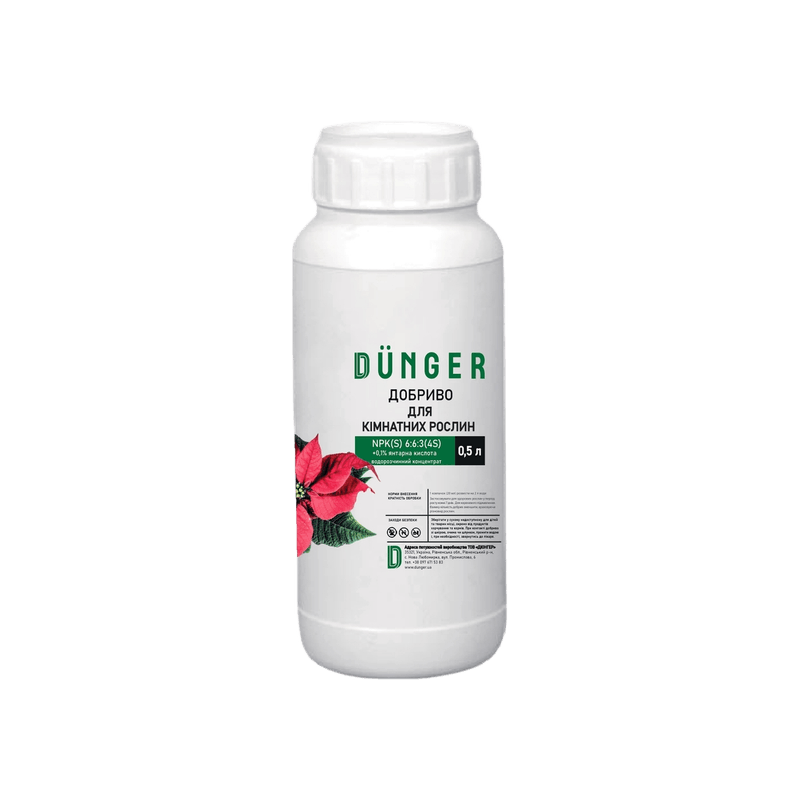
Complex fertilizer for house plants
For a healthy peace lily in an appropriate growth phase, consider this indoor-plant concentrate. The 0.5 L bottle contains fertilizer to dilute, rather than ready-made watering solution. First check fertilizer already present in the new medium; do not automatically add this product to that initial nutrient supply.
It is used for healthy plants during the growing period every 7 days. Dilute 20 ml of concentrate (1 cap) in 2 liters of water, feed the plant after watering, taking into account the size and age. In winter, reduce the concentration of fertilizer.
Do not exceed the recommended doses of fertilizer, as this can lead to injury or death of plants. Do not use with other fertilizers. Under no circumstances should plants be fertilized when the soil is dry.
Choose the number of bottles and check current purchase terms on the product page. Compare alternatives among indoor plant fertilizers. Prepare pot numbers, sizes and previous feeding information for your plan. Fertilizer does not restore the structure of compacted compost.
Information to gather if the plant deteriorates
Prepare photographs of the plant, its rootball and the substrate packaging. Include pot size, material, drainage openings, the latest watering and products already applied. Saying that the soil is bad cannot distinguish incomplete wetting from standing water. Establish what is happening around the roots before buying another bag. Replacing a product while repeating the same container and watering problem may produce the same result.
Frequently asked questions
The medium's properties and suitable intended use matter more. A prepared houseplant mix may work when it retains moisture without prolonged saturation and provides good pore space. Read its ingredients, any included fertilizer and the manufacturer's directions rather than relying on the front label alone.
Do not automatically transfer the potting method for an epiphytic orchid to a peace lily. Such media have different structure and moisture retention. For ordinary pot cultivation, select a balanced houseplant medium. Bark being present in a mixture does not establish its suitability by itself.
A layer of material at the bottom does not create a water outlet. An inner pot with holes inside a decorative outer container is more practical, provided you empty excess water. Check whether the growing pot is standing in water as well as checking the surface of its compost.
First check nutrients already included and the plant's condition. Fertilizer is for a healthy peace lily during appropriate growth, rather than a solution to saturated compost. Avoid combining fertilizers or applying concentrate to a dry rootball. Use the selected product's complete instructions when feeding is appropriate.


