


Good neighbours for lavender share its need for sunlight, freely draining soil and suitable moisture management after establishment. Common thyme, woodland sage, Faassen’s catmint, lamb’s ear and blue fescue are candidates worth considering. Choose the particular cultivar according to the space available and the way you water the border. Similar flower colours do not necessarily mean similar requirements. A planting that looks attractive in a photograph may still need separate care for its different plants.
Assess the lavender’s position first
Check which lavender species and cultivar you have. Winter hardiness varies, so choosing companions cannot solve every overwintering problem. Think beyond the summer display: consider what happens to the soil during autumn rain, thaws and prolonged wet weather. A sunny hollow that remains saturated does not become suitable merely because drought-tolerant plants surround it.
Lavender needs light, drainage and space around its crown. Additional fertilizer cannot compensate for overcrowding. Where large perennials already grow, observe their shade through the day. Moving the proposed lavender group to an open edge may be more practical than squeezing it between established plants.
After rain, notice where water enters the bed. A downpipe or lawn sprinkler can repeatedly soak its edge even when you never water the lavender directly. Address that problem before buying companions. The arrangement should make care easier instead of requiring constant corrections to an unsuitable position.
Five options for a sunny border
Common thyme for the lower layer
Common thyme, Thymus vulgaris, suits sunny positions with freely draining soil, including sandy or stony ground. Its low growth can work near a path. Give it its own space rather than planting directly against lavender’s woody base. Check the label when buying: different thymes have different growth habits, and a small nursery plant does not reveal its eventual spread.
Woodland sage for upright flower spikes
Woodland sage, Salvia nemorosa, brings upright flower spikes to sunny planting in well-drained soil. It tolerates drier conditions once established, but a new planting still needs moisture checks. Compare the cultivar’s height with your lavender. Taller flower stems can provide a background accent, while compact forms may suit the front. Do not assume that every plant sold as sage has these same requirements.
Faassen’s catmint for softer outlines
Faassen’s catmint, Nepeta × faassenii, forms spreading clumps with grey-green foliage and blue-purple flowers. It needs good drainage and tolerates dry periods after establishment. Beside lavender, the important consideration is the clump’s eventual width. Arrange pots according to mature dimensions and leave access for maintenance. Catmint should not eventually cover its neighbour simply because the plants fitted neatly together when purchased.
Lamb’s ear for contrasting foliage
Lamb’s ear, Stachys byzantina, adds soft silvery leaves and a low layer. Well-drained soil suits it, while prolonged dampness and wet foliage can encourage problems. It can spread vigorously, so resist filling every gap around lavender at planting time. Allow space to manage the clump’s edge, particularly in a small bed where access to neighbouring plants matters.
Blue fescue for a different texture
Blue fescue, Festuca glauca, forms low rounded clumps of fine blue-grey foliage. It likes sunshine and freely draining soil; waterlogged conditions are unsuitable. Use it to alternate shapes, without expecting an identical appearance throughout the year. Heat, humidity and winter weather can affect its foliage. Check the cultivar and allow for the possibility of renewing an ageing clump.
Can lavender grow beside roses?
You can plan this combination, but shared sunshine does not mean identical feeding and watering requirements. Roses generally benefit from fertile soil that retains moisture while allowing excess water to drain. Place lavender on an open edge where a mature rose will not shade it and where watering can be controlled separately.
Compare the mature widths of both cultivars and allow access for pruning. A tight lavender ring around a large rose may look appealing initially but become difficult to maintain. If the whole bed receives the same generous watering, adjust the irrigation or separate the planting areas. There is no need to describe the plants as enemies: the practical issue is their growing conditions.
Which plants belong in another garden zone?
Most hostas prefer moist soil and light to moderate shade. That differs from the open, freely draining position usually chosen for lavender. Both can belong in the same garden, with each occupying a suitable zone. Even when a particular hosta tolerates sunshine, check its moisture requirements rather than judging compatibility by light tolerance alone.
Apply this approach to other candidates instead of relying on lists of supposedly good and bad neighbours. A plant requiring consistently moist ground, dense shade or enough space to overshadow lavender will make a small shared bed harder to manage. Separating those conditions is often a better solution than repeatedly moving struggling plants.
Arrange the plants before planting
- Mark the sunny area and places where water collects.
- Record mature height and width from each cultivar’s description.
- Position the pots with room for growth and pruning access.
- Check which plants would share a watering zone.
- Start with a few repeated groups instead of a random mixture of every candidate.
For a narrow strip beside a path, consider lavender and low thyme, giving each its own space. A wider border can include separate sage or catmint groups. Lavender and blue fescue may suit a gravel-style planting. These are design examples, not universal spacing plans: use the mature dimensions of the actual cultivars you select.
Walk past the arrangement before digging. Check whether you can reach the plants without stepping over their crowns, whether spreading foliage will obstruct the path, and whether watering one group will soak another. An empty gap is not necessarily a mistake. It may be the room a perennial needs to reach its normal size without covering its neighbour.
Watering new plants and seasonal care
Drought tolerance in established plants does not mean newly planted root balls can be ignored. Check moisture beside each root ball rather than only between the plants. As roots establish, reassess watering according to rainfall, soil and plant condition. Different parts of the same composition may not need water together.
In a Ukrainian garden, choose planting time according to weather and workable soil, avoiding frozen or waterlogged ground. Consider every cultivar’s winter hardiness, not just the lavender’s. A guide to year-round lavender care can help coordinate the new arrangement with pruning and seasonal work while preserving access to each plant.
Plan nutrition for each crop separately
A shared flower bed does not automatically require a shared fertilizer dose. Consider the lavender’s needs, previous applications and soil condition. Advice on feeding lavender helps distinguish nutrition decisions from watering or shading problems. A dedicated product is available for its applicable soil-feeding use.
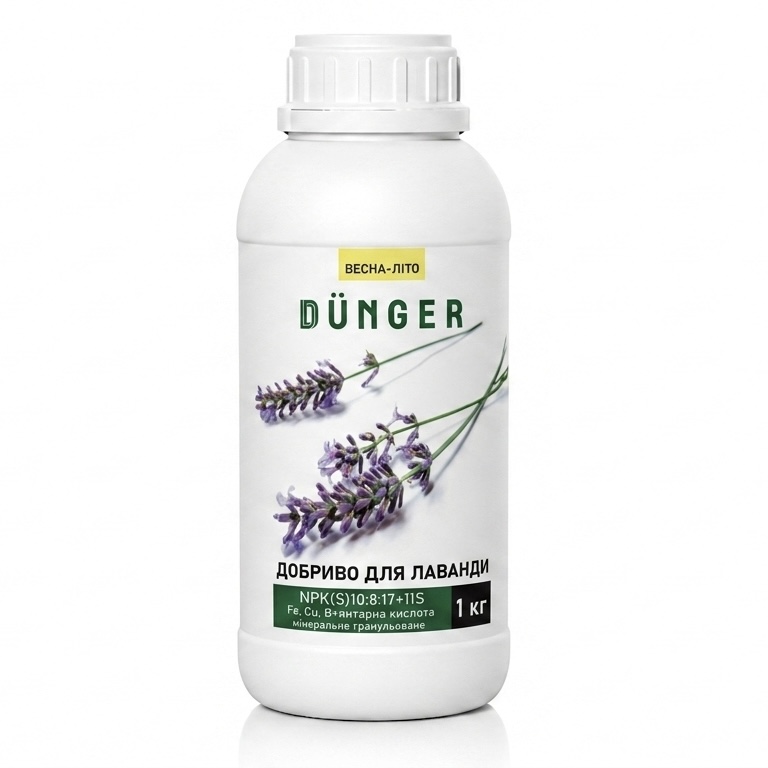
Complex fertilizer for lavender, granular
DÜNGER mineral granules with NPK(S) 10:8:17(11), copper, boron, iron and succinic acid. For soil feeding of lavender and the crops listed in the instructions. Rate: 30 g/m². Pack sizes: 0.5 and 1 kg. Do not dissolve in water.
Read the full application instructions before use. Do not automatically transfer this product’s rate to thyme, sage or other neighbouring plants. Save separate zones and their measurements in My garden to plan pack quantities according to the actual growing areas and their requirements.
Frequently asked questions
Compare compact thyme, sage and fescue cultivars by mature width and site requirements. The best choice will leave lavender enough light and allow compatible moisture management. The smallest plant on a shop display is not necessarily the most compact one at maturity.
Do not rely on that guarantee. Inspect each crop and identify the reason for damage separately. An aromatic planting does not replace observation or appropriate action when a problem develops.
A shared container needs adequate root space, drainage and compatible watering. Starting with separate pots placed together is easier: you keep the visual arrangement while retaining control over each plant’s moisture and spread.


