


Inspect lavender after winter before pruning, watering or feeding it. A grey canopy does not necessarily mean the plant has died: natural leaf colour, damaged tips and delayed regrowth can look similar. Wait for visible new growth, check moisture around the roots and establish which parts remain alive. Fertilizer cannot revive dead tissue or remove standing water from the root zone.
Why lavender looks different in spring
Lavender is a subshrub with a woody framework, not a herbaceous perennial that reliably grows back from ground level every year. Older bare stems and silvery foliage are not, on their own, proof of trouble. Equally, dried leaves do not necessarily mean the entire stem underneath has died. Assess subsequent shoot development as well as colour.
The species matters. English lavender generally tolerates cold better than tender types, although cultivar and conditions still affect survival. A plant in open ground and the same kind in a pot may have experienced very different winters: container roots have less insulation against cold. Comparing yours with a neighbour's plant cannot replace inspecting its own growing conditions.
Let the plant show when growth resumes
Spring warmth in a Ukrainian garden can alternate with returning frosts. New shoots may appear earlier beside a sunny wall than in an exposed, cold border. That does not automatically make the first plant healthier, because tender new growth can be damaged by a subsequent cold spell.
Use the particular shrub's development, the forecast and soil conditions rather than a single March or April deadline. During a cool spring, do not declare lavender dead simply because bright green shoots have not appeared. Once one part of the same plant is growing strongly while another remains dry, the extent of damage becomes easier to assess.
Take a photograph from the same position and inspect again as conditions change. Compare individual growth points instead of relying on the overall colour impression. This helps you notice small changes without removing another branch every day merely because the shrub does not yet look as it did in summer.
Three situations that need different responses
Fresh growth is present beneath dry tips
New leaves show where active growth has resumed. Once the picture is clear, remove dead or damaged portions while retaining living shoots. Do not immediately force the plant into a perfectly symmetrical dome if one side suffered more than the other. Preserving functioning growth comes before achieving a balanced outline.
The plant is brown but stem survival is uncertain
Browning can accompany winter drying or other damage. If the ground remains cold and regrowth has not started, allow more time before making a final decision. Avoid snapping every stem or repeatedly lifting the plant. Watching its development after warming is more useful than adding fresh injuries during every inspection.
The foliage looks dry but the root zone is wet
A dry-looking canopy does not always indicate a need for water. Roots can function poorly in saturated soil, and wet conditions increase the risk of root rots. Do not automatically water such a plant more heavily. Check where runoff goes, whether water collects in a hollow and whether wet material is packed around the base.
Correct the site before reshaping the shrub
Look at the border after snowmelt or rain. Water may arrive from a path, roof or neighbouring irrigation. This is a useful clue about growing conditions, not proof of a particular disease. If lavender occupies a persistently wet depression, covering the surface with more fertile soil may not solve the underlying drainage problem.
Remove debris and matted wet remains that prevent you from seeing the base. Do not bury woody stems to hide an exposed framework. Lavender needs sun, air and freely draining ground. Where the site repeatedly becomes waterlogged, plan a raised growing area or another suitable location for future plants.
Avoid transplanting a weakened shrub solely to inspect its roots when watching the canopy and soil is sufficient. If decline continues or damage spreads, a closer assessment of the plant and root zone is warranted. A single photograph of brown foliage is not enough to select a dependable treatment.
When to use the secateurs
Begin cautious removal of winter damage when new growth is clearly visible. Each cut should respect the living part of that particular shoot. Lavender does not readily regrow from old leafless wood, so cutting the entire plant to the ground can make matters worse. Remove the dead portion without sacrificing the living framework to achieve one uniform height.
Use clean, sharp tools and inspect each shoot as you work. Leave uncertain branches until regrowth makes the boundary clearer. The separate guide to spring lavender pruning while preserving the living canopy explains shaping in more detail. Immediately after winter, the main task is to establish what survived.
Check potted lavender separately
Inspect the drainage holes and make sure the container is not standing in water. A dry surface does not prove that the root ball is also dry inside. Do not transfer the border's watering routine directly to a pot: soil volume, wind, sun and the winter location all affect moisture needs.
If the plant spent winter in a protected place, consider its species and the forecast before returning it outdoors. New shoots do not demonstrate frost hardiness. A pot containing a tender type cannot be treated like an established English lavender growing in the ground.
Does lavender need feeding straight after winter?
Lavender has relatively low nutrient requirements. High nitrogen levels can encourage excessive vegetative growth and fewer flowers. Winter browning alone is therefore not a reason to apply fertilizer. First assess living shoots, drainage and nutrients already supplied. Consider feeding for a plant that has resumed growth and has an appropriate need.
Plan lavender feeding from the product instructions
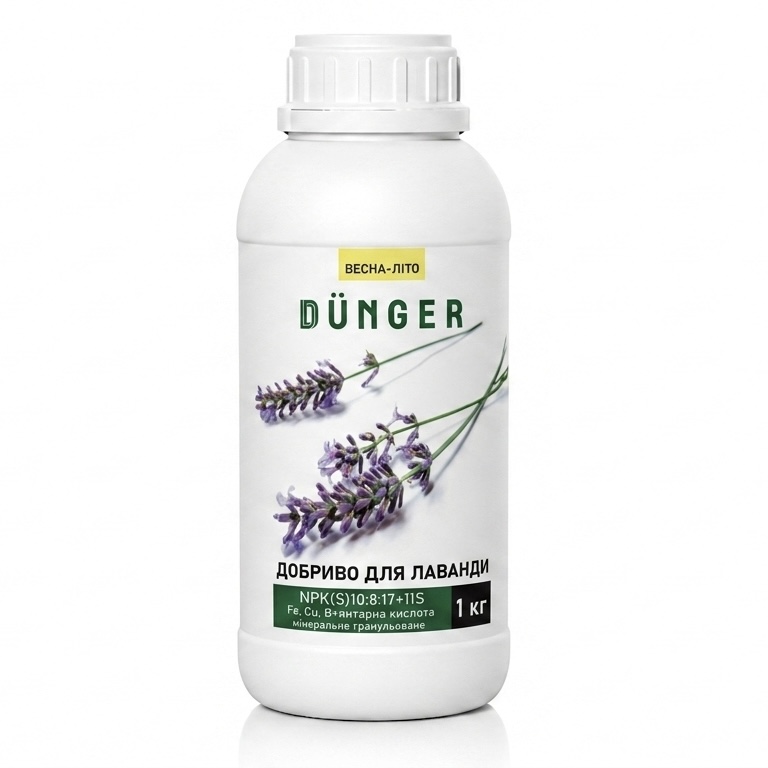
Complex fertilizer for lavender, granular
This compound is available in 0.5 and 1 kg packs for planned lavender care. The instruction rate is 30 g/m². It refers to the planted area, not an amount for each shrub. Fertilizer is not a treatment for root rot or a means of restoring dead roots.
Check the plant stage and full application method in the lavender fertilizer product card before use. Calculate only the area you actually intend to feed. In My Garden, prepare zones, measurements and product plans to compare the required quantity with available pack sizes.
When replacement becomes the practical choice
If living shoots remain absent after sustained warming and enough opportunity for regrowth, assess the shrub's viability more closely. A completely dead plant will not respond to an extra fertilizer dose. An old, heavily woody lavender may also remain sparse even when a few tips are alive.
Before replacing it, reconsider both plant choice and site. New lavender in the same wet hole can encounter the same problem. Review winter moisture, planting conditions and light, choose a suitable cultivar and address drainage. Keep the plant name and site photographs in your own notes so you have useful observations for the next season.
Frequently asked questions
No. Silvery-grey foliage is natural in many lavenders. Assess fresh growth and different parts of the shrub. Dry brown leaves deserve attention, but they do not always prove that every stem has died.
Do not do so solely because of its appearance. Wait for visible regrowth so you can preserve living shoots. Lavender regrows poorly from old leafless wood, and a severe cut can remove the remaining living canopy.
Inspect the damaged side, soil and winter position. Preserve live growth rather than evening up the entire shrub with a deep cut. Once the boundary of dead portions becomes clear, remove those parts individually.


