


For home-grown watermelon transplants, start by estimating when the plants can go into a warm bed with no frost expected. Count back roughly three to four weeks as a first planning estimate for many seeded cultivars, then check your packet, growing conditions and pot size. Seedlings should be compact, have developed true leaves and lift with an intact root ball. The right date leaves time for gradual hardening without forcing you to keep an overgrown vine indoors.
Work backwards from your actual planting site
Choose the bed before choosing a sowing date. At planting, the soil where the roots will sit should have warmed steadily, and nights should be suitable for this warmth-loving crop. Check soil at the depth of the root ball and look at the forecast, not just the highest daytime temperature. The south side of an open Ukrainian garden can warm sooner than a low bed shaded by a fence. In parts of the west or north, cool spring weather can also keep an exposed garden bed colder for longer. Treat those as examples of site conditions, not a regional planting calendar.
Write down a likely planting window rather than a single date. Work back from the date you can reasonably prepare the bed and get a compact transplant ready. An unheated tunnel can alter that window, but it can be warm at noon and cool sharply at night. Measure conditions inside it and check the bed independently. For the separate outdoor decision, including when direct sowing is reasonable, use the guide to sowing and planting watermelon outdoors. This guide starts once you decide to raise seedlings indoors.
Give each seed batch its own timing
Find out whether the seed is a standard seeded cultivar, a seedless type, or meant to be grown with a pollinizer. Read the supplier's details for germination and maturity. Seedless types can have more demanding germination requirements, so do not copy the schedule from ordinary seeds. If the packet quotes a number of days to maturity, check which event it counts from. A maturity estimate has a different purpose from the time a seedling spends in a pot.
Allow for differences between a well-lit propagation bench and a windowsill. A cool room may delay emergence and leaf growth. An overly warm position with poor light can produce a long stem before the bed is ready. Earlier sowing does not fix those conditions. A small second batch, sown on a separate date, is an option if you have room and the outdoor window is uncertain. Label batches so that you can compare their actual stages later.
Sow in the pot that will carry the roots to the bed
Watermelon is sensitive to root disturbance. Use separate pots or cells with drainage holes and a clean seedling medium that holds moisture without staying saturated. Allow enough room for roots until planting, particularly if poor weather often delays work at your site. A very large pot is unnecessary for a short start, while a tiny cell can limit roots if the plants have to wait. Choose according to your expected timeline and the instructions for the seed.
Moisten the mix evenly before sowing and follow the packet for depth. Mark the cultivar and sowing date while the pots are still easy to tell apart. If you have two seedlings in one cell and need to keep only one, snip the weaker stem at the surface rather than pulling it through the other seedling's roots. Do not separate a shared plug by shaking away the medium.
Change the conditions when the seedlings emerge
Seeds need warmth and even moisture to germinate. Once seedlings emerge, provide bright light and avoid keeping them very warm in poor light. Check the position at leaf height and watch how the stems develop. Move the tray away from cold glass overnight or an unregulated radiator if those positions cause large swings. Keep enough space that the leaves of neighbouring pots do not continually shade one another.
Check the medium and pot weight before watering. Apply plain water when needed, allow excess to drain and empty standing water from the tray. Check a pot at the edge of the tray as well as one in the middle. They may dry differently. Persistently wet mix is a reason to adjust watering and drainage. A slow seedling in a wet pot does not automatically need fertilizer.
Before feeding, check the original medium label. Some mixes already supply nutrients for early growth. Separate a possible nutrient need from insufficient light, cold roots, root binding or repeated saturation. Replacing the normal watering decision with feeding can make the original problem harder to see. For the next stage, the guide to growing watermelons outdoors covers care once the vines are established outdoors.
Check readiness instead of counting days alone
The first rounded leaves are the cotyledons. True leaves develop after them and show the crop's characteristic shape. A few well-developed true leaves and a root system that holds the mix together are more useful than a calendar age alone. Inspect a representative pot by supporting the ball and easing the container away only if the mix holds together. Avoid repeatedly unpotting young plants just to check progress.
If the bed will stay cold for several days, leave the tray in good light and adequate warmth, with air around the leaves. Delay planting rather than exposing seedlings to cold, and do not keep them deliberately dry to stop their growth. If roots have already filled the smallest cells and the delay will be substantial, consider moving the intact plug into a somewhat larger container. Avoid loosening the roots or making repeated pot changes.
Harden off gradually, then move the intact root ball
Begin outdoors in a sheltered spot for a short period in mild conditions. Increase the time, light and airflow in steps as the seedlings respond. Bring them in again if cold nights or strong wind are forecast. A sunny glass balcony may heat faster than the garden, while the same balcony may be too cool overnight. Check it rather than assuming it provides a safe intermediate stage.
Before planting, water as needed so the plug holds together but is not saturated. Prepare the hole and open the pot without tugging the stem or breaking the ball. Once planted, water to settle the surrounding soil and check the forecast again. If you use a temporary cover, pay attention to overheating in sun. Check that the cover cannot press on new growth during strong wind. Leave feeding decisions for the actual substrate, plant stage and need.
For healthy seedlings that need additional nutrition
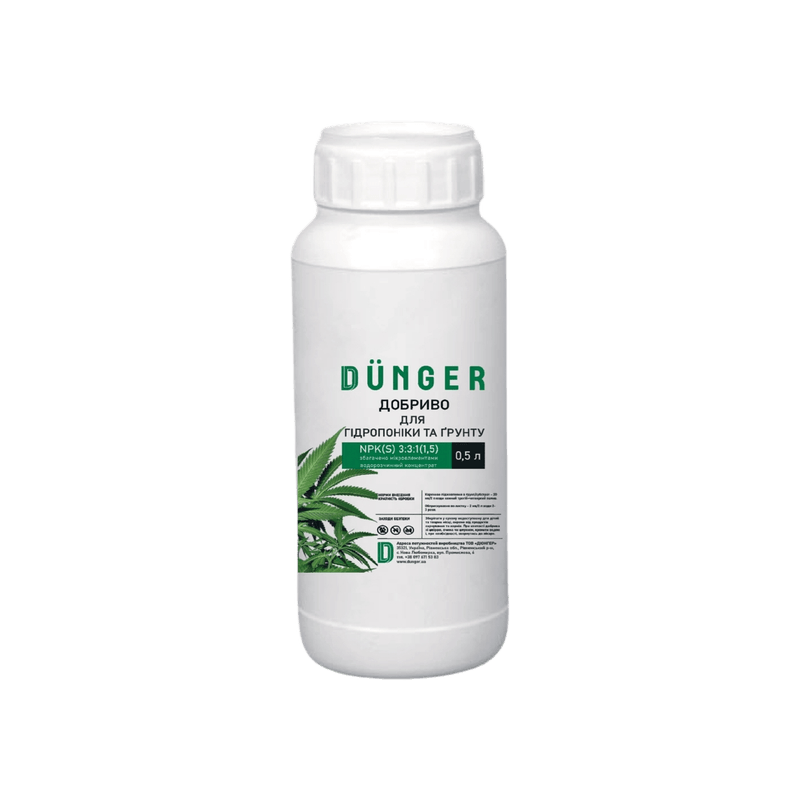
COMPLEX FERTILIZER FOR HYDROPONICS AND SOIL
The DÜNGER liquid concentrate for hydroponics and soil has a root-feeding row for all seedlings in soil or substrate. Consider it for healthy growing watermelon seedlings only if the mix does not already supply what they need. First check light, temperature, pot room and drainage.
The bottle contains 0.5 L of concentrate. Check the root-feeding directions, the number of pots and what nutrients the growing mix already contains before buying. Use plain water as needed and keep feeding as a separate decision.
Questions about starting watermelon indoors
Work backwards separately for each crop. Watermelon can quickly fill a small container and responds poorly to root disturbance. An earlier tomato sowing date is not a good reason to move the watermelon date forward.
Postpone planting into the cold bed, keep the plants well lit and continue checking moisture. If needed, move one intact plug to a larger pot while you wait. Restart gradual exposure when conditions improve.
Check whether the growing mix was already charged and whether the plants are receiving enough light, warmth and drainage. If healthy growing seedlings need extra nutrition, use a product with directions for their stage and follow its own root-feeding instructions.


