


Water remains beside a bed after rain, a spade meets unusual resistance, and neighbouring plants grow unevenly. Soil compaction deserves investigation, but these signs do not establish the cause on their own. A naturally heavy soil, a low spot, drought or damaged roots can produce similar difficulties. Compare the affected patch with a nearby area that performs better before deciding whether to loosen soil, change irrigation, investigate drainage or revise feeding.
Compaction is different from clay texture
Texture describes the proportions of sand, silt and clay. Structure concerns the way particles form aggregates and the spaces between them. Pressure can reduce those spaces, making root penetration harder and interfering with air and water movement. Clay soil can have a workable structure, while a soil with a different texture can become heavily compacted through repeated traffic.
A difficult bed therefore needs more investigation than the label “heavy soil”. Adding sand at random is not a reliable answer. Check how the soil behaves at different moisture levels, where pressure has occurred and how roots are growing. Our guide to assessing garden soil before choosing fertilizer provides a broader starting point. A nutrient and acidity test helps with feeding decisions, but does not by itself reveal how easily roots can penetrate a dense layer.
Read the pattern across the garden
A track beside the gate, the shortcut between a greenhouse and a tap, or an old materials-storage area can be more informative than one hard clod. Mark these places on a simple sketch. Compare similar plants receiving similar light on either side of a traffic route. Poor growth following that route strengthens the case for a physical problem without ruling out other causes.
When soil is moderately moist, inspect a small profile in a safe position. Plate-like layers, dense clods and roots turning sideways above a particular depth deserve attention. Avoid exposing the entire root system of a living tree just to investigate. A careful check at the accessible edge is more appropriate for small plants; substantial work around established trees needs professional assessment.
A probe or garden tool is useful only when comparisons involve similar moisture conditions. Dry soil can resist penetration without serious compaction, and a stone can stop a tool in one spot. Do not force an instrument into ground containing unknown services. Home observations help decide the next step, rather than replacing a specialist measurement or proving every patch needs deep cultivation.
Choose workable conditions, not a calendar date
A sunny afternoon does not necessarily make soil ready for work. The surface may have dried while the layer underneath remains wet and easily deformed by footsteps. Soil that forms a sticky lump, smears onto tools and resists crumbling under gentle pressure is a reason to postpone cultivation. Interpret this alongside texture because sandy and clay-rich soils behave differently.
In Ukrainian gardens, thawing, recent rain, shade and local relief determine when work is practical. Even within one property, an open bed and a patch near a shaded wall may dry at different speeds. In spring, check below the surface after snowmelt. In autumn, allow for prolonged wet weather. Frozen or saturated ground does not become suitable merely because planting materials have arrived or a free weekend is approaching.
Remove the source of repeated pressure
Loosening a bed achieves little if a loaded wheelbarrow crosses it again the next morning. Establish permanent paths and choose a bed width that lets you reach plants from the edge. Before soil or building materials are delivered, agree where vehicles can stand. Keeping traffic to a defined access strip is preferable to gradually compressing the whole growing area.
For unavoidable short-term access, suitable temporary boards can distribute the load. They do not make wet soil safe for heavy machinery. Afterwards, assess the access route separately from the planting area. Lawn recovery also depends on the condition of the turf; see lawn care and turf recovery for the distinct decisions involved in restoring grass cover.
Improving an empty planting bed
Once the soil is workable, choose the least disruptive method suited to the depth of the problem. A thin surface crust and a dense layer beneath machinery tracks require different responses. Repeatedly running a rotary cultivator until the soil resembles fine powder can break down useful aggregates. Work from a path and avoid stepping back onto the area you have just treated.
Mature compost can support gradual structural improvement. Consider its quality, previous additions and the particular bed instead of repeating an arbitrary annual quantity. Compost also supplies nutrients, so include it when reviewing the overall feeding plan. Mixing it vigorously into wet ground can undermine the improvement you intended to make. First wait for appropriate soil conditions.
A cover crop can be useful on vacant ground where the species, growing window and method of termination fit the next planting. Living roots and residues work progressively. One short crop should not be expected to remove deep construction compaction or a severe wheel track. Preventing further traffic remains part of the solution even when the bed carries vigorous vegetation.
Occupied borders and trees need a gentler approach
An established flower border cannot be treated like an empty vegetable bed. Perennial roots already occupy the upper layers, and cutting substantial tree roots introduces another problem. Start by keeping traffic away, investigating water movement and protecting the surface. Discuss deep work around mature trees with a qualified specialist rather than applying a whole-bed digging method beneath the canopy.
For lawns, purpose-made aeration methods include removing small soil cores when grass and soil conditions are suitable. Simply pushing spikes into the ground is not the same operation. Around other plants, keep mulch away from stem bases and trunks, and choose the material with moisture conditions in mind. A surface covering should protect the soil rather than conceal a permanently wet root zone.
When water is the main difficulty
If a downpipe repeatedly discharges into a bed or water collects in a depression, loosening alone may not solve the problem. Investigate the direction of runoff, the site level and possible barriers below the roots. Do not divert the difficulty into a neighbour's garden. A raised bed may create a better rooting space for suitable small crops, but cannot replace solving widespread flooding.
Check the same places during subsequent rainfall after changing access or irrigation. Look at how puddles disappear, whether new roots explore the soil and whether growth becomes more even. Leaf colour the next morning is a poor measure of structural recovery. Where a lawn is involved, lawn watering and moisture checks helps separate watering decisions from soil cultivation.
Feeding after assessing the root environment
Once the root environment is suitable, assess the crop’s nutrient needs. This organo-mineral product is an option for applicable garden crops. The quoted row concerns its named crop group, not a treatment rate for compaction. Do not increase the dose because soil feels hard or add different instruction rows together.
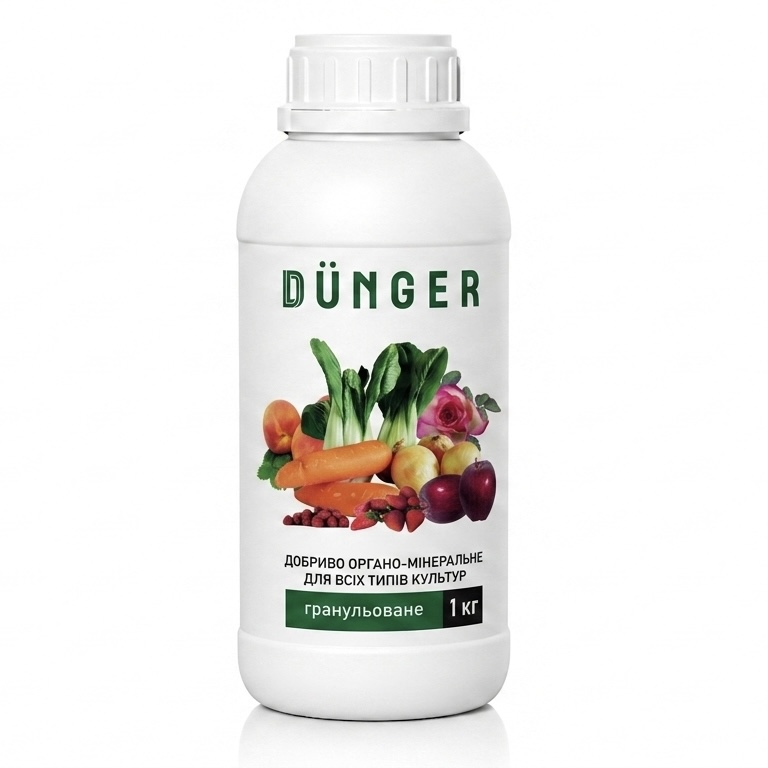
Organo-mineral fertilizer for all types of crops granular
DÜNGER organo-mineral fertilizer granules for all types of crops. Available pack sizes: 1 and 5 kg. Select a pack, check its price and availability, and place an order for delivery within Ukraine.
Vegetable, melon, berry: 45-50 g/m²
Use My Garden to save growing zones, crops and measurements, then plan fertilizer quantities. Measure the planted area rather than including access paths. Check the application method, calculated quantity and selected pack before ordering.
Frequently asked questions
Assess plant nutrition and the physical rooting conditions separately. Choose fertilizer for the crop and its demonstrated need. It does not replace stopping repeated traffic, addressing standing water or carrying out appropriate physical improvement where that is necessary.
Do not add it without assessing the soil. A small amount of sand does not guarantee better structure. Texture, water movement and the cause of density matter. For many garden beds, a suitable working regime, good-quality organic matter and permanent access paths are more useful starting points.
Wait until the soil is workable rather than sticky or saturated, and check underneath the surface. Heavy and light soils reach that stage differently. A fixed number of days after rainfall is therefore unreliable.
Natural temperature and moisture changes can affect shallow soil, but they do not guarantee removal of deep machinery compaction. Protect the area from additional pressure and reassess rooting conditions rather than relying entirely on freezing weather.


