


Plant blueberries in a prepared acidic root zone that retains moisture without staying waterlogged. Check the site and soil, choose a suitable plant, and only then remove its container. For a container-grown blueberry, use the root-ball level as a guide rather than burying the bush arbitrarily deeper. Follow planting with watering, suitable mulch and regular moisture checks during establishment.
A well-labelled plant cannot correct unsuitable ground. If acidity and drainage remain unknown, finish that assessment before planting. The article on blueberry growing media explains choosing the root environment. Here the focus is practical: arranging the planting area, handling the roots and managing the first period afterwards without unnecessary disturbance.
Choose a position for the mature bush
Blueberries fruit better with adequate sunlight. Observe shade across the day and account for neighbouring plants as they grow. A gap beside a young tree may later become crowded and shaded. Select the position not simply because the current pot fits there, but because a developed bush can be watered, inspected and managed in that space.
Think about irrigation before marking positions. You need convenient water access and a way to check moisture. An attractive distant corner that is difficult to reach with a hose may be awkward for new plants. Leave room for inspection, picking and later care instead of squeezing blueberries between a path and neighbours already occupying the available ground.
When planting several cultivars, keep their names and check their suitability for your climate. Different cultivars can support cross-pollination, but the combination should account for the particular plants. Do not select by the berry photograph alone. Ask about growth habit and development so that spacing reflects mature bushes rather than the matching sizes of nursery containers.
Assess the ground before planting day
Measure acidity instead of inferring it from soil colour. Take a sample from the proposed area according to the laboratory or test instructions. Record recent amendments and their dates to help interpret results. Do not estimate an acidifier quantity by eye. Preparation should provide an appropriate environment before living roots are introduced into it.
Assess drainage as well. Blueberries require moisture, but a wet hollow is not automatically suitable for an acid-loving crop. Observe water after rain and identify incoming runoff. If the natural soil is unsuitable, consider a prepared raised area or a container with suitable medium and drainage. Choose the approach according to the whole site's conditions.
Preparation extends beyond a small pot-sized hole because roots will eventually grow outwards. Plan the available volume of suitable growing space. Avoid creating a narrow pocket where water accumulates and future care is difficult. The guide to assessing garden soil explains the broader distinction between texture, moisture and nutrition before you decide what to change.
Choose a workable planting opportunity
Timing depends on local climate, plant condition and the form of planting material. A container plant and one supplied with exposed roots need different handling. One compulsory date will not suit every part of Ukraine. Choose workable soil and a period when follow-up care is possible, avoiding frozen ground and hot, dry conditions.
Coordinate buying with site preparation. If plants have arrived, inspect them rather than leaving them unattended while deciding where they belong. Remove transport packaging as appropriate, check moisture and secure the cultivar label. Exposed roots particularly need protection from drying while waiting and during movement to the planting position. Preparation should reduce unnecessary time out of their protected conditions.
Arrange the work so roots are not left exposed while tools or water are fetched. Prepare the bed, mulch, watering and labels first. With several plants, work sequentially: inspect and position one, then continue to the next. This preserves identities and avoids leaving the entire purchase simultaneously unprotected during a task that takes longer than expected.
Inspect the container and root ball
Check the medium before removing the pot. The root ball should be moist, rather than dry inside beneath a wet surface. Remove the container carefully while supporting the plant, then inspect the outer roots. Do not pull hard on the shoots. If the pot obstructs removal, release it carefully instead of damaging the root ball through haste.
Where roots densely circle the outer surface, loosen them carefully so they can grow into the surrounding medium. Do not apply equally forceful treatment to every plant. Assess how congested the roots are and their condition first. The purpose is to prepare outward growth, not to dismantle an otherwise healthy root ball completely.
Inspect damaged or suspicious planting material separately. Photograph unexplained dieback, rotten areas or major shoot damage and clarify the condition before planting. Fertilizer cannot repair poor nursery-stock quality or disinfect roots. Discussing a concern with the supplier is easier when the plant's original condition is documented before it enters a different environment in your garden.
Plant with the finished soil level in mind
Prepare enough space for the root ball without squeezing it. Set a container-grown blueberry with the top of its growing medium level with the prepared soil. Check the eventual surface, especially where more landscaping is planned. Soil added later to level the bed can quietly alter the depth of a correctly planted bush. Avoid burying shoot bases beneath an arbitrary extra layer.
Fill around the roots with the prepared medium and gently firm by hand to remove large air pockets. Do not stamp saturated soil into a hard mass. Water the root ball and surrounding area, then inspect the position again. If the surface settles noticeably, reassess the level instead of automatically piling more material over the plant's base.
Choose a mulch suitable for blueberries, such as appropriate bark, and leave a gap around the shoot bases. Mulch helps conserve moisture and suppress weeds, but does not replace checking the soil beneath it. Do not use an unidentified material merely because it remains from another bed; its properties also become part of the growing environment.
Early care and the place of fertilizer
New plants need moisture monitoring because their roots have not yet explored the surrounding ground. Check the original root ball and adjacent soil; they may differ. Wet-looking mulch alone is not evidence of adequate root moisture. After rain or a weather change, reconsider the next watering rather than automatically adding water according to an unchanged routine.
Do not aim for the largest possible berry crop from a small, newly planted bush. Establishment and plant development matter first. Assess whether flowers should remain according to the plant's age and condition. Avoid arbitrary heavy pruning based on a mature-bush programme; a young plant requires its own decision, with damaged parts considered separately.
Select fertilizer for a particular stage, rather than treating it as a compulsory ingredient of the planting hole. DÜNGER has a blueberry complex designated for the first feeding. That name refers to a defined spring use. Its directions do not mean an autumn planting must immediately receive a spring application. Also establish whether the purchased growing medium already contained fertilizer.
Fertilizer for your planned care
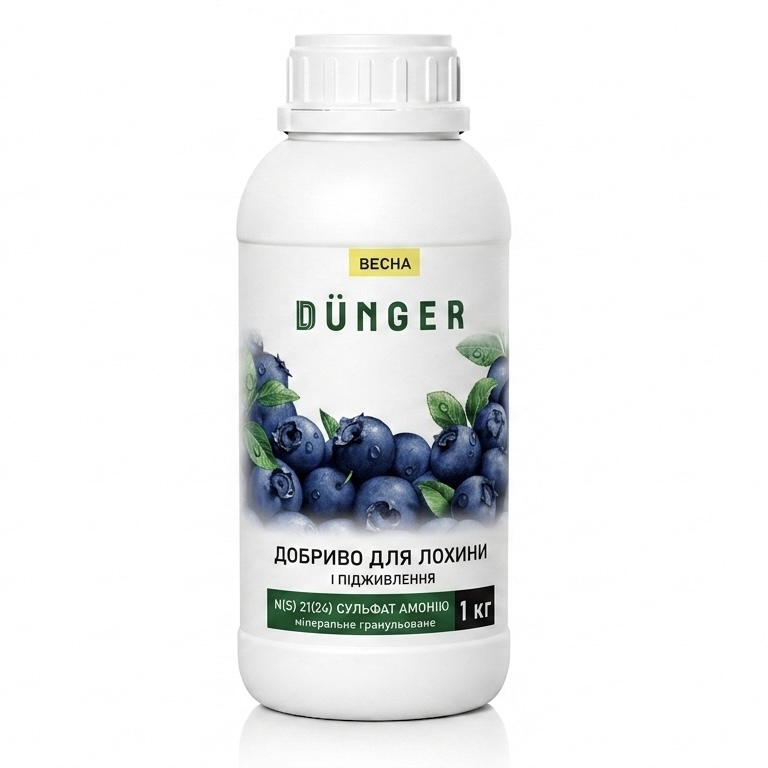
Nutritional complex for blueberries I fertilization granular
For a planned first spring feeding, check this specific complex and its 1 and 5 kg packs. Account for each bush’s age and size; pack weight is not an application rate per plant.
Add your plants to My Garden and prepare your purchase calculation.
Keep first-feeding and subsequent-feeding products distinct: they are separate formulations. Before purchasing, record bush numbers, age, size and previous care. The first-feeding product has 1 and 5 kg pack options, and the bottle or canister contains granules. Explore the berry crops section when planning the following stages of the season.
A planting record need not be complicated. Keep a simple sketch with the cultivar at each position, a photograph of the final ground level and the date. Add the growing-medium label and any preparation details. If another person takes over watering, share that information so the newly planted row receives consistent care rather than duplicated or missed applications.
Frequently asked questions
Only when its properties suit the crop. Check acidity, drainage and available root space. Describing soil as fertile does not establish those requirements. If conditions are unsuitable, prepare an appropriate growing area first rather than assuming fertilizer will compensate after planting.
That depends on the plants selected and the space available. Cross-pollination can be useful, so check suitable combinations and room for mature bushes. Do not crowd several plants into a position that can only accommodate one well-grown bush.
Consider season, moisture, acidity and the plant's initial condition. Colour alone does not identify a fertilizer requirement. Keep photographs and planting history to investigate the cause, instead of beginning a series of unrelated feeds before understanding what has changed.


