


Judge homemade rose feeds by their composition, the plant's needs and the intended application method. Mature compost, fresh kitchen peelings and liquid from a jar are different materials. Making them at home does not give them the same properties. If their composition and concentration are unknown, there is no reliable basis for assigning one precise dose to every rose.
A practical decision starts with inspecting the rose and its soil, rather than finding the most elaborate recipe. Check moisture, light, the root environment and previous applications. The guide to choosing fertilizer for your roses compares prepared products. Here, the main task is distinguishing a useful soil amendment from an unsupported attempt to intensify flowering.
Define what homemade feed means
Separate three categories. One is mature compost used to improve soil. Another is a prepared fertilizer with a known composition that you measure properly at home. The third is a mixture of scraps or an infusion whose nutrient content has not been established. This distinction matters more than treating everything as equivalent because it is described as natural.
Compost forms through the breakdown of organic materials. It acts as a soil amendment and releases nutrients gradually, but does not equal a concentrated mineral fertilizer in nutrient content. Its quality and quantity matter in a flower bed. Adding unlimited amounts every year simply because it has a natural origin is not a sound decision rule.
A homemade infusion does not acquire a guaranteed concentration because you counted the same number of peelings. Their size, condition and preparation can differ. Without information about the resulting composition, the liquid cannot be equated with a particular fertilizer or converted into a justified rate per rose. Its colour and smell are not measurements of nutrient value.
Ask five questions about any recipe
- Which established need of the rose is the application intended to address?
- What is known about the finished material, rather than just the ingredients?
- For which plant, soil environment and development stage was the method described?
- Have earlier fertilizers, compost and nutrients in the potting mix been counted?
- Can the amount be measured and the next decision explained without guesswork?
If the answers are missing, do not turn the recipe into a compulsory routine. A photograph of an attractive bush after watering does not establish what caused the result. Weather, moisture and the natural growth stage may have changed between observations. A clear sequence of decisions is more useful than applying several unknown mixtures at the same time.
Understand what mature compost provides
Good mature compost has a crumbly structure and an earthy smell. An unpleasant odour, including ammonia, is a reason to check whether composting has finished. Material that is still breaking down should not automatically be called finished compost. If its origin is unknown, establish the ingredients, maturity and intended use before placing it around roots.
Composts vary in composition. Materials made from manure or mushroom-production waste can contain high levels of soluble salts. This does not mean every compost is harmful; it explains why origin and amount matter. Do not replace an appropriate container mix with pure compost merely because you want stronger nutrition for a rose.
For an established border, first recall what has already been added. A history of substantial yearly organic amendments belongs in the next purchasing decision. Soil analysis can help clarify nutrient needs and acidity. Start with assessing the soil before selecting fertilizer, rather than choosing an additive from the appearance of the upper surface alone.
Coffee grounds are not a universal rose fertilizer
Coffee grounds contain organic matter, but applying them directly is not the same as providing complete rose nutrition. Fresh or uncomposted grounds may contain compounds that make unrestricted application near roots inappropriate. Properly managed composting is a more considered route for kitchen organic residues than a thick layer of grounds in a rose pot.
Do not equate acidic coffee with proof that your soil needs acidifying. The rose's actual root environment needs assessment. Nor should a kitchen additive be prescribed as a remedy for yellow leaves, pests or disease. Establish the cause first, then choose feeding only where it fits the identified need. A familiar ingredient is not a diagnosis.
Peelings, yeast and salts: what to establish
The presence of a nutrient in food does not establish that an infusion supplies the required amount to a rose. Do not calculate a banana-peel infusion rate from the instructions for a potassium fertilizer. Likewise, a yeast mixture cannot simply be equated with a prepared compound containing declared nutrient percentages. They are different materials without a shared verified application programme.
Magnesium sulphate, commonly called Epsom salt, supplies magnesium and sulphur, but does not supply nitrogen, phosphorus and potassium as the main components of compound feeding. It is not a complete substitute for rose fertilizer. Establish the need for a separate nutrient from the growing conditions and appropriate analysis, rather than the popularity of a gardening tip.
Do not add iodine, kitchen salt or household products to watering water according to an arbitrary scheme. Do not combine fertilizer and a plant-protection product without appropriate instructions. A longer ingredient list does not make an unknown recipe more precise. The word homemade determines neither the dose nor suitability for root application.
Separate garden roses from container roses
A container contains a limited amount of growing medium and needs its own assessment. Keep the mix label and establish whether fertilizer was included. Make sure excess water can drain. The outside diameter of a pot is not a basis for transferring an application programme intended for a large garden shrub.
In a garden, assess distinct locations separately. A rose beside a path and one in a long-amended border may have different starting conditions. Across Ukraine, allow for local weather and the plant's seasonal development. A plant finishing its growth before cold weather should not receive an improvised stimulating mixture simply because another watering day has arrived.
An option with a known garden-rose rate
A granular compound for roses
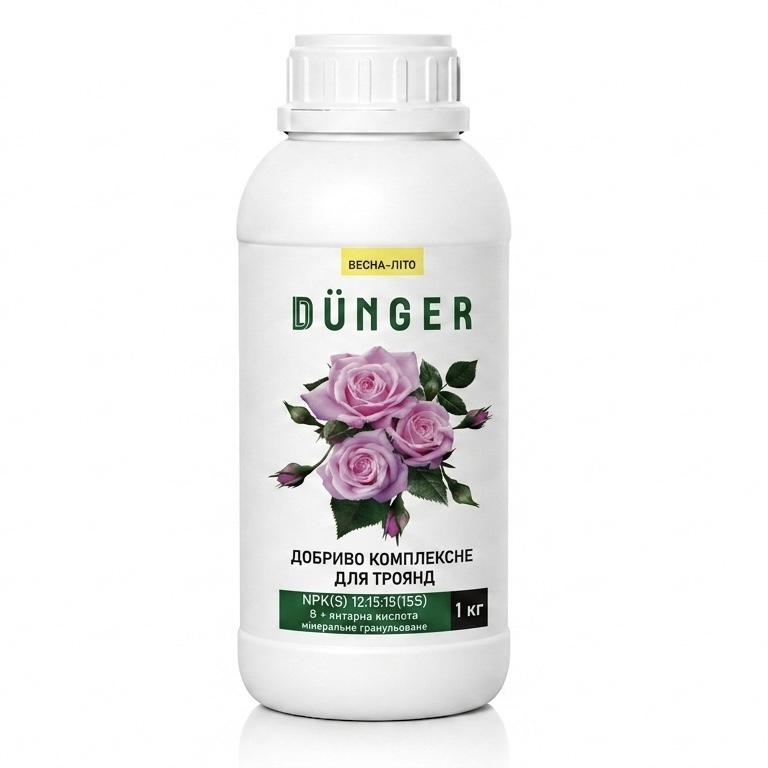
Complex fertilizer for roses granular
This product has a declared composition and a separate rose row. Measuring according to its instructions establishes the quantity of product actually applied. The displayed row is not a recipe for mixing it with kitchen scraps.
Pack sizes are 0.5 and 1 kg. The bottle contains granules, not a prepared liquid solution.
This is a granular soil product. Read the whole application method, allowing for bush size, age and previous feeding. Do not pour granules into a homemade infusion or judge compatibility from appearance. For a container rose, check the suitability of the method and growing conditions separately instead of automatically treating it as a full-sized shrub in garden soil.
Make a decision without unnecessary additions
- Describe the problem or need you actually observe.
- Check soil, water, light and materials already applied.
- Separate soil improvement with compost from a measured fertilizer application.
- Select an appropriate product and season from its complete instructions.
- Measure the quantity and retain personal records of what was actually used.
In My Garden, define zones, crops and measurements to prepare a fertilizer plan. Keep your personal list of previous mixtures separately. The guide to spring rose feeding after inspecting the bush can help with a subsequent seasonal decision. Other care topics are available in Flowers and ornamentals.
What to tell the seller before ordering
Provide the number and approximate size of the roses, whether they are in the ground or containers, and which products have already been used. Keep photographs of existing labels. This makes a discussion about the next purchase more concrete than asking for something stronger for every plant. Compare the quantity needed with the selected pack, and check current price and availability when ordering.
If a rose has deteriorated after an unknown mixture, retain the ingredient list and details of the amount used. Avoid adding another guessed remedy before the problem is assessed. Information about the actual sequence is more useful than describing the feed only as organic. Where a problem continues, seek an assessment of the plant and root environment.
Questions about homemade rose feeds
Without an established composition and quantity of available nutrients, that substitution cannot be calculated. Do not transfer a prepared potassium product's rate to peel infusion or apply both automatically.
Do not treat them as a ready balanced feed. Organize composting separately for kitchen organic residues. Assess the whole root environment when considering the condition of a container rose.
It improves soil and releases nutrients gradually, but composition and plant needs differ. The decision depends on the actual soil and previous additions, rather than one rule for every flower border.
You lose a clear account of the composition and amount applied. If the plant changes, the cause becomes harder to explain. Start with checking the need and making one considered decision.


