


A Guzmania is often bought for its colourful display, then treated exactly like the ficus standing beside it. That is where confusion begins. This plant has a water-holding leaf rosette, a modest root system and a distinctive life cycle. Caring for it means separating three jobs: managing moisture, choosing a suitable position and recognising what happens after flowering. A fading display does not automatically call for a stronger fertilizer.
The colourful display and the true flowers
The striking red, orange or yellow part of a Guzmania consists mainly of bracts. The true flowers are much smaller and sit among them. Flowering and the gradual fading of the colourful display therefore need not end together. Judge the whole plant, including its green leaves, central rosette and any young growth at the base, rather than deciding its fate from one dry part.
This distinction also helps when choosing a plant. Ask for the cultivar name if it is available, and find out whether the display has only recently developed. An attractive photograph does not tell you the age of the individual plant offered for sale. Keep its label: identifying a Guzmania correctly matters because other bromeliads can have different requirements.
Finding a position in a Ukrainian home
Bright, filtered light is generally a good starting point for a houseplant Guzmania. Near a south-facing window, protection from strong summer sun may be necessary. However, a dark corner is not suitable simply because it has no direct sunshine. Look at the light over the course of the day, rather than assessing the position only when you bring the pot home.
During the Ukrainian heating season, conditions immediately around the plant deserve attention. On one windowsill the leaves may be above a hot radiator while the pot sits close to cold glass. Move it out of hot airflow and cold draughts. When opening a window for ventilation, take the plant away from the direct stream of cold air beforehand.
A summer balcony needs its own assessment. A sheltered glazed space and an exposed balcony have different night temperatures, wind and light. Do not move a tropical plant outside according to a date alone or leave it there until frost arrives. Indoors, the actual room can matter more than the region: a bright heated room and a cool hallway do not justify the same watering routine.
Water the rosette and assess the pot separately
Guzmania belongs to the bromeliads whose overlapping leaf bases form a natural water reservoir. This does not mean the entire pot should stand in water. Inspect the central reservoir and the potting mix separately. Water in the rosette does not establish that the roots have suitable moisture, and a heavy, saturated pot is not a reason to water it again.
A practical checking sequence
- Lift the inner pot out of its decorative cover and check for water collected underneath.
- Inspect the central leaf reservoir. Use clean, soft water suitable for plant care.
- Replace the water periodically instead of repeatedly topping up old water. Support the pot and foliage while doing this.
- Check the potting mix. It should remain open enough to admit air and release surplus water.
- After watering the pot, let excess water drain before returning it to its cover.
Do not give every houseplant an identical measured drink. Rosette size, growing medium, container and room conditions differ. During warm, active growth, keep the mix moderately moist. Under cooler conditions and weaker winter light, water more sparingly and check how it dries. If several people share plant care, agree who checks and waters it so that each person does not add water independently.
Humidity without waterlogged roots
Guzmania appreciates humid air, which is a different condition from a soaked growing medium. Constantly adding water to the roots does not correct a poor position beside a heater. Improve the position first. A tray of damp pebbles can be used around a small group of plants, with the base of each pot above the water level. Its purpose is not to keep the pot absorbing water continuously.
Misting does not replace checking the reservoir and growing medium. Hard water can leave marks on foliage, so a pale mark is not automatically evidence of a nutrient deficiency. Examine the leaves in daylight and compare their appearance before and after spraying. Review the water you use where appropriate. Avoid experimenting with household polishes or improvised mixtures on the leaves.
When a different pot or mix is needed
Guzmania needs an airy growing medium rather than heavy garden soil. Mixes for epiphytic bromeliads commonly contain bark and other components that support drainage. When buying a ready-made mix, check its intended use and texture. A general label saying it suits all flowers does not explain how it will behave in your small container.
Repotting is not an obligatory welcome for a newly purchased plant. First assess the growing medium, stability and drainage holes. If repotting is necessary, choose a container only slightly larger and retain the previous planting depth. A huge pot is not required to produce an impressive display. Support the plant near its base while working rather than pulling on the flower stem.
The guide to choosing potting mix for houseplants can help you compare different growing media. Guzmania has a particular requirement within that wider choice: its modest root system needs good aeration even when neighbouring plants favour a more moisture-retentive mix.
What happens after flowering
A mature rosette in these bromeliads generally flowers once, gradually ages and produces offsets. The fading of an old display therefore does not necessarily mean you have made a mistake. Increasing fertilizer cannot restore that rosette's original colour. The task changes to maintaining healthy growth and allowing the young rosettes to develop.
Do not remove a tiny offset simply because you have noticed it. Let it become substantial; around one-third of the parent plant's size is a useful guide when considering separation. Also assess the young plant's base and whether it can be established in a small pot. For a first attempt, active growth with adequate indoor light and steady warmth is a more useful starting point than an inflexible calendar date.
Prepare a clean, sharp tool, a small container and suitable mix before starting. Decide whether some offsets will stay together. You do not have to dismantle the whole clump at once to make it look symmetrical. A young Guzmania needs time, and a promise that it will flower again for a particular holiday would be misleading.
Choosing fertilizer for your indoor collection
Bromeliads generally do not require the intensive feeding associated with fast-growing pot plants. If the plant deteriorates, check water, light, its base and its stage of development first. Fertilizer does not reverse the ageing of a parent rosette or solve persistently waterlogged growing medium. Combining several products is not a shortcut to recovery.
When comparing indoor plant fertilizers, distinguish root feeding from feeding through the central leaf reservoir. A general houseplant label does not authorise pouring any solution into a Guzmania's centre. That use needs suitable instructions for the particular product. The guide to when to feed houseplants helps put general feeding decisions into context.
A root-feeding product for indoor plants
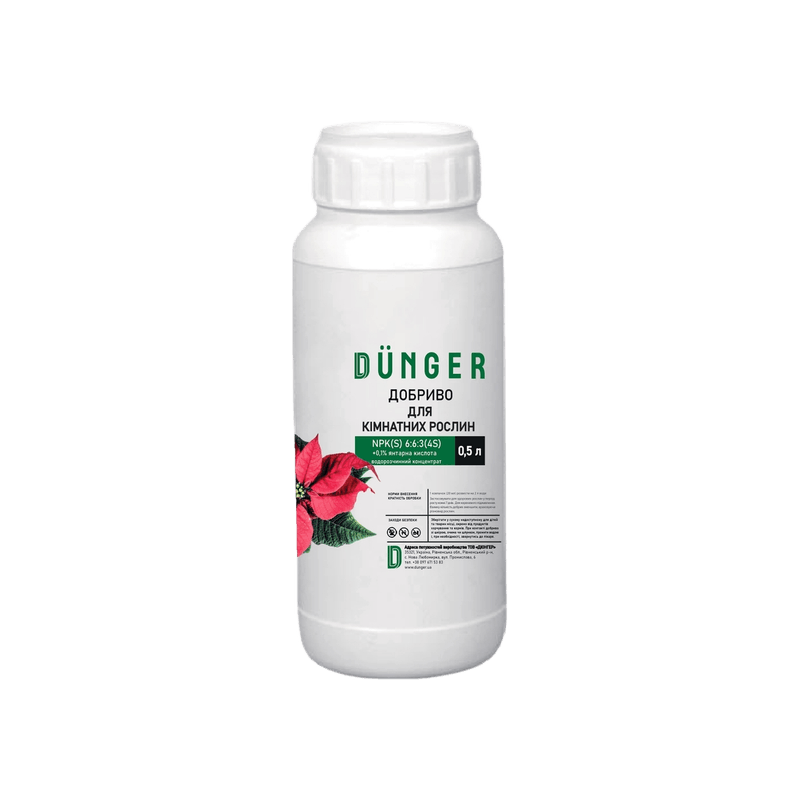
Complex fertilizer for house plants
DÜNGER complex houseplant fertilizer in a 0.5 L bottle. A water-soluble concentrate for root feeding of indoor plants.
This concentrate is intended for root feeding within an indoor plant collection. Do not add it to the water in a Guzmania leaf reservoir: a root-feeding method is not an instruction for that application. Before using it specifically on Guzmania, confirm that the method and the plant's needs match. For other suitable healthy houseplants, follow the complete product instructions. Choose bottle quantities for your actual needs and check current purchase conditions.
To plan a combined purchase, open My Garden.
Investigate changes before buying more products
Begin by describing what you can actually see. Saying that the flower is dying might mean dry old bracts, a spot on a single leaf or a softening base. These are different observations. Photograph the whole plant, the base and the pot, and recall its last watering and any move to another position. This information is more helpful in a consultation than simply naming the fertilizer already used.
- An old display is fading: assess the flowering stage and look for offsets.
- Leaf edges are drying: review nearby heating, water and light without diagnosing from one symptom alone.
- The pot stays wet: inspect the outer cover, drainage holes and growing medium.
- The base is soft or smells unpleasant: arrange a closer assessment rather than another feeding.
For a combined purchase for suitable indoor plants and garden spaces, My Garden lets you keep supported zones and measurements and build a product plan. A shopping plan does not determine a Guzmania feeding rate. Check the product's method and instructions, and judge whether feeding is appropriate for the plant itself.
Questions about Guzmania care
No. Inspect the base: the parent rosette can age gradually while producing offsets. Continue caring for healthy growth and avoid separating very small young plants prematurely.
With Guzmania, consider both the central leaf reservoir and the growing medium. Check them separately, keep the reservoir water fresh and do not leave the pot standing in water.
No. An ending display is not corrected by a higher dose. Establish the plant's stage and condition first. Any feeding requires a suitable method and the particular product's confirmed instructions.
No. If the container is stable, drains properly and holds a suitable mix, concentrate first on routine care. Repot when needed, without a large jump in container size or burying the rosette more deeply.


