


Once peppers establish outdoors, they need steady root moisture, suitable warmth, healthy foliage and support matched to their fruit load. Judge the plant by more than height: new growth, flowering, root conditions and developing fruit all matter. If growth slows, check conditions first. Another fertilizer portion cannot replace warmth or resolve every reason that flowers fall.
Check whether the plant has established
New leaves and gradual enlargement can indicate continued development. The number of days since transplanting does not establish an identical condition for every plant. Compare neighbouring peppers, check moisture around the former root ball and inspect the stem base. Avoid rocking the plant repeatedly to test whether roots have grown: observation does not require disturbing it.
The separate guide to transplanting peppers outdoors covers the initial move. Plan subsequent care around actual condition. Healthy plants can develop more slowly in cool soil. Changing water, feeding and pruning simultaneously makes it harder to identify what was limiting growth. Start with the most evident condition instead of treating every slow plant as an urgent fertilizer problem.
Warmth matters, but excessive heat also limits growth
Peppers are warm season plants sensitive to frost. Cool nights and cold soil slow development, while severe heat can interfere with fruit set. A delay in cropping therefore does not automatically indicate missing nutrients. Compare the beginning of the problem with weather conditions rather than looking only at the last fertilizer application.
In a northern or exposed Ukrainian garden, cool periods may need particular attention; in the south, overheating and rapid drying may be more pressing. These are assessment priorities, not a forecast for a particular season. If using temporary protection, monitor temperature and ventilation: an enclosed space can overheat in sunshine. A cover does not guarantee protection against every cold event, and it needs management as conditions change.
Water the root zone
Check below the surface and in different parts of the bed. A light daily sprinkle is not equivalent to moistening the soil roots can use. Drip irrigation or careful soil watering helps keep foliage from being repeatedly wetted. Adjust frequency and duration to soil, rain, plant size and system performance rather than assigning one universal number of litres to every pepper.
After a dry period, avoid trying to compensate with uncontrolled flooding. Aim for relatively even root conditions without alternating severe drying and prolonged saturation. The same input behaves differently in sand and heavy soil. If plants wilt while the ground is wet, assess drainage and possible root problems before opening the water again. Look beneath mulch rather than using its dry appearance as your only guide.
Manage mulch and weeds gently
Mulch helps reduce weeds and moisture loss but does not remove the need for soil checks. Do not pack wet, dense material against stem bases or use material with unknown herbicide residues. If the bed has a sheet covering, retain access for inspection and for the fertilizer application method you intend to use.
Without mulch, remove small weeds with shallow, careful cultivation. Deep hoeing beside a plant can injure roots. Afterwards, check for exposed roots and displaced irrigation tubing. Surface care should reduce competition without creating a new problem for a pepper already carrying fruit. Waiting until weeds are large can make removal around branches and roots more difficult.
Provide support before branches break
Support depends on height, growth habit, wind exposure and fruit weight. A compact cultivar and a tall plant carrying large peppers face different loads. Inspect branch junctions and fruit laden stems that bend outwards. Supporting them before strong wind or a heavy fruit breaks a branch is easier than attempting to rescue it afterwards.
Position stakes carefully around roots and buried irrigation lines. Ties should support rather than constrict stems. Check them as stems thicken and the plant grows. Do not pull every shoot into one tight bundle: retain room to inspect the plant, water the soil and harvest without breaking neighbouring branches. Support is a continuing check rather than a single operation performed only when the plant is small.
Avoid one pruning rule for every pepper
Strong pinching or removal of every side shoot is not required for every pepper to crop. The response depends on cultivar, condition and available season length. Pinching can delay fruiting, which matters where the warm season is short. Do not copy a tall greenhouse training system onto every outdoor bush without considering that difference.
Keep healthy leaves that shade fruit from direct sun. Suddenly stripping foliage in hot weather increases the risk of sunscald. Assess damaged portions individually rather than using them as a reason to remove all leaves around the harvest. After working on the plant, check whether fruit has lost its natural shade. More visible fruit does not necessarily mean better protected fruit.
Flowers without much fruit
Compare the problem with temperature, root moisture and overall growth. Heat, cool nights and irregular watering can affect flowers and young fruit. Excess fertilizer is also undesirable: abundant foliage does not guarantee timely cropping. Avoid responding to every fallen flower with another stimulant mixture, especially when the environmental cause remains unchanged.
Check whether existing fruit continues to enlarge. Follow actual development over successive inspections rather than counting flowers alone. When weather changes, allow the plant to respond without adding several unknown inputs at once. The guide to feeding peppers after transplanting covers nutrition separately. Keep that decision connected to previous applications rather than adding a new programme each time a flower drops.
A fruit mark does not automatically identify a fertilizer
A dark area at the blossom end may be blossom end rot, associated with calcium delivery to developing fruit and water management. However, not every mark has that cause. Pale injury on the sun exposed side, decay, punctures or accompanying leaf spots require a different assessment. Look at position, shape and other symptoms before deciding what you are seeing.
Do not promise to repair damaged fruit with a complex fertilizer or a homemade calcium mixture. Check water, roots, previous inputs and the condition of subsequent fruit. Identify a spreading problem before selecting a treatment. Fertilizer supports nutrition within its intended use; it is not a universal medicine for pests or diseases, and an existing lesion does not disappear because a feeding portion has been applied.
Defined feeding for the vegetable group
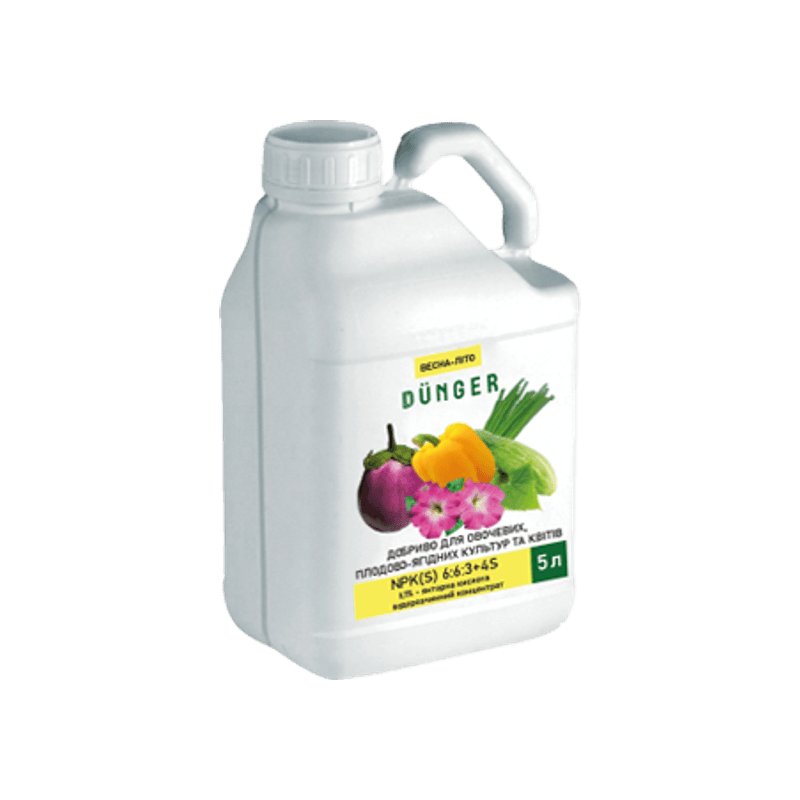
Complex fertilizer for vegetables, fruit and berry crops, and flowers
This product covers vegetables, including pepper. Account for previous inputs and select the route from the complete directions. The quoted group rate is root feeding, rather than the complete irrigation requirement or a treatment for damaged fruit.
Used throughout the entire period of plant development and growth. For root feeding into the soil/substrate, dilute 50 ml of fertilizer in 10 L of water (100 ml of solution per 1 plant) and use at intervals of 10-12 days. For foliar treatment (spraying), dilute 25 ml in 10 L of water and apply with a sprayer, ensuring even coverage.
For treating seedlings, halve the concentration of the working solution!
Feed plants with fertilizer in the morning or evening, avoiding hot weather. Fertilize the seedling substrate for the first time 10-14 days after pricking out or at the stage of 4 true leaves.
Remember that the solution for seedlings should be half as concentrated as the solution for mature plants. Do not use products whose instructions specify the same dosage.
Vegetables of all types, fruit and berry crops, flowers (root feeding): 50 ml/10 L of water (100 ml of solution /plant)
The pack contains 5 L of concentrate. Before measuring, distinguish mature plants from seedlings and root application from foliar use. Do not add unapproved ingredients.
Harvest by size and intended maturity
Many cultivars can be used at full size while green; their final ripe colour depends on the cultivar. Choose the stage according to use and the opportunity to leave fruit on the plant. Do not expect the same final colour from every pepper or leave the entire crop waiting when dangerous cold is forecast. A calendar alone does not establish that all fruit will finish colouring outdoors.
Clip fruit with a suitable clean tool while supporting the branch, rather than pulling sharply. Check hidden fruit and ties during harvest. Protect your hands when handling hot types and avoid touching your eyes afterwards. Regular inspection lets you remove ready fruit without unnecessary damage and assess whether heavy remaining branches need additional support.
Prepare a purchase plan for this bed
Count plants, identify their stage and account for products already used. In My Garden, plan the zone, crop, measurements and fertilizer. Compare the garden crop range by intended use rather than canister volume alone. Treat support, water and nutrition as separate needs when preparing your shopping list.
Frequently asked questions
No. Consider cultivar, growth habit and season length. Strong pinching can delay fruiting, while healthy foliage shades the fruit.
Temperature stress, irregular moisture and other causes are possible. Assess conditions before prescribing another feed.
Not for every cultivar or use. Assess full size, quality and cultivar characteristics; final ripe colours vary.
No. A measured working solution portion is feeding according to directions. Assess the root zone's ordinary water requirement separately.


