


Judge a homemade tomato seedling feed by what it adds to the growing medium, not by the popularity of its recipe. Wood ash, eggshells, used coffee grounds and finished compost have different properties. Soaking a material in water does not automatically turn it into a balanced fertilizer. First find out whether the seedling mix already contains nutrients, then choose an approach with a known composition and a clear method of use.
Using something already in the kitchen can seem economical. However, a useful comparison includes the time spent preparing it, the value of the seedlings and whether you can measure and repeat the treatment. Unmeasured applications make later results difficult to interpret. A simple routine that you can record is easier to manage.
Start with the label on the growing medium
Two identical tomato varieties may be growing in quite different mixes. One mix may contain an initial nutrient supply; another may require a separate feeding programme. Keep the bag label, product name and date of transplanting. These details establish the starting point more clearly than the colour of an infusion.
If you no longer know the ingredients, avoid adding several remedies together. Reconstruct what has already gone into the pots: packaged growing medium, compost, ash or fertilizer added during pricking out. Include all of these in the history of care. For a closer look at the root environment, see the guide to choosing and checking seedling growing media.
What a recipe name cannot tell you
The description “natural feed” does not establish the nitrogen, phosphorus or potassium content of the final liquid. Before using a treatment, you should be able to answer three practical questions: which growth stage is it intended for, how is the working solution prepared, and how much is applied? Without this information, two jars made under the same recipe name cannot be compared reliably.
Also distinguish nutrients present in a raw ingredient from nutrients available to roots after preparation. The presence of minerals in plant scraps does not establish a particular seedling recipe. A mixture made with an unspecified amount of peel, leaves or kitchen leftovers has no direct equivalent in the instructions for a manufactured concentrate. Borrowing its dilution rate would create a number without a sound basis.
Wood ash needs more care than a spoonful in every pot
Wood ash can contribute certain mineral nutrients and raise pH. Its salts can also injure tender seedling roots. That makes routine addition to every sowing container a poor starting point when the properties of the mix are unknown. The case is especially weak if the manufacturer has already adjusted the acidity of a packaged seedling medium.
A decision to use ash in an established garden bed should follow an assessment of that soil. It is not a ready-made treatment for a small seedling container. Do not use ash from rubbish, painted wood or treated timber. Soaking an unsuitable material does not establish that it is suitable for tomatoes. If its origin or the need for it is uncertain, leave it out of the seedling pots.
Eggshells belong in a longer-term material plan
Eggshells break down slowly. Crushing increases their exposed surface, but does not turn them into a fast, complete seedling feed. They are not a reliable way to prevent blossom end rot in the future crop. That disorder also involves water uptake and movement of calcium within the plant, rather than simply the presence of calcium somewhere in the soil.
The practical lesson for a small tray of tomatoes is to avoid postponing necessary care while waiting for shell fragments beside the roots to act. Put suitable shells into composting and plan the seedlings' nutrition separately. If the growing-medium label already lists its components, an extra handful of shell does not demonstrate that the mix has become better balanced.
Coffee grounds cannot precisely adjust acidity
Used coffee grounds can be added to composting, but they do not consistently lower soil pH. The acidic taste of a drink is not a measurement of the used grounds or of the medium surrounding a tomato root. These are different materials. Measure acidity when it matters, and decide on any correction from the actual conditions rather than the name of the drink.
A layer of grounds is not equivalent to a complete fertilizer either. Separate the worthwhile aim of reusing kitchen materials from the immediate needs of young plants. Collect suitable leftovers for composting, while keeping the windowsill routine understandable. It is easier to assess a change when you know exactly what was watered, what was fed and what remained the same.
Finished compost and a jar of infusion are different
Composting changes organic materials, and finished compost is used with the properties of a particular growing mix in mind. Water containing kitchen scraps is not an equivalent substitute. Even if both began with material from the same kitchen, their final condition and intended use can differ. Do not transfer a proportion intended for a solid growing mix to watering liquid.
Collect suitable scraps for future soil improvement while managing the existing seedlings from their medium label and transplanting records. A new batch of kitchen waste is not a reason to change their feeding routine.
Choose a product that specifically covers seedlings
When additional nutrition is needed, the chosen product should explicitly include vegetable seedlings. A rate for mature plants must not automatically become a seedling rate. DÜNGER offers a liquid complex for vegetables, fruit and berry crops, and flowers with separate instructions for young plants. Root feeding requires the seedling root-feeding row, rather than the foliar-treatment row.
The instruction extract below belongs to that particular product and plant group. Concentrate volume, water volume and the quantity of prepared solution applied to each plant describe different parts of the operation. Measure them separately. A millilitre of concentrate is not interchangeable with a millilitre of prepared solution.
Fertilizer for a confirmed feeding need
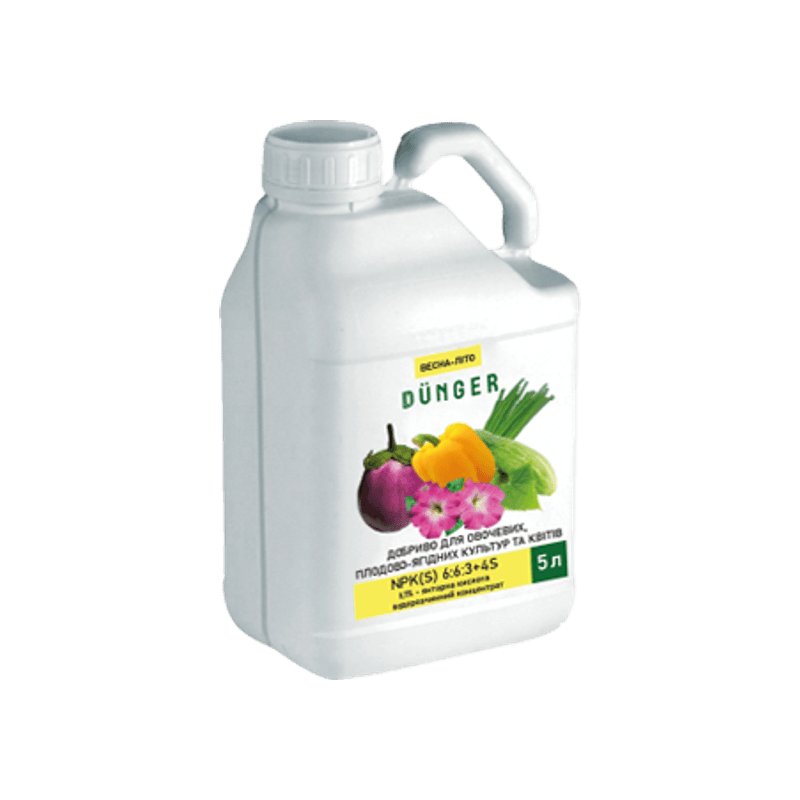
Complex fertilizer for vegetables, fruit and berry crops, and flowers
Compare this liquid complex with homemade mixtures by its specific seedling use. Consider the 5 L pack alongside other permitted crops, keeping their application instructions separate.
All types of vegetable seedlings, fruit tree saplings, berry bushes, flowers (root feeding): 25 ml/10 L of water (50 ml of solution /plant)
Feed plants with fertilizer in the morning or evening, avoiding hot weather. Fertilize the seedling substrate for the first time 10-14 days after pricking out or at the stage of 4 true leaves.
Remember that the solution for seedlings should be half as concentrated as the solution for mature plants. Do not use products whose instructions specify the same dosage.
Save your plantings in My Garden and prepare your calculation.
Returning to a clear routine after an experiment
If you have already used a homemade infusion, record its ingredients, application date, approximate volume and the plants that received it. Avoid immediately trying to balance it with another mixture. First inspect moisture, drainage and plant condition. If deterioration continues, the next useful step is identifying the cause rather than adding another unmeasured treatment.
For advice, prepare photographs of the whole tray and individual plants, the growing-medium label and your application history. Compare pots that received different care, but avoid treating one observation as proof of a recipe. Light, temperature and plant development are discussed separately in the guide to growing sturdy tomato seedlings.
When buying fertilizer, calculate from the plants you actually have and the permitted use. Do not plan to empty a large canister simply because the season has ended. A shared purchase may serve a vegetable patch, berry planting and flower garden, but each group still requires its own applicable instructions and record of use.
Frequently asked questions
Consider the nutrients already in the medium and the growth stage first. Follow the selected product's conditions for the first seedling application. Germination alone does not mean that every pot needs an additional treatment, especially when you have not checked the initial mix.
Do not build that mixture by guesswork. Unmeasured additions make the overall nutrient supply and acidity difficult to assess. Choose a justified action that accounts for the growing medium and previous care instead of adding several materials at once.
A correct dilution is only part of correct application. An arbitrary volume in each pot can still depart from the instructions. Observe the stated quantity per plant and the conditions of use, and record the application so the next decision begins with reliable information.


