


Head cabbage needs a suitable cultivar, enough growing time, light, water and nutrients to form a head. Fertilizer helps when nutrients are needed, but cannot trigger head formation independently of growing conditions. If the bed contains only open rosettes, check the transplanting date, cultivar maturity, moisture and plant condition first. Those checks should come before deciding which cabbage feed to buy.
This approach concerns white, red and other heading cabbages. Broccoli and cauliflower develop different edible structures, so their timing and management should not automatically be transferred to this bed. Keep the seed packet or transplant label. Identifying the crop precisely helps avoid expecting a plant to produce a shape or develop on a timetable that does not belong to its type.
Check the cultivar and planting history
Early and late cultivars should not be expected to become firm simultaneously. Check whether the seed supplier counts maturity from emergence or transplanting. These are different starting points. If you remember only a number of days, return to the description. Comparing your plants with a neighbour's is useful only when the cultivar, growing method and starting date are known, rather than just the day their first head appeared.
Mark different batches of transplants. Note which went out first, which replaced missing plants later and where cultivars were mixed. Uneven development then becomes easier to understand. Do not double the feed for a younger batch to make it catch up. Keep a simple row plan for next year; it can help compare both timing and the different conditions along the edges of the garden.
Understand what a cabbage head is
A cabbage head is formed by leaves wrapping tightly around each other. A large outer rosette alone does not mean the crop is ready. Look at the centre without pulling it apart and compare gradual changes. Once a head exists, assess firmness and the size characteristic of the cultivar. Rounded, flattened and pointed varieties should not all be expected to look identical.
Choose a few representative plants and photograph them from the same direction during later inspections. Mark damaged growing centres, spotted leaves and plants that lag behind separately. This method does not promise a head by a particular date; it makes continuing development easier to see. When seeking advice, you will be able to explain whether the problem affects the whole planting or individual plants.
Light and space between plants
Cabbage needs a sunny position. Check more than morning light: a fence, greenhouse or neighbouring tall crop may shade the bed later. Plant spacing affects head size. Large-headed cultivars need suitable room, so consider the seed supplier's spacing when planting. Extra fertilizer cannot create physical space between crowded plants or remove the shade cast by a neighbouring structure.
In an established bed, record actual spacing and sources of shade. Do not move mature plants after a single inspection without a considered reason. Compare your observations with the cultivar's expected characteristics first. For future plantings, allow access for care as well as space for growth. The middle plants must remain reachable for leaf inspection, watering and harvesting at the right stage.
Maintain a steady water supply
Cabbage needs to absorb water and nutrients steadily while growing. Check soil around the roots rather than judging wet leaves after a brief watering. Watch young transplants particularly carefully in dry conditions. The bed must also let excess water drain. A persistently wet patch and a dry edge should not receive identical treatment merely because they sit in the same row.
When watering by hose, check whether you overlook the far end or repeatedly soak the beginning of the bed. With drip irrigation, inspect delivery at different points. Correct obvious unevenness before judging fertilizer needs. Nutrient solution is not a useful irrigation test: establish how water reaches the planting before adding a product. Keep notes when a particular section repeatedly behaves differently.
Heat, roots and damage change the picture
Cabbage grows best in cool weather. Growing dates should suit the cultivar and local conditions, rather than allowing maturity to fall in the hottest period without consideration. Fertilizer does not change air temperature. If development slowed after difficult weather, record that with the dates. It will help plan the next sowing and avoid blaming only the composition of the feed used.
Inspect both leaf surfaces, the growing centre and the base of the stem. Insect damage, disease and environmental conditions can all change plant appearance. Feeding does not replace identifying the cause. Prepare photographs of the whole plant and representative details, and note previous crops in that spot. Do not select a crop-protection treatment at random because the head is not yet firm.
When feeding is the next useful step
Use soil information to assess phosphorus and potassium needs, and account for compost and other organic additions. Start with checking soil before feeding. If the bed received fertilizer before planting, record its name and amount. That allows additional nutrition to be considered without automatically repeating a full package of inputs that may already have been supplied.
Do not search for one nutrient guaranteed to make every cabbage form a head. A compound, a nitrogen fertilizer and a homemade mixture can contribute overlapping nutrients. If transplants were weak before planting, reconstruct their earlier care. The guide to growing seedlings from sowing to planting out offers useful context. A garden bed continues a plant's development; each new fertilizer purchase does not restart it.
Before acting, decide how you will assess the next inspection. Mark the plants you compared and note whether the change you want concerns new growth, water delivery or a damaged area. Avoid changing fertilizer, irrigation and several other treatments at once without records. A clear sequence helps you understand what still needs attention and gives a consultant something more useful than a list of products purchased.
A compound feed for the vegetable bed
Where assessment shows a need for compound nutrition, cabbage is covered by the vegetable group of Complex fertilizer universal granular.
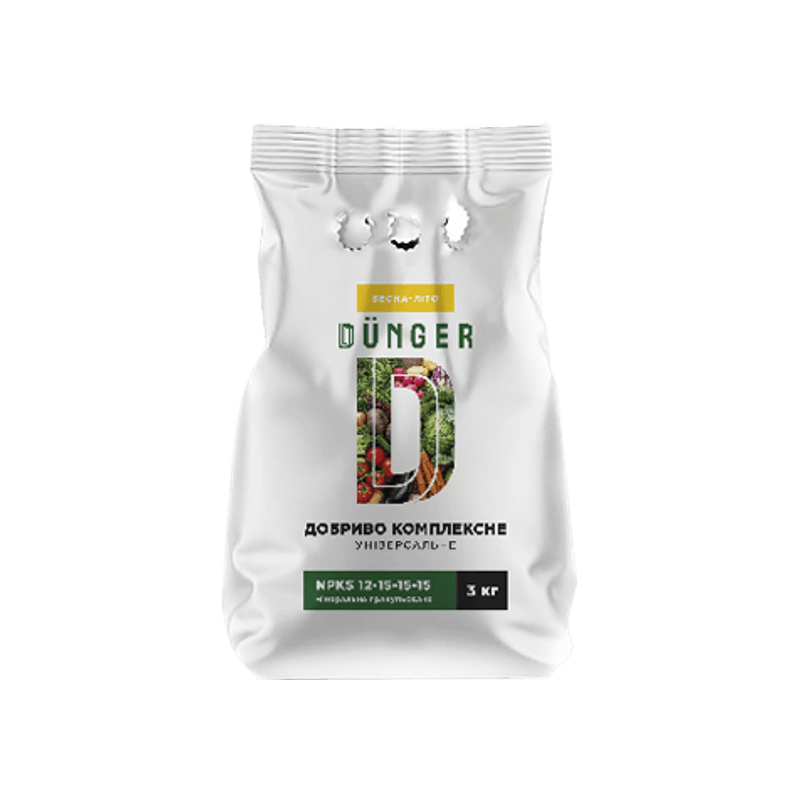
N 12%; P2O5 15%; K2O 15%; S 15%
Vegetable, legumes and greens: 20-40 gr/m²
This is the relevant crop-group rate, not a special recipe for rapid head formation. It is expressed per area of soil. Do not read it as an amount per plant or a spray concentration. Select the application method from the full instructions and account for fertilizer already supplied when planting.
The product comes in 3, 4 and 5 kg packs, all containing granules. Before buying, measure the area you actually intend to feed, excluding paths and neighbouring crops. Record each bed separately if cabbage occupies several areas. Use My Garden to organise those details and prepare the purchase calculation.
Where soil information shows that some nutrients are already sufficient, do not choose a compound solely for convenient packaging. Match its entire composition to the task. Account for shared nutrients before adding another fertilizer. Buying one suitable product does not mean performing every method listed on its page on the same cabbage plants.
If the decision concerns one nutrient, first understand nitrogen's role and choosing a nitrogen feed.
Questions about cabbage heads and feeding
Not necessarily. First establish whether development is actually delayed rather than normal for a late cultivar. Crowding, shading, water problems and damage do not disappear when the dose increases. Feeding should match nutrient need, not the number of days separating one plant from its neighbour. A comparison is meaningful only when the plants have similar starting conditions.
Compare cultivar, transplanting date, original seedling size and position. Check whether water delivery is even and whether some plants experience shade or local damage. Do not try to equalise every plant with one additional application. Distinguish expected differences from an area needing a particular change in care. Keep separate notes for mixed cultivars rather than treating their normal differences as a problem.
Use firmness and the cultivar's characteristic features. Size also depends on conditions and spacing. Once a head is ready, do not postpone harvesting simply to fit in another feed. Plan how you will use the crop and inspect regularly so plants can be harvested at the appropriate stage. The largest possible size is not the only useful indication of readiness.


