


An apple tree feeding plan begins with the needs of one tree, rather than a shopping list for every month. A young tree is building roots and a framework; a bearing tree must support fruit without producing excessive shoots. Age alone does not reveal what the soil can supply. Neighbouring trees may have different rootstocks, crop loads, watering and previous inputs. Sharing a date does not mean they need the same feed.
A newly planted tree and a bearing apple
With a recently planted apple, check establishment first. The root ball must not dry out, the root collar should not be buried, and dense grass should not compete around the tree. Poor growth under these conditions does not demonstrate a nitrogen shortage. Concentrated fertiliser touching young roots can make matters worse. Do not turn a general rate for established trees into material for filling a planting hole.
For a bearing apple, assess the balance between shoots and fruit. A vigorous green canopy with long shoots does not automatically need another feed. A tree carrying many small apples may be overloaded. Consider fruit thinning and the previous harvest before increasing nutrition. Rootstock also affects tree size: a dwarf apple and a large old tree are not suitable references for each other's normal vigour.
Soil and leaves answer different questions
A soil test helps assess acidity, organic matter and the availability of particular nutrients. It is especially useful before establishing an orchard. For existing trees, interpret results alongside plant condition. A nutrient present in the soil may still be poorly absorbed by damaged or waterlogged roots. Start with assessing garden soil before choosing fertiliser if you have previously judged fertility only by soil colour.
Leaf analysis shows what the tree has actually absorbed. Follow the laboratory's instructions about growth stage, leaf position and sampling. Do not casually combine cultivars or trees growing in different conditions. A handful of the yellowest leaves is not a representative sample. For a local problem, arrange separate samples from affected and normally growing areas so that the comparison has a clear purpose.
Ask the laboratory to explain units and the intended calculation method. A soil reading, a nutrient concentration in leaves and the weight of a fertiliser are different measurements. Do not convert between them using a random table. If results contradict what you observe, check sampling and previous applications before purchasing another product. Keep the analysis date, not just a photograph of its coloured interpretation chart.
Reading shoot growth and the canopy
Mark several ordinary shoots in different parts of the canopy and compare their growth at the end of the season. Avoid selecting only the strongest upright shoots produced after pruning. Account for cultivar, rootstock, light and fruit load. Excessive growth can suggest ample nitrogen, but one shoot is not a laboratory test. Consistent observations of the same tree are more useful than changing the plan each year because of one photograph.
Pruning changes the picture. After substantial canopy reduction, a tree can direct considerable growth into new shoots. Extra nutrition should not encourage unwanted congestion. See spring apple pruning for branch management. Separate the effects of pruning, root problems and a genuine nutrient requirement before deciding whether feeding is necessary.
Plan around growth stages
Before active growth
Review records, tests, soil condition and the forecast. Decide whether an application is needed and which composition meets the identified requirement. In Ukraine, an early warm spring and a prolonged cold soil period can occur in different years in the same garden. Do not spread granules over snow, frozen ground or a saturated surface merely to meet a calendar date. Include conditions for postponing the work in your plan.
Flowering and developing fruit
Watch the tree's stage, leaf condition, water supply and fruit set. Flowering alone is not evidence that another product is required. Extra fertiliser cannot reverse frost injury to flowers or replace effective pollination. The guide to apple buds and flowering helps identify the sequence of stages. Record an application before making the next decision, so another product name does not lead to repeating the same nutrient input.
At the season's end
Compare shoot growth, the crop, leaf condition and actual applications. Autumn leaf fall is not a signal to provide nitrogen for recovery. Do not try to compensate for every missed task with one large application. Decide what needs checking before new growth and what relates to water or tree health. A useful season review produces decisions for the next period; it does not necessarily produce an empty fertiliser pack.
Water and previous inputs change the decision
On a dry exposed site in the Ukrainian Steppe, compare weak foliage with moisture in the rooting zone first. On heavy Forest-Steppe soil following prolonged rain, investigate standing water. Both trees may appear stressed while requiring different action. Fertiliser does not replace watering or put air into saturated soil. Do not judge root-zone moisture solely from a dry crust on the surface.
Count compost, manure, earlier granules and lawn fertiliser reaching the apple's roots. Different names can supply the same nutrients. Compare nitrogen sources and their uses particularly carefully. Nutrient inputs belong in one budget. Mulch has separate roles in moisture conservation and reducing weed competition. Using different materials is not a reason to add all of them together.
A compound fertiliser for a confirmed need
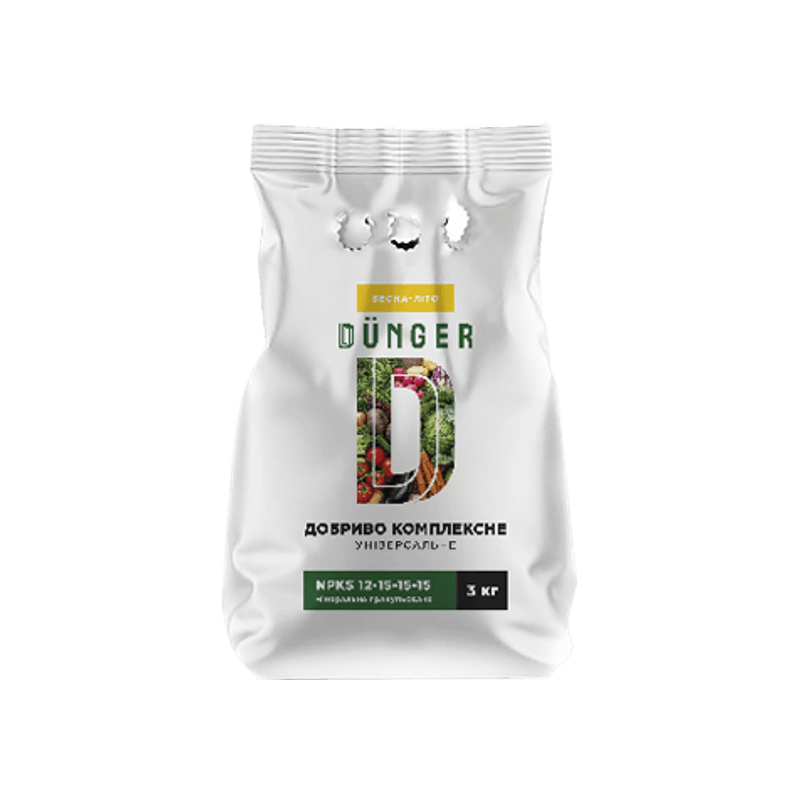
Complex fertilizer universal granular
For a healthy apple with an identified need matching this composition, consider DÜNGER universal granules. The quoted instruction is for its deciduous-tree group, not a separate apple recipe. Follow the complete root-zone method and account for earlier inputs. Do not add the age-related memo quantity to the area rate as a second feeding.
Packs contain 3, 4 or 5 kg of granules. Measure the relevant area, use one agreed calculation method and check your remaining stock of this product. Select the pack on its product page and save the growing zone in My Garden.
Leafy trees and buches
45 gr/m²
Calculate the amount without doubling it
First identify and measure the rooting area relevant to the selected application method. Do not substitute the number of trees for an area measurement. An area rate and the age-related product memo are not two independent applications to add together. If their application to your tree is unclear, resolve the method before calculating. Record one selected method, the product and the amount already used.
Rooting areas can overlap in a mixed garden. Define the actual area being treated so the same soil is not counted twice. Before ordering, check the remaining amount of the correct product, pack weights and any repetitions permitted by its own instructions. A purchasing calculation helps obtain enough product; it does not prescribe additional feeding.
For a young apple beside a lawn, record tree care and lawn feeding separately. Granules spread up to the trunk already matter to the overall assessment. For an older tree beside vegetable beds, include compost applied to those beds each year. The absence of a separate apple-labelled pack does not mean the tree has received no nutrition. Keep four columns: observation, confirmed need, planned action and actual work. After an application, record its date and amount and note what to check next. This makes it easier to stop when the need has been met rather than buy another product because an earlier treatment was forgotten.
Frequently asked questions
Not necessarily with the same composition or quantity. Decide from growth, cropping, tests and previous inputs. A tree on a well-prepared site may need much less additional nutrition than its owner expects.
No. Check water, roots, the pattern of symptoms and nearby trees first. Arrange testing for a recurring problem. Adding nitrogen on the basis of leaf colour alone is unreliable.
Count compost as an input with its own properties. Without analysis it does not supply a known dose of each nutrient. Keep it away from the trunk and avoid applying a complete mineral programme on top of earlier inputs without reviewing the need.


