


A curled apple leaf tells you that its development or water supply has been disturbed, but it does not identify the cause. Aphids may be feeding inside a young shoot tip. White powdery growth may accompany mildew. Dry leaf margins call for a check of soil moisture and roots. Unwanted exposure to a weedkiller can also distort foliage. Start by examining the tree rather than choosing a spray mixture.
Find the pattern before choosing an action
Compare several shoots that you can reach safely: the affected shoot, an apparently healthy neighbour and one on the other side of the canopy. Are only the youngest leaves curled, or are older leaves affected too? A close photograph is useful, but so is a view showing where the shoot sits on the tree. One damaged tip and the progressive wilting of an entire apple tree call for different investigations.
- When did the change appear: as leaves opened, after hot weather, following watering or after spraying nearby?
- Are leaves still green, or are they yellowing, reddening, becoming powdery or drying at the edges?
- Can you find live insects, sticky deposits, fine threads or chewed tissue?
- Is one cultivar affected, one side of a tree, or several different plants nearby?
Photograph the whole tree, the shoot tip and both leaf surfaces. Note the date and recent garden work. This small record gives someone assessing the problem more useful information than an assumption that the tree needs potassium because a leaf happens to curl upwards.
Look inside the curled leaf for insects
Gently open a reachable curled leaf without pulling off the entire shoot tip. Look for groups of small insects beneath it and around the soft new growth. Aphids suck sap and can distort developing tissue. Stickiness strengthens the suspicion, but does not identify the species. Several aphids occur on apples, so red colouring or the direction of a curl is not a reliable identification on its own.
Leaves held together with threads, caterpillars or missing pieces of tissue point towards a different investigation. Do not label every rolled leaf an aphid problem. Inspect growing tips and check whether new affected patches are appearing. Choosing an appropriate response depends on the organism actually present, the extent of the problem and the tree's stage, rather than a photograph of vaguely similar damage.
White powder and distorted young shoots
Powdery mildew can produce a white, flour-like coating and distort young leaves. Examine the upper and lower surfaces as well as the shoot itself. Compare the coating with possible residues from a recent spray: the product name and date will help someone assessing it. A single picture of a pale patch is not enough to distinguish all possible causes.
Choose care and protection after the cause has been confirmed. Extra nitrogen does not remove a fungal problem. Overfeeding, particularly with nitrogen, encourages soft growth that is susceptible to powdery mildew. Planned spring apple pruning is a separate way to consider canopy structure; it does not mean a tree should be cut back hard whenever a few leaves curl.
Check moisture where the roots are working
Dry margins and wilting after hot, drying wind are reasons to investigate water supply. Poor drainage and saturated soil can also damage roots and interfere with delivery of water to the canopy. This is why telling every owner to add more water immediately can be misleading. Check moisture at several places in the root zone, taking care not to sever roots while examining the soil.
The surface below mulch can differ from the soil farther down. Check whether irrigation actually reaches the intended area, runs away or leaves water standing after rain. For a recently planted tree, consider the condition of the original root ball as well as surrounding soil. Apples on dwarfing rootstocks can be more vulnerable to drought because their root systems are smaller.
In a Ukrainian home orchard, use recent rainfall, wind, soil condition and the individual tree's development to guide decisions. A neighbour's watering routine or last year's schedule does not establish today's need. If the ground is saturated, investigate why water remains there. If it is dry, water the root zone and check penetration rather than merely wetting the mulch.
Recall work on lawns and nearby beds
Unwanted exposure to some herbicides can cause twisted, cupped young foliage. This is a possible explanation, not a diagnosis made from leaf shape. Record the product used, the application date, where the work took place and weather conditions. Compare the apple with other plants along a possible drift path, while remembering that different plants may respond differently.
Prevent further exposure to the suspected product and seek an assessment. Do not add another pesticide, a homemade mixture or an improvised antidote. Damage can persist, so an old leaf failing to flatten quickly is not evidence that another treatment is needed. Similar injury nearby provides a clue to investigate; it does not prove which chemical was responsible.
When a nutrition check is useful
Curling does not reveal which nutrient, if any, is lacking. If yellowing accompanies it, assess the colour change separately and compare the ages of affected leaves. The guide to plant chlorosis and yellow leaves helps separate superficially similar signs. Previous applications and appropriate test results are also relevant to fertilizer selection, rather than one symptom alone.
Begin with assessing garden soil before fertilizing. Where roots are damaged, finding the reason for that damage comes first. A suitable nutrient mixture cannot remove aphids, mildew or herbicide exposure. If testing and growth assessment establish a separate nutrient requirement, choose a composition and application instruction that match it, including nutrients already supplied earlier.
Nutrition after the cause has been checked
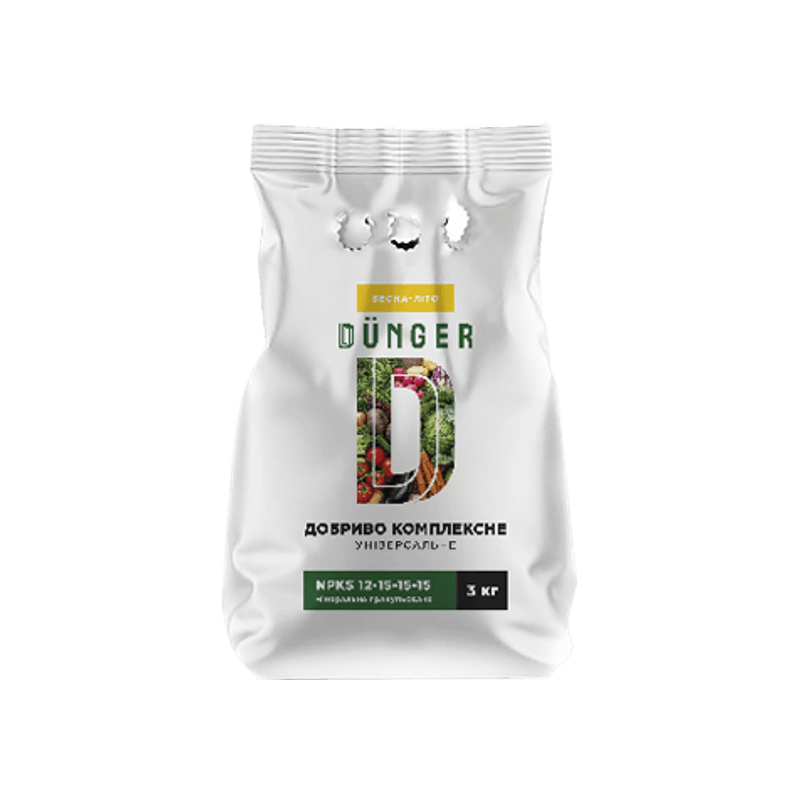
Complex fertilizer universal granular
If assessment shows that a healthy or recovered tree needs this particular nutrient combination, consider the universal granules under the general deciduous tree and shrub group. The quoted row belongs to that group; it is not an apple leaf-curl treatment or a separate apple-specific programme.
Pack sizes are 3, 4 and 5 kg. Before buying, match the full composition, application directions and site requirement. Do not add the area rate to other calculation options in the instructions. An old distorted leaf failing to flatten is not a reason to apply an extra portion.
Save your orchard zone and plan the fertilizer quantity in My Garden
Judge progress without chasing one old leaf
Compare the same shoot with your earlier photographs and inspect new leaves as they develop. Tissue that has already been damaged may not return to its original shape. More useful questions are whether new affected patches are appearing, whether normal growth continues and whether the confirmed cause has been addressed. The appearance of one old leaf is an incomplete measure of recovery.
Seek a professional assessment promptly if shoots wilt and darken rapidly, a branch begins to die or the whole tree deteriorates. Provide photographs, cultivar and age if known, irrigation details and names of products used. Do not wait for the next planned feed to rescue a severely affected tree. A product order can be planned after a nutrition need is established; it should not delay investigation of a worsening problem.
Frequently asked questions
Do not strip an otherwise healthy canopy simply because leaves have changed shape. Identify the cause first: an insect colony, an infected shoot and disrupted water supply require different decisions. Removing large numbers of leaves neither establishes the diagnosis nor replaces appropriate care, and it removes useful foliage.
No. Insects may be hidden inside tightly curled leaves, and other problems also cause distortion. Check for powdery growth, root-zone moisture, shoot condition and recent spraying. Avoid buying an individual nutrient solely on the basis of a guess.
Damage formed during development can remain visible. Examine subsequent growth and consider other causes that have not been ruled out. If new leaves are also distorted or the tree keeps declining, return to the investigation instead of automatically increasing water or fertilizer.


