

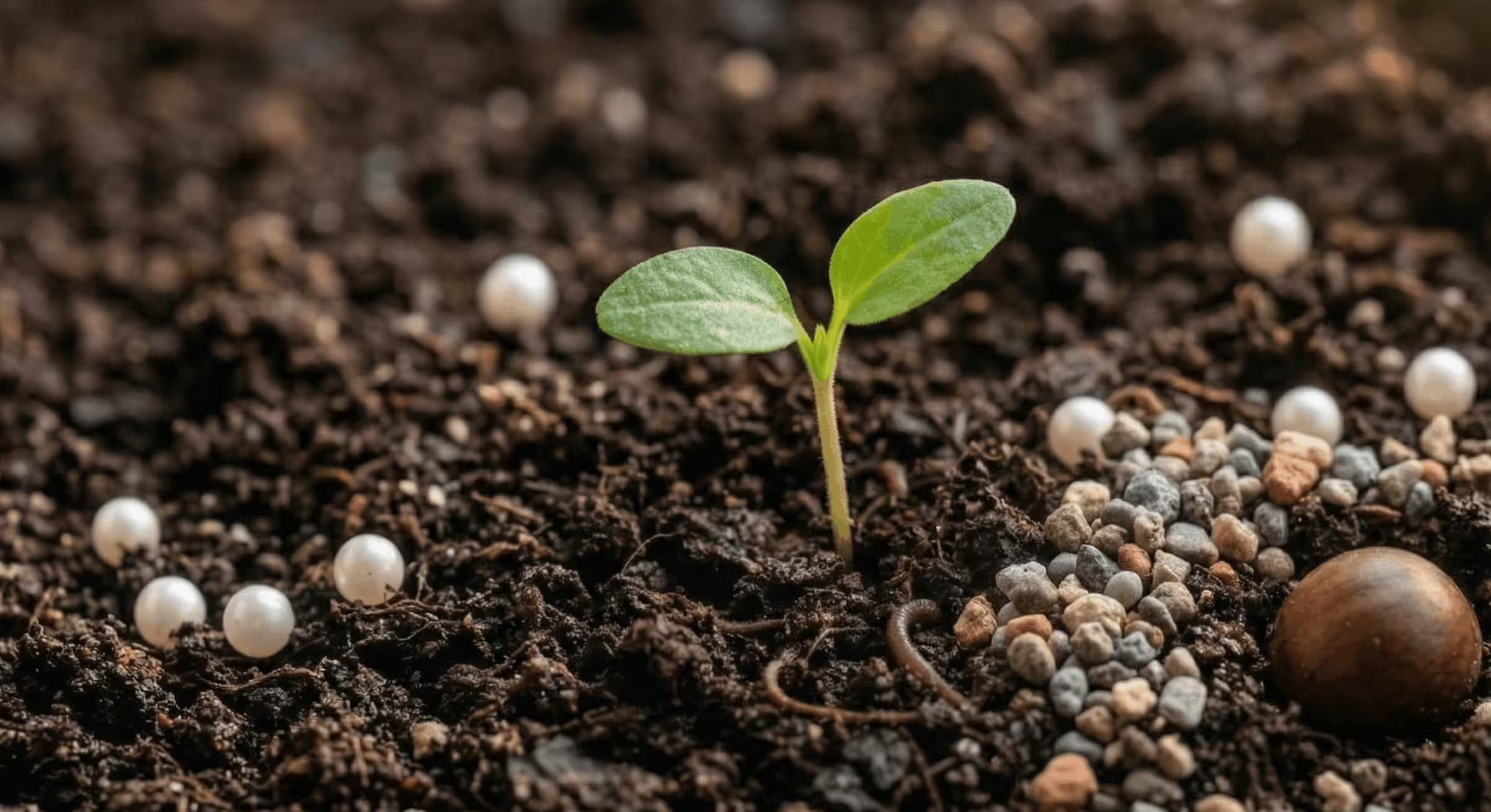

Grape Fertilizers - Buy from Manufacturer Dünger
Grapevines require 4-5 feedings per season at precise phenological stages. After bud break - balanced NPK (SKU 1) for shoot development. 10 days before flowering - boron is mandatory (SKU 18): without it flower clusters shed before pollination and yield drops 30-60%. At pea-size berry - only P+K (SKU 19) for sugar and anthocyanins. Autumn post-harvest - SKU 601 with silicon for next year's yield and frost hardiness. DÜNGER mineral and organo-mineral grape fertilizers - granular, slow release, chlorine-free. Delivery by Nova Poshta and Ukrposhta across Ukraine.
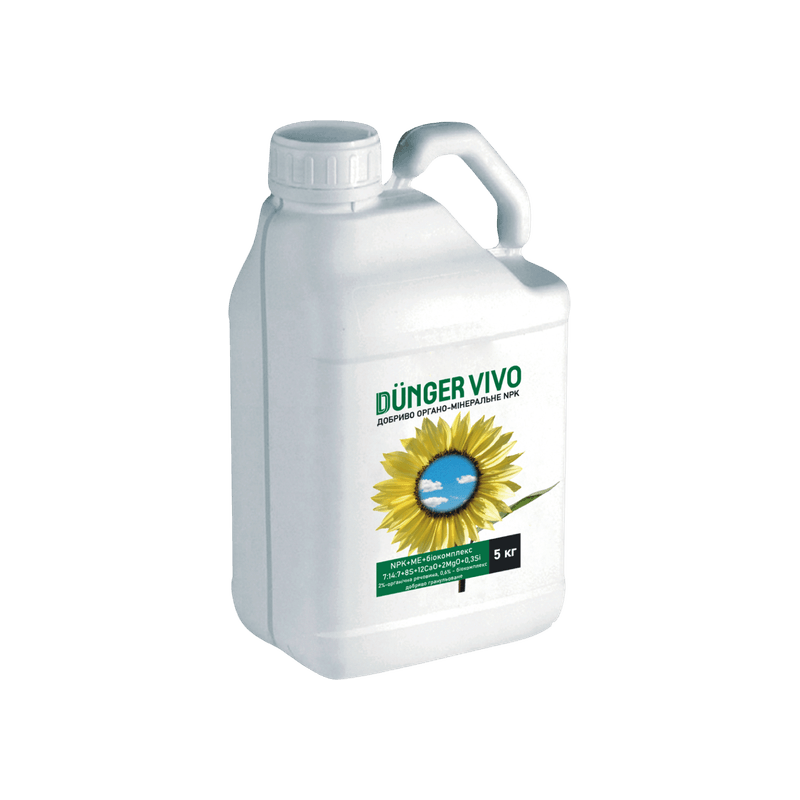
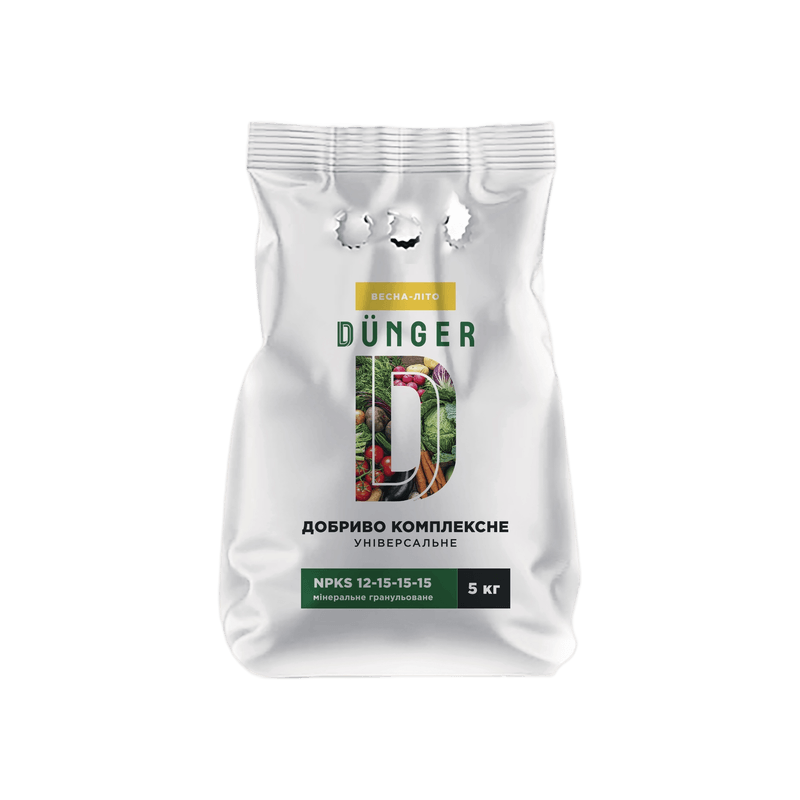
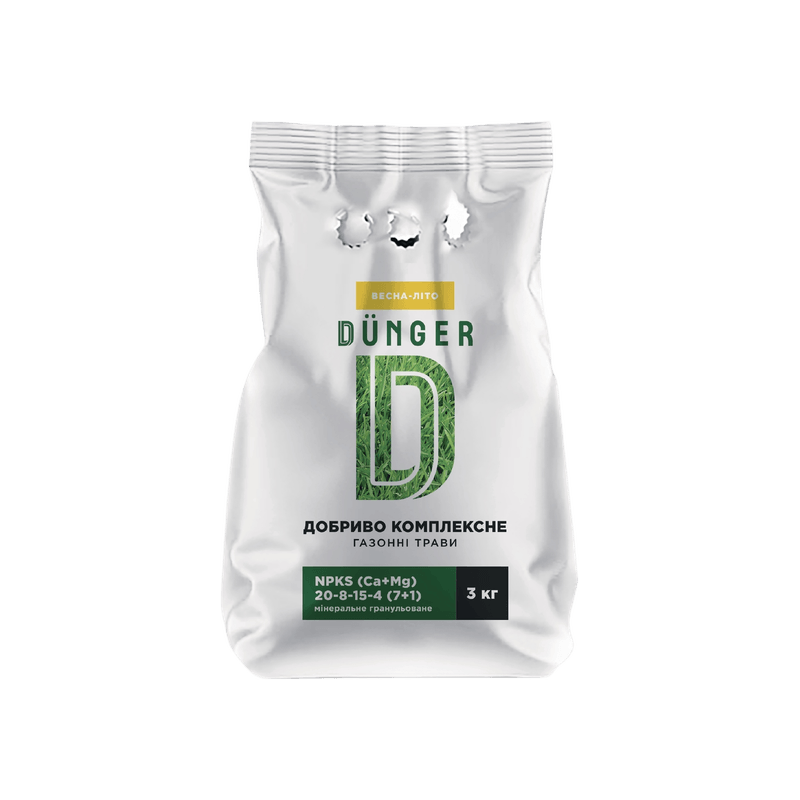
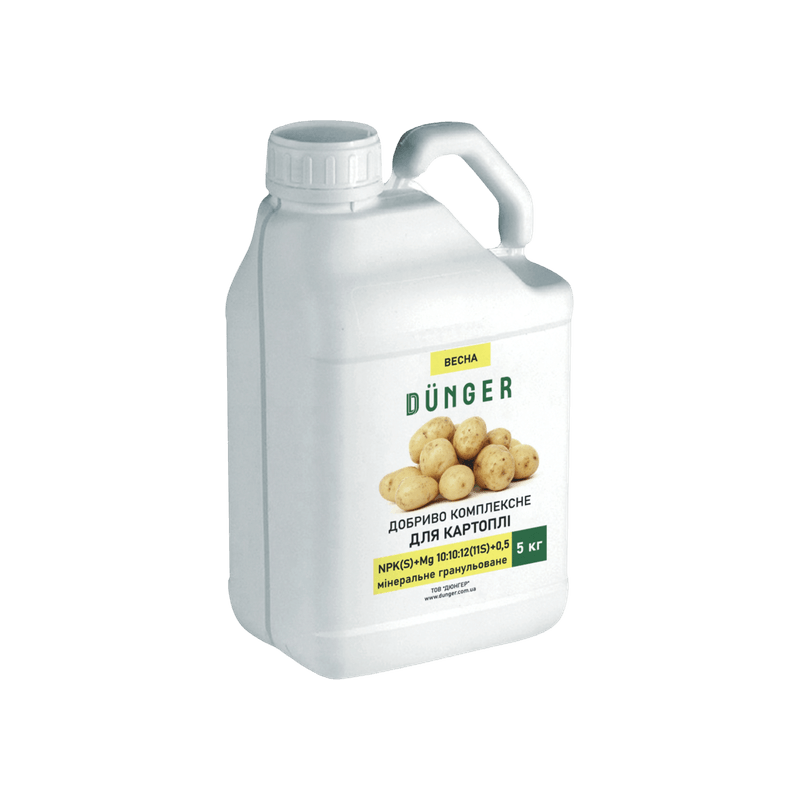
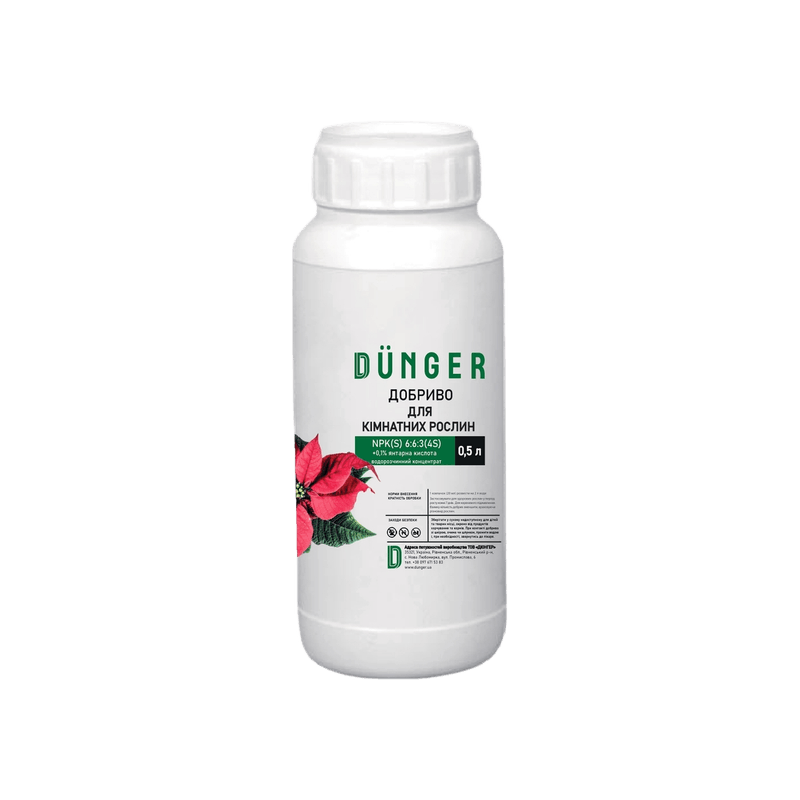
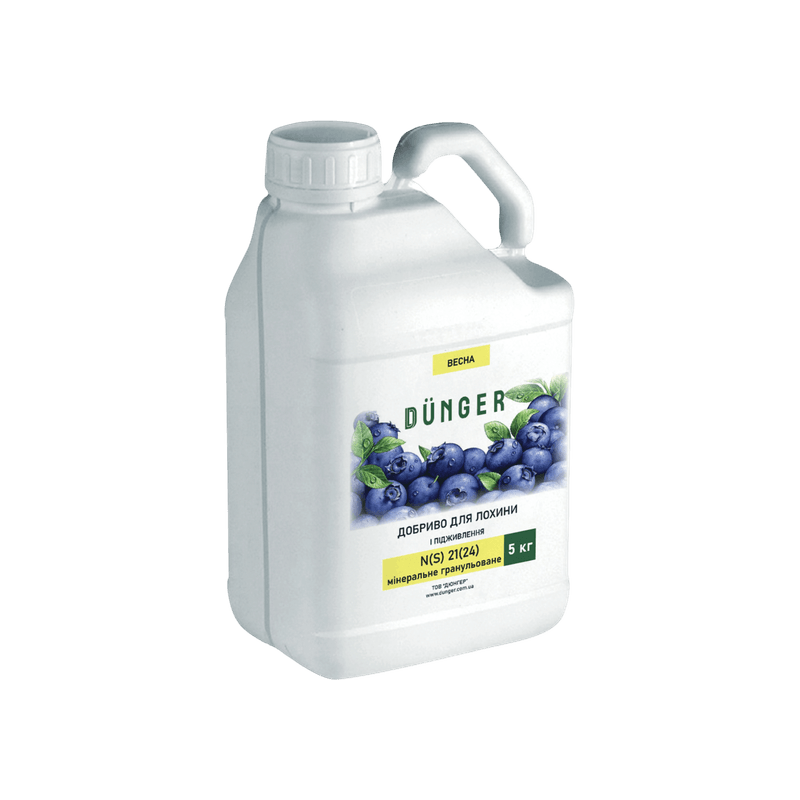
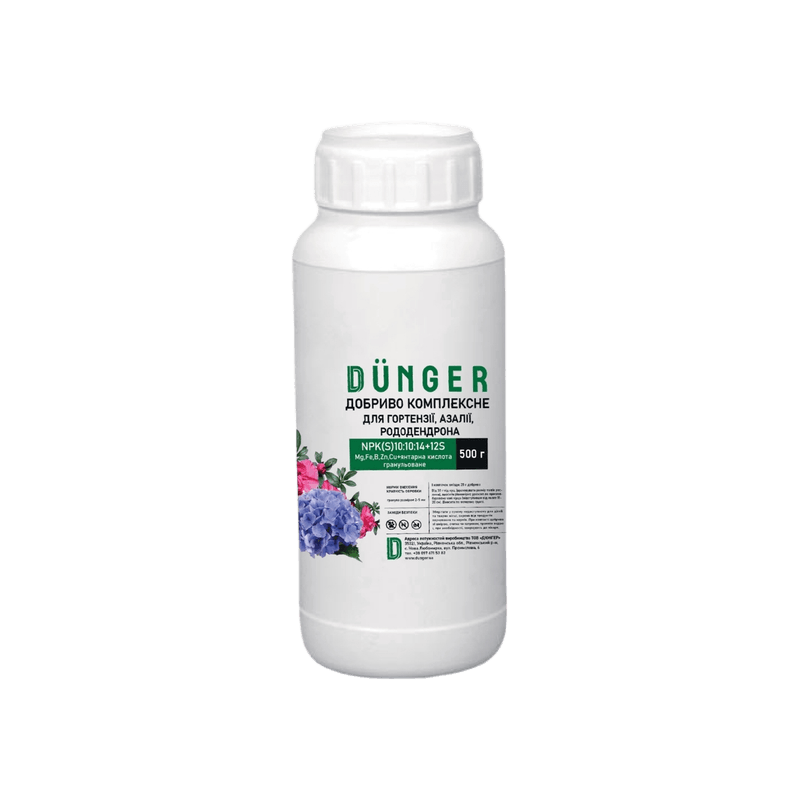
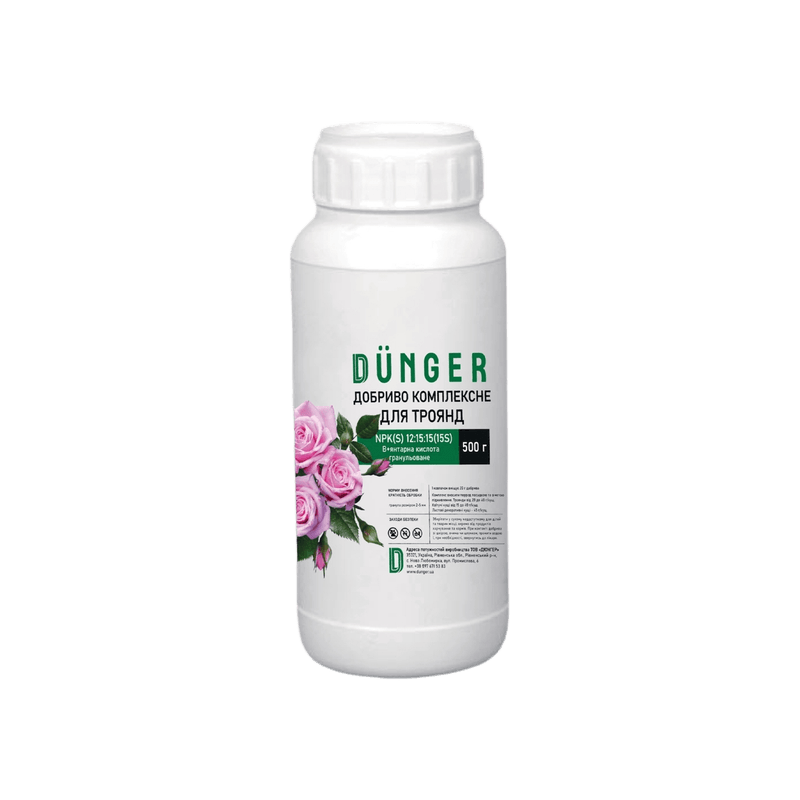
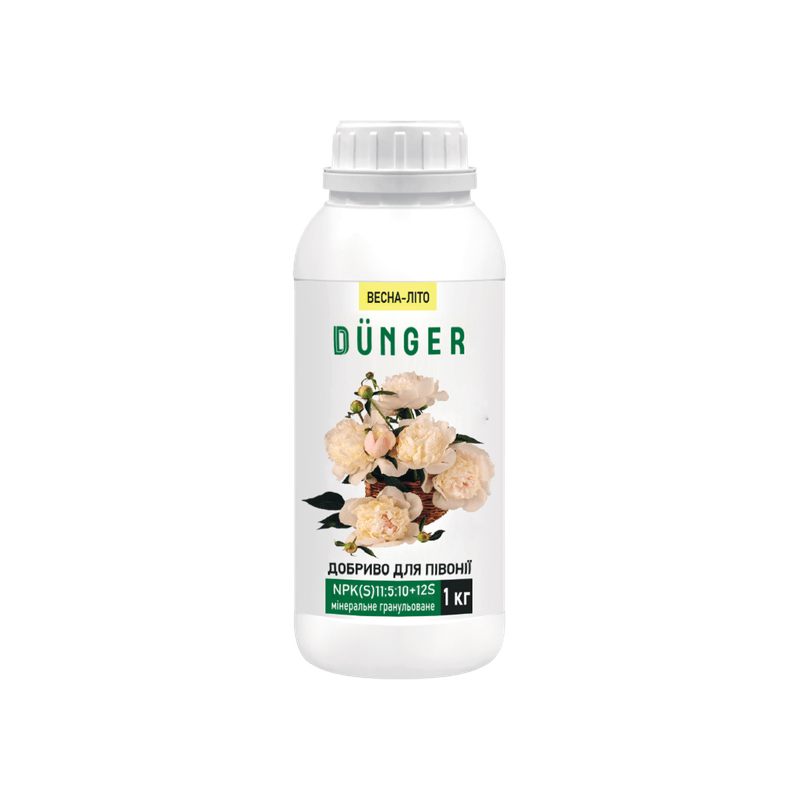
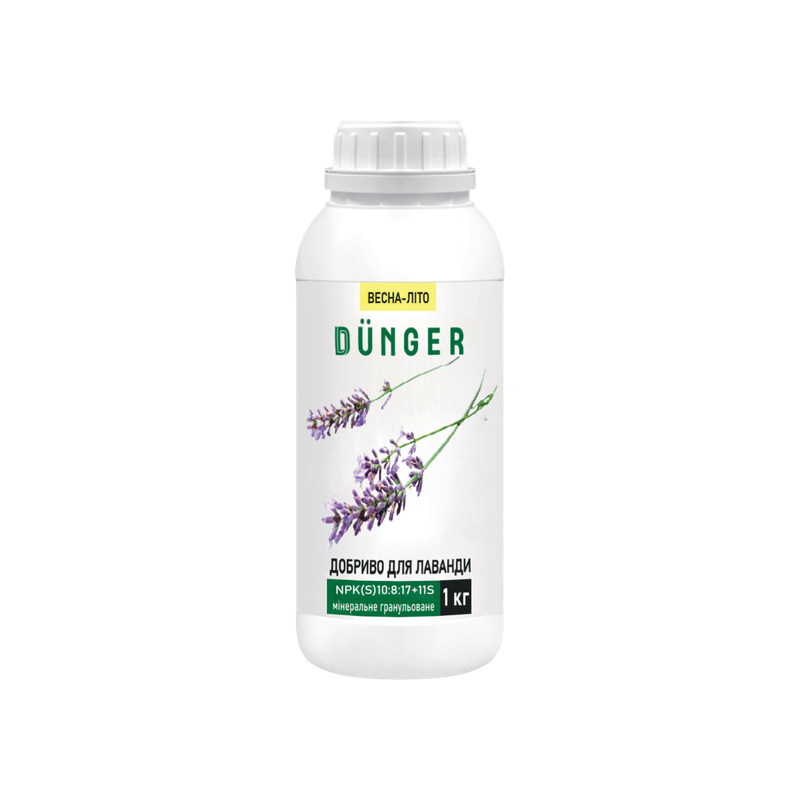
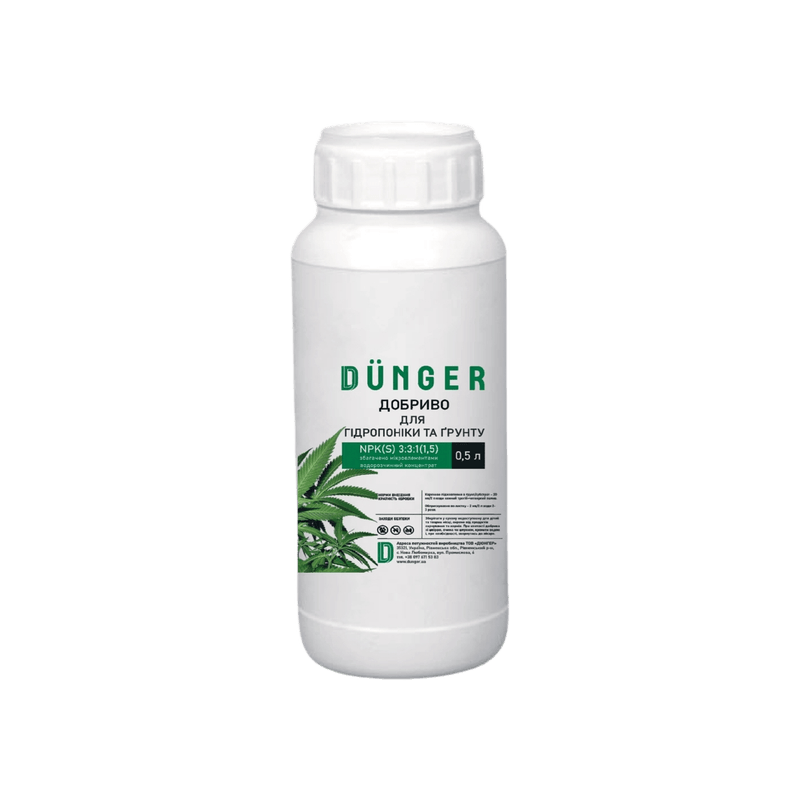
Grape Feeding Calendar: 5 Phases per Season
Grapevines differ from most crops in that every feeding must align with a specific phenological stage. A week's error and the fertilizer either won't be absorbed or will cause harm. The DÜNGER grape feeding schedule:
- After bud break (late March – April): SKU 1 (N12-P15-K15-S15) - 20-25 g/m² in the canopy projection or 20 g/10 L. N for shoot and leaf growth, P activates the root system after winter, K strengthens cell walls.
- 10 days before flowering (May – early June): SKU 18 (N12-P15-K15-S15-B0.35%) - 20-25 g/m². The key feeding: boron B0.35% is critical for berry set. See next section for full detail.
- At pea-size berry (June – July): SKU 19 (P23-K30) - 20-25 g/m² every 2 weeks. Zero nitrogen. K for sugar, anthocyanins and berry skin thickness.
- After harvest (October – November): SKU 601 (N5-P14-K21-S6-Si0.3%) - 20-25 g/m². P+K for root reserve accumulation and next year's bud formation. Si for cane lignification and frost hardiness.
- Young vines (year 1-2): SKU 1 once per season at half dose (10-12 g/m²). Excess N in young vines = unripe canes that die in winter.
Boron Before Flowering: Why Vines Drop Clusters Without It
Coulure - cluster shatter - is the leading cause of sudden yield collapse in grapes. The vine sheds most of its flowers before or immediately after pollination. The cause is boron B deficiency in the tissues at the moment of flowering.
The mechanism: each berry in a cluster requires individual pollination. B is required for pollen tube elongation in every flower. Without B the pollen is present but the tube cannot grow - fertilization fails and the flower drops. A typical cluster has 100-300 florets. With moderate B deficiency 30-60% shed.
The second phenomenon - millerandage: the same cluster contains both normal berries and tiny seedless shot berries. Commercial quality collapses regardless of how healthy the vine looks.
Prevention protocol:
- 10-14 days before flowering: SKU 18 (B0.35%) - 20-25 g/m² root application.
- 5-7 days before flowering: foliar boric acid 2 g/10 L (morning or evening, not midday).
- At the start of mass flowering: repeat foliar boric acid 1 g/10 L.
Iron Chlorosis on Calcareous Soils
On soils with pH above 7.5 - common in Kherson, Mykolaiv, Zaporizhzhia and Odesa regions where grapes are widely grown - iron Fe is present in the soil but locked in an unavailable form. Vines develop chlorosis.
How to distinguish Fe chlorosis from Mg deficiency:
- Fe chlorosis: the youngest leaves yellow (shoot tips). Veins remain green. Soil is typically alkaline.
- Mg deficiency: the oldest leaves yellow. Also green-veined, but it's old leaves not new ones.
Treatment of Fe chlorosis: chelated iron 5 g/10 L foliar (Fe-EDTA or Fe-DTPA), 2-3 applications 10 days apart. Prevention: soil acidification under the vine, pine needle mulch, use of acidifying fertilizers.
Potassium at Berry Sizing: Sugar, Color and Disease Protection
From pea-size berry to harvest, potassium K is the undisputed key element. Specific roles:
- Sugar (Brix): K activates sucrose-loading enzymes that pump sugars from leaves into berries. With adequate K: table varieties Brix 18-22, wine 20-24+. Without K: watery, sour berries even in a sweet variety.
- Anthocyanins (color): in dark varieties K activates PAL enzyme (phenylalanine ammonia-lyase) that synthesizes anthocyanins. Without K a dark variety produces dirty-pink berries instead of deep black/blue.
- Skin thickness: K builds strong cell walls. Thick skin = fewer micro-cracks = fewer entry points for Botrytis (grey mold).
- Shelf life and transport: K-fed berries hold their shape and don't crack in rain.
DÜNGER SKU 19 (P23-K30) - zero chloride, zero nitrogen. 20-25 g/m² or 20-25 g/10 L every 14 days from pea-berry to harvest.
Foliar Feeding for Grapevines: When and How
Grapevines respond to foliar feeding better than most crops: their deep root system is far from the application point, and thick bark can limit certain nutrient uptake through soil. Foliar bypasses these constraints and delivers elements directly to leaves.
Rules for effective foliar feeding on grapevines:
- Time: morning 6-9am or evening after 7pm. At midday stomata close due to heat - absorption is minimal.
- Pressure: fine mist spray. Cover the underside of leaves - that's where most stomata are.
- Do not spray above 28°C or in strong wind.
- Frequency: maximum 1-2 times per month.
- Water: ideally pH 6.0-7.0, chlorine-free (let stand or filter).
- Do not mix boric acid and calcium nitrate in the same tank (precipitate).
Nutrient Deficiency Signs in Grapes: Diagnosis and Treatment
- Pale young leaves, slow shoot growth - N deficiency. SKU 1 root or foliar.
- Flower drop, empty clusters - B deficiency. SKU 18 10 days before flowering + boric acid 2 g/10 L foliar.
- Yellow young leaves, green veins (shoot tips) - Fe chlorosis (alkaline soil). Chelated Fe 5 g/10 L foliar.
- Yellow old leaves between green veins - Mg deficiency. Magnesium sulfate 20 g/10 L foliar 2-3 times.
- Small, watery, sour berries - K deficiency. SKU 19 every 14 days, stop N fertilizers.
- Dark varieties without color (pink instead of black) - K deficiency (anthocyanins). SKU 19 + stop N.
- Brown spots between veins (leaf necrosis) - K deficiency. SKU 19 foliar 10 g/10 L.
Deliver DÜNGER grape fertilizers across Ukraine: Kyiv · Kharkiv · Dnipro · Odesa · Zaporizhzhia · Lviv · Kryvyi Rih · Vinnytsia · Poltava · Mykolaiv · Chernihiv · Cherkasy · Zhytomyr · Sumy · Rivne · Ternopil · Khmelnytskyi · Ivano-Frankivsk · Lutsk · Uzhhorod · Chernivtsi and other cities of Ukraine.
Clusters shattering, berries colorless or failing to build sugar? Call us and a Dünger agronomist will build a feeding plan. Free consultation.
📞 +38 (097) 671-53-83 - free consultation. Mon-Sun 8:00-20:00. Delivery from 0.5 kg.
Dünger Fertilizer Delivery Regions Across Ukraine
Buy Dünger mineral and organo-mineral fertilizers with delivery to any region of Ukraine. Select your oblast - and get fertilizers direct from the manufacturer for your garden, farm or agribusiness. Delivery via Nova Poshta and Ukrposhta to all cities, villages and district centres. Produced in Rivne Oblast, Dunger LLC.
- Order Fertilizers — Vinnytsia
- Order Fertilizers — Volyn
- Order Fertilizers — Dnipropetrovsk
- Order Fertilizers — Zhytomyr
- Order Fertilizers — Zakarpattia
- Order Fertilizers — Zaporizhzhia
- Order Fertilizers — Ivano-Frankivsk
- Order Fertilizers — Kyiv Oblast
- Order fertilizers — Kyiv City
- Order fertilizers — Kirovohrad
- Order fertilizers — Lviv
- Order fertilizers — Mykolaiv
- Order fertilizers — Odesa
- Order fertilizers — Poltava
- Order fertilizers — Rivne
- Order fertilizers — Sumy
- Order fertilizers — Ternopil
- Order fertilizers — Kharkiv
- Order fertilizers — Kherson
- Order fertilizers — Khmelnytskyi
- Order fertilizers — Cherkasy
- Order fertilizers — Chernivtsi
- Order fertilizers — Chernihiv
Fertilizers from Manufacturer in Rivne Region
Order & Inquiry
Get in touch

Order mineral and organo-mineral fertilizers directly from the manufacturer. We will help you choose the right product for your garden, farm or landscape.
Hello!
Let's get acquainted and help you
Press Enter to continue
By clicking the button, you agree to privacy policy