


Boxwood Fertilizers - Buy from Manufacturer Dünger
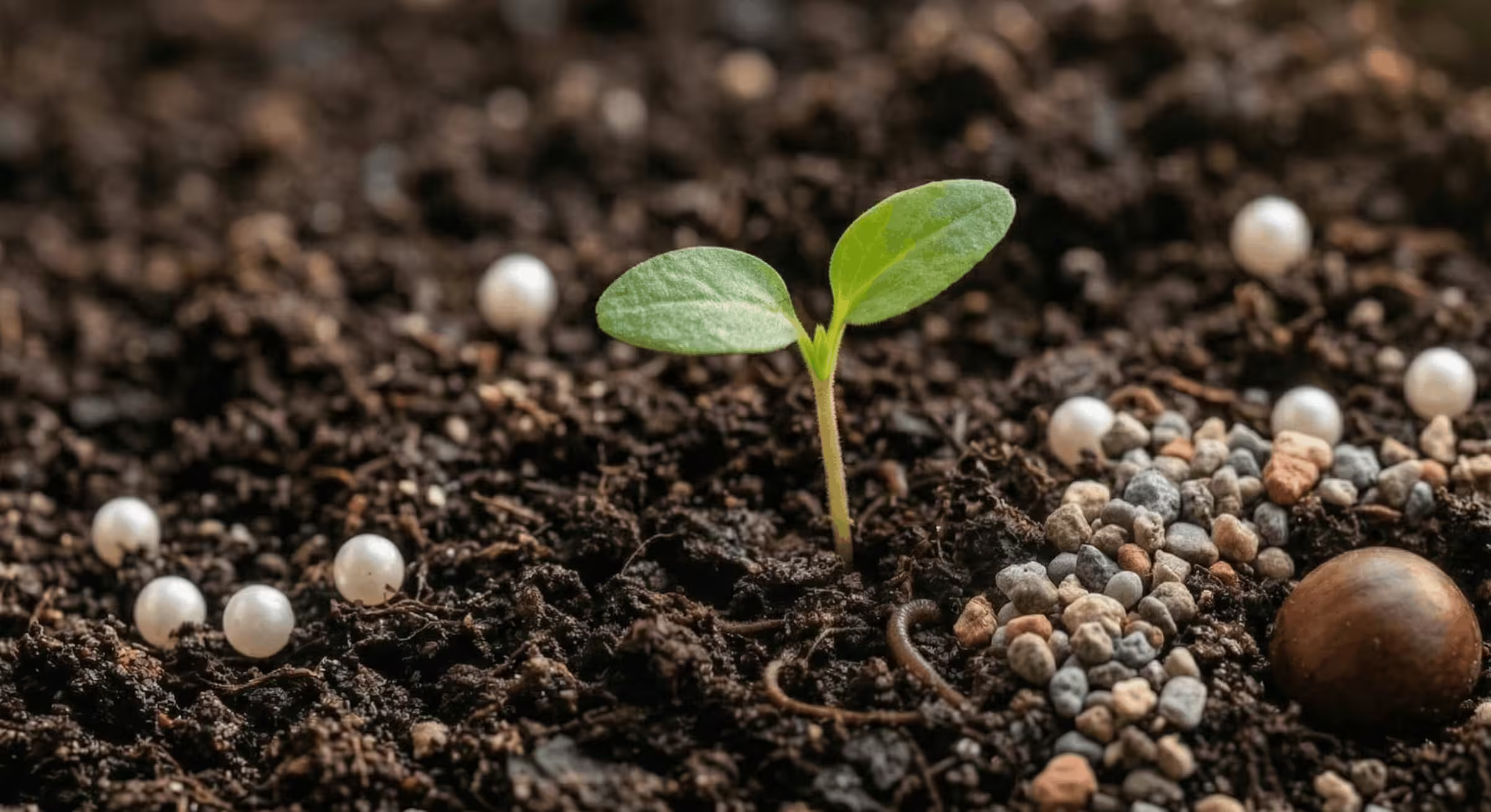
Boxwood grows slowly, and that is its strength: dense, hard leaves with a dark gloss are naturally resistant to disease and frost. Excess nitrogen destroys this advantage - it produces soft, tender growth that is highly susceptible to boxwood blight. The right boxwood fertilization: moderate N in spring and a K-focused approach in summer and autumn. DÜNGER granular boxwood fertilizers: chloride-free, no excess nitrogen - dark gloss and tight form year after year. Delivery by Nova Poshta and Ukrposhta across Ukraine.
Why Boxwood Needs Little Nitrogen - and What Happens When It Gets Too Much
Boxwood is one of the slowest-growing ornamental shrubs: 5-15 cm per year under normal conditions. This slowness is not a drawback but a competitive advantage: slowly formed wood and leaves are dense, hard and naturally waxy. Hard leaves are mechanically resistant to penetration by spores of boxwood blight (Calonectria pseudonaviculata).
Give boxwood excess nitrogen and it grows faster - but new shoots emerge soft, tender and watery. These are the tissues most vulnerable to disease:
- Soft leaves are easily penetrated by blight spores.
- Tender shoots freeze at the first frost.
- Loose new growth distorts the shape of clipped topiary.
The conclusion: for boxwood, less nitrogen = healthier bush. The correct dose is about half the standard rate for most plants. Optimal soil pH: 6.0-7.0.
Spring Feeding: Moderate Dose (March-April)
Apply the first feeding at the first signs of growth - bud swell or the first 1-2 cm of new shoots. Usually late March or April.
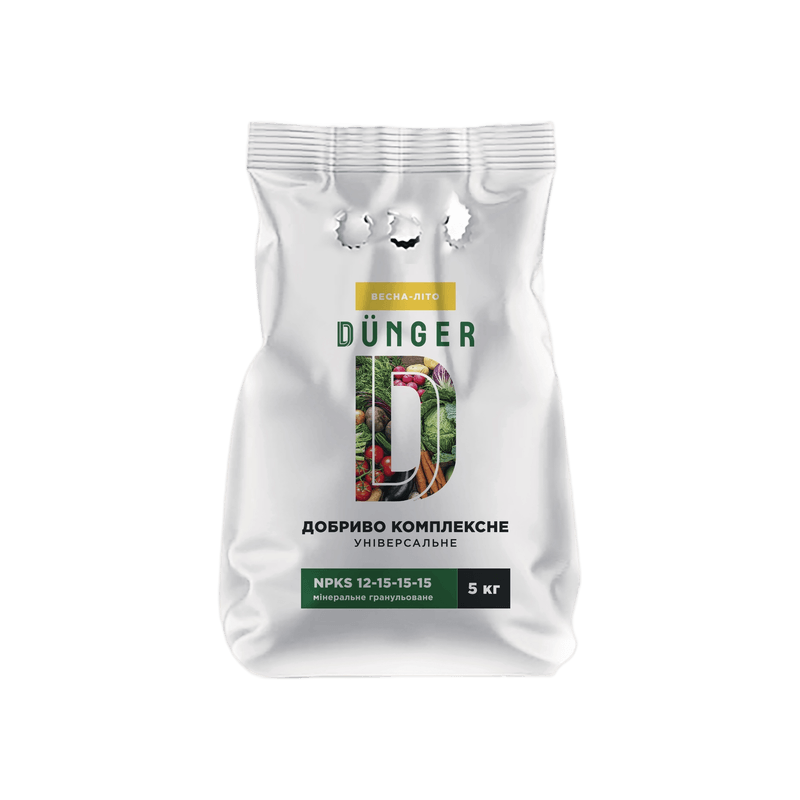
DÜNGER SKU 1 (N12-P15-K15-S15) - 10-15 g/m² or 15-20 g per medium-sized bush (standard for most plants is 25-30 g/m² - half that for boxwood). N12 at low dose produces neat, compact growth without loosening the form. P15 stimulates the root system after winter. K15 already begins to harden cell walls at this stage. S15% gently acidifies the soil (maintains pH 6.0-6.5) and improves Fe and Mg uptake.
Important: do not wet leaves when applying. Moisture on boxwood leaves is a favorable environment for blight spores. Spread granules under the bush and water at the base only.
Summer Feeding: Potassium Without Nitrogen (June-July)
Once spring growth on boxwood is complete and hardened - usually June - the second feeding is due. At this stage nitrogen is no longer needed: the plant should not be building new mass in summer but consolidating what has already grown.
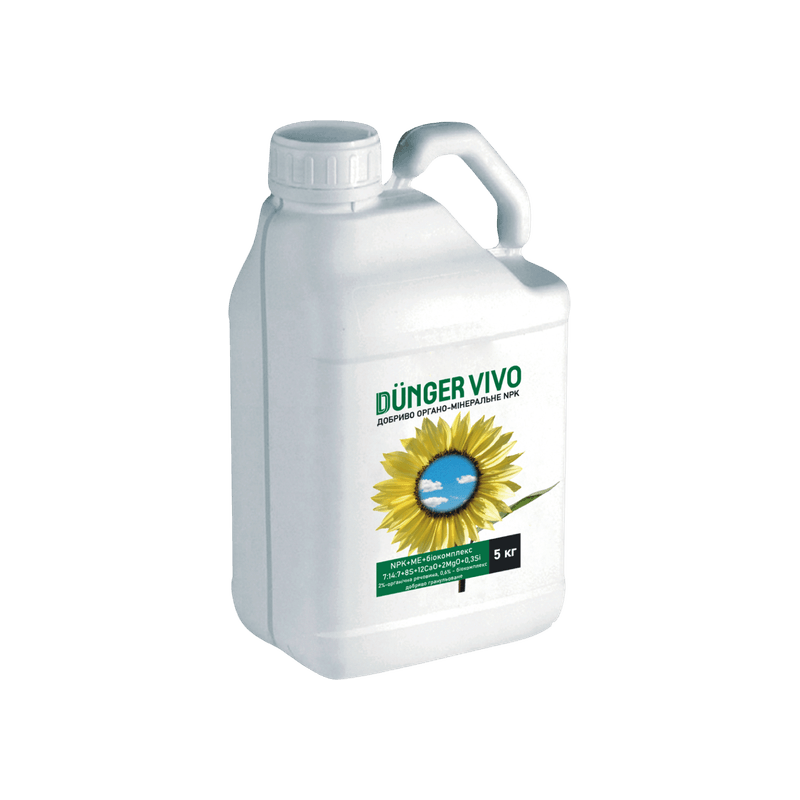
DÜNGER SKU 19 (P23-K30) - 10-15 g/m² or 15 g per bush. Zero nitrogen, zero chloride. Important: boxwood is chloride-sensitive. Chloride forms of potassium (KCl) cause leaf-tip scorch and marginal necrosis. SKU 19 contains K in sulfate form (K2O) - safe for chloride-sensitive plants.
K30 in summer feeding:
- Thickens the leaf epidermis (waxy layer) - a natural barrier against disease spores and desiccation.
- Deepens the dark, glossy-green leaf color.
- Raises cellular osmotic pressure - better water balance in heat.
P23 supports root system development. Deeper roots = better summer drought tolerance.
Autumn Feeding: Bark Hardening and Frost Resistance (September)
Third feeding in September - no later. After September, fertilizer application is undesirable: nitrogen may trigger soft late growth before frost.
DÜNGER SKU 601 (N5-P14-K21-S6-Si0.3%) - 10-15 g/m² or 15-20 g per bush. N5: very low nitrogen, does not trigger new growth at season's end. K21: primary frost hardiness element - raises solute concentration in cells, they tolerate lower temperatures without damage. P14: strengthens the root system before winter.
Si0.3% (silicon) - especially important for boxwood. Silicon deposits in cell walls of the leaf epidermis and bark, forming a mineral framework. Effects: resistance to mechanical snow load on the crown, less winter leaf desiccation, increased resistance to fungal spore penetration.
Boxwood Turning Yellow or Dying: How to Identify the Cause
Yellow or brown leaves on boxwood can have four fundamentally different causes. Distinguishing them is critical because the treatments are completely different:
- Iron (Fe) deficiency: young leaves yellow between green veins (interveinal chlorosis). Older leaves remain green. More common at pH above 7.0 or in waterlogged soil. Treatment: foliar chelated iron 3-5 g/10 L twice, 7 days apart + check pH and drainage.
- Magnesium (Mg) deficiency: older leaves yellow between green veins (veins stay green). Treatment: foliar magnesium sulfate 20 g/10 L.
- Drought stress: uniform yellowing or bronzing starting from tips or leaf margins. Older leaves drop first. Treatment: normalize watering, mulch under the bush (5-7 cm).
- Boxwood blight (Calonectria): brown spots on leaves with a dark border, then rapid, massive defoliation. Black streaks visible on stems. Leaves fall en masse, leaving bare branches. This is not a nutrient deficiency - it is a fungal disease. Treatment: fungicides based on thiophanate-methyl or prochloraz. Affected shoots are removed and burned. K and Si fertilizers improve resistance but do not cure an active infection.
What Is Forbidden for Boxwood and Application Rules
Forbidden:
- Potassium chloride (KCl) - chloride causes leaf margin scorch and general stress. Use only chloride-free forms: our SKU 19 and SKU 601 are safe.
- Fresh manure and poultry droppings - ammonia root burn, high humidity promotes disease.
- Wetting leaves during fertilization - increases fungal spore activation risk.
- Nitrogen fertilizers after August - soft late growth will freeze at first frost.
Safe application rules: spread granules evenly under the crown projection, water at the base only, avoiding leaf wetting. Best timing: early morning or evening on an overcast day.
Deliver DÜNGER boxwood fertilizers across Ukraine: Kyiv, Kharkiv, Dnipro, Odesa, Zaporizhzhia, Lviv, Kryvyi Rih, Vinnytsia, Poltava, Mykolaiv, Chernihiv, Cherkasy, Zhytomyr, Sumy, Rivne, Ternopil, Khmelnytskyi, Ivano-Frankivsk, Lutsk, Uzhhorod, Chernivtsi and other cities of Ukraine.
Boxwood yellowing, dying back or losing shape? Call us and a Dünger agronomist will identify the cause and recommend a care plan. Free consultation.
📞 +38 (097) 671-53-83 - free consultation. Mon-Sun 8:00-20:00. Delivery from 0.5 kg.
Dünger Fertilizer Delivery Regions Across Ukraine
Buy Dünger mineral and organo-mineral fertilizers with delivery to any region of Ukraine. Select your oblast - and get fertilizers direct from the manufacturer for your garden, farm or agribusiness. Delivery via Nova Poshta and Ukrposhta to all cities, villages and district centres. Produced in Rivne Oblast, Dunger LLC.
- Order Fertilizers — Vinnytsia
- Order Fertilizers — Volyn
- Order Fertilizers — Dnipropetrovsk
- Order Fertilizers — Zhytomyr
- Order Fertilizers — Zakarpattia
- Order Fertilizers — Zaporizhzhia
- Order Fertilizers — Ivano-Frankivsk
- Order Fertilizers — Kyiv Oblast
- Order fertilizers — Kyiv City
- Order fertilizers — Kirovohrad
- Order fertilizers — Lviv
- Order fertilizers — Mykolaiv
- Order fertilizers — Odesa
- Order fertilizers — Poltava
- Order fertilizers — Rivne
- Order fertilizers — Sumy
- Order fertilizers — Ternopil
- Order fertilizers — Kharkiv
- Order fertilizers — Kherson
- Order fertilizers — Khmelnytskyi
- Order fertilizers — Cherkasy
- Order fertilizers — Chernivtsi
- Order fertilizers — Chernihiv
Fertilizers from Manufacturer in Rivne Region
Order & Inquiry
Get in touch

Order mineral and organo-mineral fertilizers directly from the manufacturer. We will help you choose the right product for your garden, farm or landscape.
Hello!
Let's get acquainted and help you
Press Enter to continue
By clicking the button, you agree to privacy policy