


Lavender Fertilizers - Buy from Manufacturer Dünger
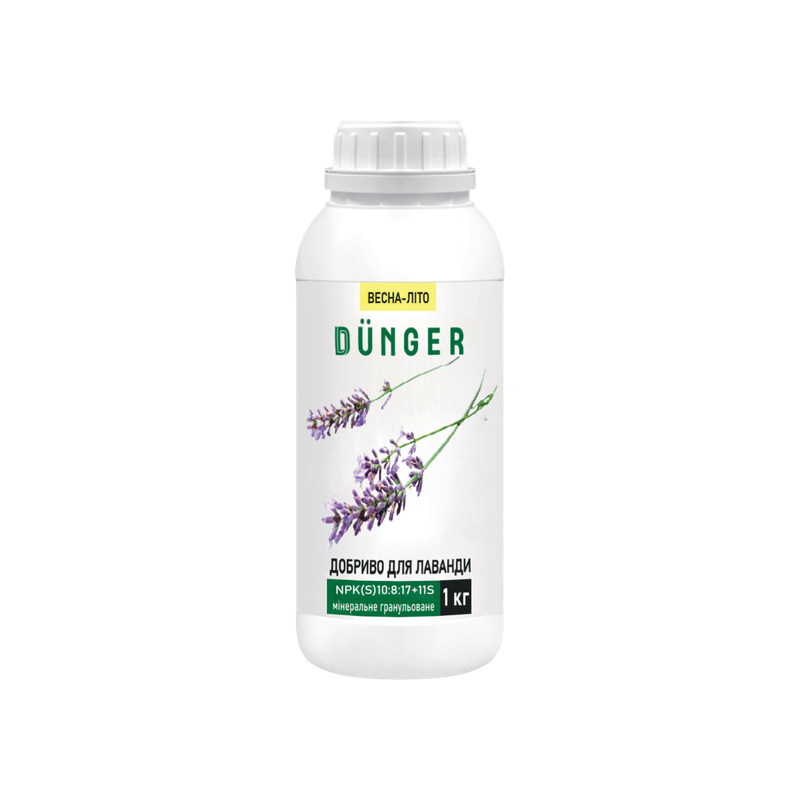
Lavender is a Mediterranean plant that naturally grows on poor, stony soils. Excess fertilizer - especially nitrogen - produces lush foliage and weak fragrance instead of abundant bloom. The lavender rule: two feedings per season - a half-dose in spring and P+K after bloom for winter hardiness. DÜNGER granular lavender fertilizers: minimal and correct. Delivery by Nova Poshta and Ukrposhta across Ukraine.
Why Lavender Needs Less Fertilizer Than Most Plants
Lavender originates from the dry, stony slopes of the Mediterranean. Where most garden plants struggle, lavender thrives. Its roots have spent millennia learning to extract nutrients from soils where almost none exist.
Move lavender to rich garden soil or over-fertilize it and it switches from 'blooming mode' to 'survival mode': the plant builds leaves and stems instead of flowers and fragrance. Excess nitrogen N is the main enemy of lavender scent:
- Lush, dark-green foliage at the expense of bloom.
- Soft, thin stems that can't hold their own weight and sprawl open.
- Weak or absent fragrance: the plant spends resources on growth rather than synthesizing essential oils (terpenes).
- Increased disease susceptibility: succulent tissues attract aphids, powdery mildew and root rots.
The lavender rule: maximum 2 feedings per season, minimal doses, no pure nitrogen fertilizer.
Soil pH and Drainage: More Important for Lavender Than Fertilizer
Before applying any fertilizer to lavender, confirm the basic conditions match its requirements. Even the ideal fertilizer will not save lavender with the wrong pH or without drainage.
Optimal pH: 6.5-7.5 (slightly alkaline). At pH below 6.0: leaves yellow, root system is suppressed and root rot risk rises sharply. How to correct: 200-300 g/m² of ground limestone or dolomite (dolomite is better - contains both Ca and Mg, which lavender loves).
Drainage: critical. Waterlogging even for 2-3 weeks kills lavender more reliably than any nutrient deficiency. On heavy clay soils: add 20-30% coarse sand or fine gravel at planting, or plant on a raised bed (15-20 cm height). Ideal substrate: loam + sand + gravel, pH 6.5-7.5.
Testing pH is simple - use test strips or a pH meter. At pH 7.0-7.5 lavender produces the maximum number of flowering stems and the most intense fragrance.
Two Feedings Per Season: The Lavender Schedule
Lavender does not need frequent feeding. Two correctly chosen applications per year are all it needs for healthy growth and abundant bloom.
Feeding 1 - spring (March-April), new shoots 2-5 cm:
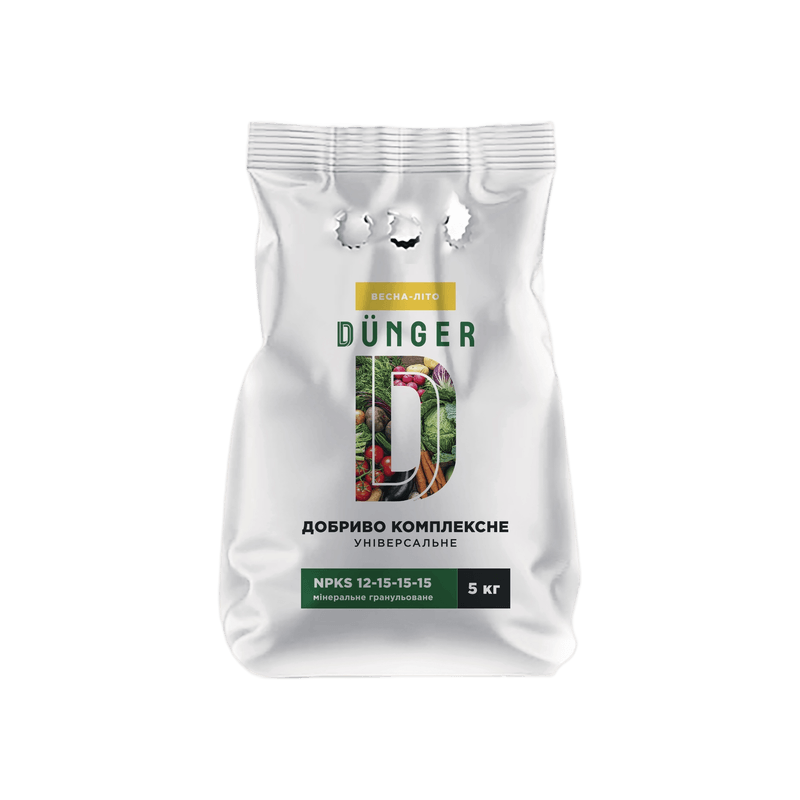
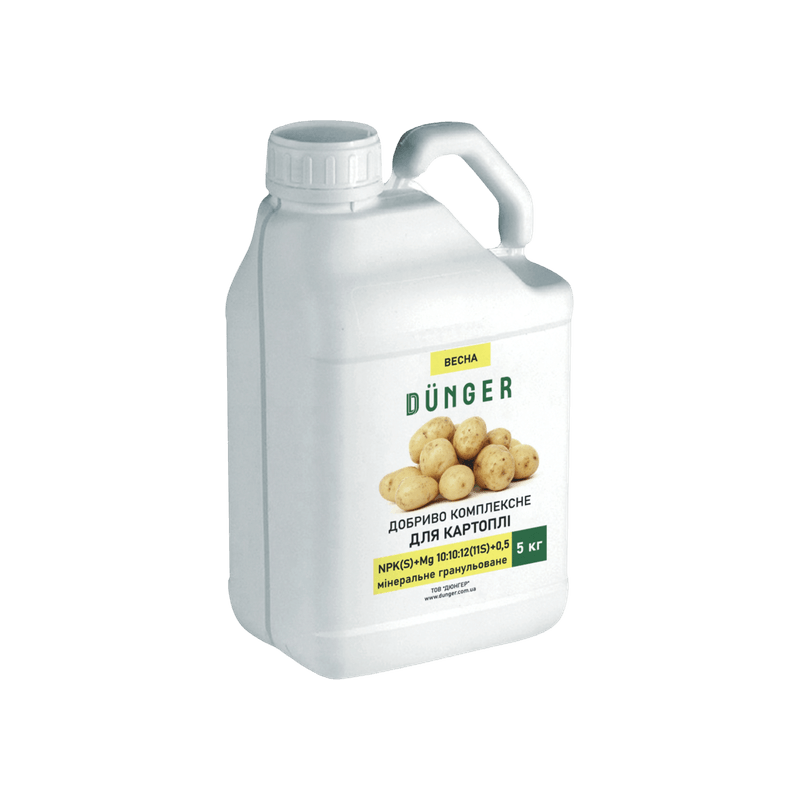
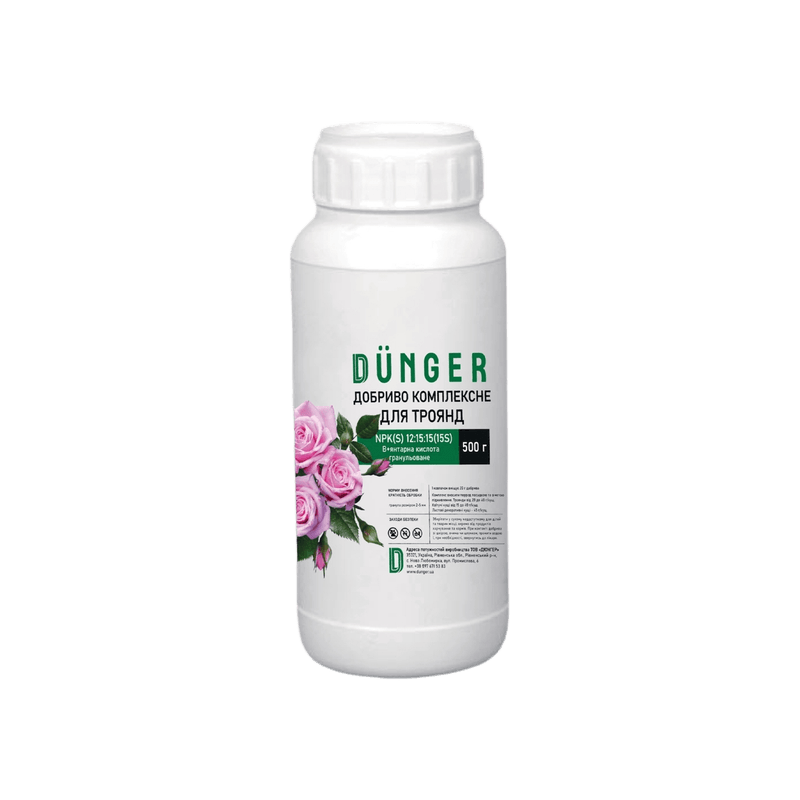
DÜNGER SKU 1 (N12-P15-K15-S15) - HALF the standard dose: 10-15 g/m² (standard for most plants is 25-30 g/m²). Balanced NPK with moderate nitrogen triggers new growth and stimulates flower stem initiation. P15 supports root system recovery after winter. S15% aids nutrient uptake and gently lowers pH. Spread granules evenly 10-15 cm from the crown and lightly work into the soil surface.
Feeding 2 - after bloom (August-September):
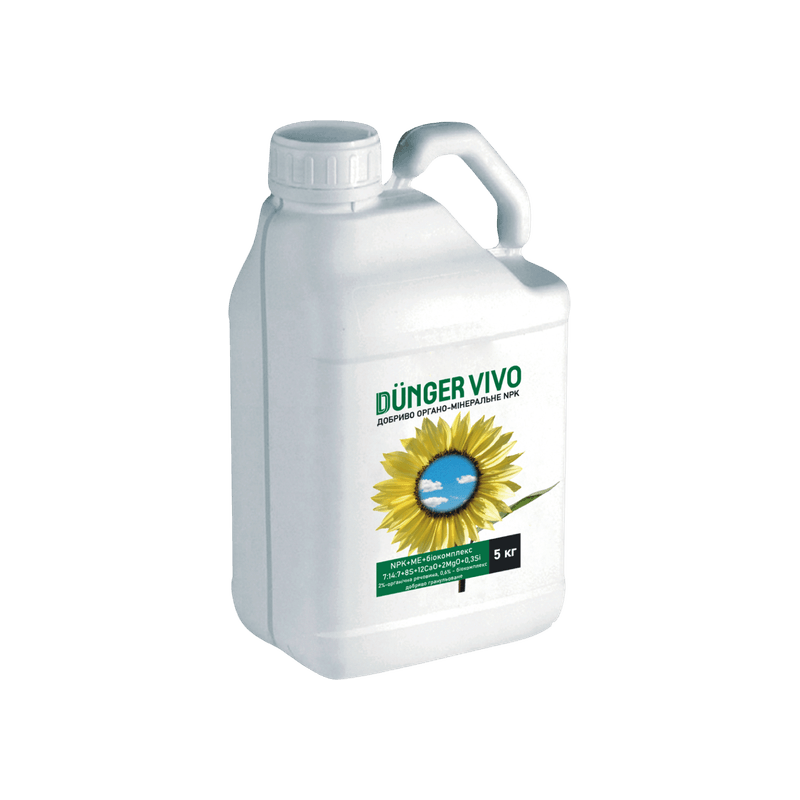
DÜNGER SKU 19 (P23-K30) or DÜNGER SKU 601 (N5-P14-K21-S6-Si0.3%) - 10-15 g/m². SKU 19: pure P and K, zero nitrogen. SKU 601: very low N5 does not stimulate late growth; P14+K21 strengthen woody stems and roots before winter. Si0.3% (silicon) strengthens cell walls - lavender tolerates winter desiccation and frost wind better.
What NOT to do: never apply nitrogen fertilizer after August. Late nitrogen stimulates soft new growth that fails to harden before frost and dies at the first freeze. This is a common cause of lavender winter loss in Ukraine.
Why Excess Nitrogen Destroys Lavender Fragrance
Lavender essential oils - linalool, linalyl acetate, borneol and other terpenes - are produced as secondary metabolites. This means: they are made when the plant is NOT in active growth mode.
When plenty of nitrogen is available:
- The plant switches to 'growth mode' - protein and chlorophyll synthesis.
- Resources are redirected away from secondary metabolites (essential oils) toward primary ones (cell growth).
- Terpene concentration in flowers drops 30-50% compared to a plant on poor soil.
- Commercial lavender essential oil producers deliberately grow lavender on poor, unfertilized soils - specifically to maximize fragrance.
The conclusion for the gardener: if lavender is green but barely fragrant - check whether you are overfeeding it with nitrogen.
Potassium and Fragrance Quality: How K Improves Lavender
Unlike nitrogen, potassium K is a beneficial element for lavender. It doesn't switch the plant into 'growth mode' but performs other functions:
- Stem lignification: K activates the enzymes that synthesize lignin - the substance that makes stems hard. Hard stems don't sprawl under their own weight or snap under snow load.
- Frost hardiness: K regulates cell osmotic pressure - cells with adequate K tolerate freeze-desiccation better. Lavender with K deficiency dies at -10°C, while plants with normal K survive -20°C and below.
- Essential oil synthesis: K participates in phosphorylation (enzyme activation), including enzymes of the terpene biosynthesis pathway. Adequate K = more intense fragrance.
DÜNGER SKU 19 (P23-K30) applied after bloom gives lavender exactly what it needs before winter: zero excess nitrogen, maximum P and K.
Signs of Problems and What Is Forbidden for Lavender
What struggling lavender looks like:
- Yellow leaves at normal pH - iron (Fe) or magnesium (Mg) deficiency. Foliar spray with chelated iron or magnesium sulfate (10 g/10 L). Also check watering - waterlogging produces the same symptoms.
- Pale leaves, weak spring growth - phosphorus (P) deficiency (especially in acidic soils where P is unavailable). Correct pH to 6.5+ and apply SKU 1 at half dose.
- Open, floppy bush, soft stems - excess nitrogen or excessively rich soil. Stop feeding for the season. Hard pruning by 1/3 restores compact form.
- Few or no flowers, only foliage - excess N or insufficient sunlight. Lavender needs at least 6-8 hours of direct sun per day.
- Winter loss - more often from moisture than from cold. Check drainage. Gravel mulch around the crown protects against waterlogging better than any fertilizer.
Forbidden for lavender:
- Fresh manure or poultry droppings (too high N concentration).
- Acidic peat substrate without liming.
- Nitrogen fertilizers after August.
- Overhead sprinkler watering - promotes powdery mildew on stems.
Deliver DÜNGER lavender fertilizers across Ukraine: Kyiv, Kharkiv, Dnipro, Odesa, Zaporizhzhia, Lviv, Kryvyi Rih, Vinnytsia, Poltava, Mykolaiv, Chernihiv, Cherkasy, Zhytomyr, Sumy, Rivne, Ternopil, Khmelnytskyi, Ivano-Frankivsk, Lutsk, Uzhhorod, Chernivtsi and other cities of Ukraine.
Lavender not blooming, weakly fragrant or struggling through winter? Call us and a Dünger agronomist will identify the cause and select the minimum necessary fertilization. Free consultation.
📞 +38 (097) 671-53-83 - free consultation. Mon-Sun 8:00-20:00. Delivery from 0.5 kg.
Dünger Fertilizer Delivery Regions Across Ukraine
Buy Dünger mineral and organo-mineral fertilizers with delivery to any region of Ukraine. Select your oblast - and get fertilizers direct from the manufacturer for your garden, farm or agribusiness. Delivery via Nova Poshta and Ukrposhta to all cities, villages and district centres. Produced in Rivne Oblast, Dunger LLC.
- Order Fertilizers — Vinnytsia
- Order Fertilizers — Volyn
- Order Fertilizers — Dnipropetrovsk
- Order Fertilizers — Zhytomyr
- Order Fertilizers — Zakarpattia
- Order Fertilizers — Zaporizhzhia
- Order Fertilizers — Ivano-Frankivsk
- Order Fertilizers — Kyiv Oblast
- Order fertilizers — Kyiv City
- Order fertilizers — Kirovohrad
- Order fertilizers — Lviv
- Order fertilizers — Mykolaiv
- Order fertilizers — Odesa
- Order fertilizers — Poltava
- Order fertilizers — Rivne
- Order fertilizers — Sumy
- Order fertilizers — Ternopil
- Order fertilizers — Kharkiv
- Order fertilizers — Kherson
- Order fertilizers — Khmelnytskyi
- Order fertilizers — Cherkasy
- Order fertilizers — Chernivtsi
- Order fertilizers — Chernihiv
Fertilizers from Manufacturer in Rivne Region
Order & Inquiry
Get in touch

Order mineral and organo-mineral fertilizers directly from the manufacturer. We will help you choose the right product for your garden, farm or landscape.
Hello!
Let's get acquainted and help you
Press Enter to continue
By clicking the button, you agree to privacy policy