

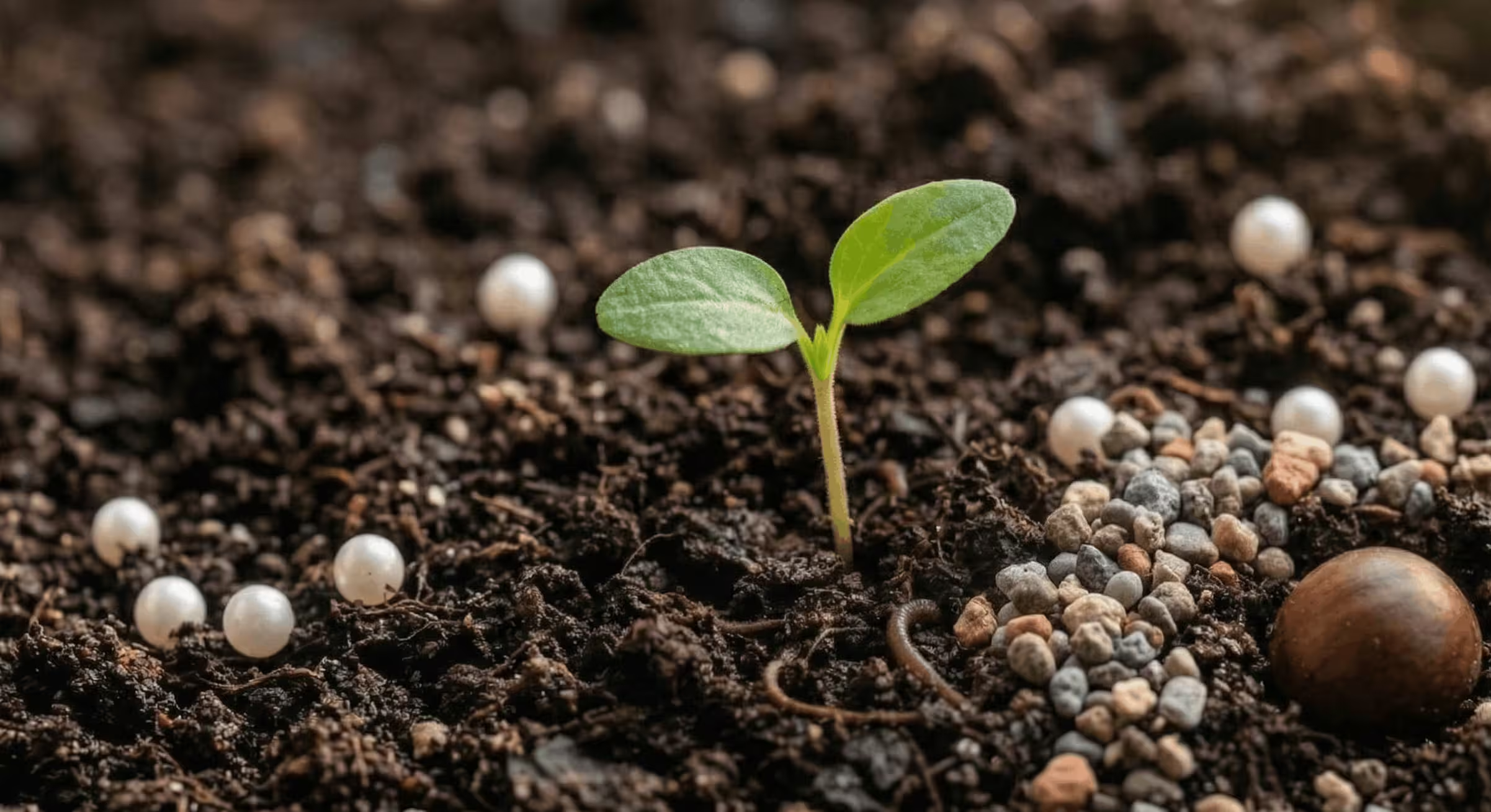

Flower Fertilizers - Buy from Manufacturer Dünger
Flowers need two fundamentally different feeding regimes: during growth - nitrogen for lush leaves and stems, during budding and flowering - phosphorus and potassium for vivid blooms and extended flowering. The correct switch between these phases is the key to rich color and a long blooming season. DÜNGER granular flower fertilizers - for annuals, perennials and bulbs: NPK for growth and P+K+B for blooming. Delivery by Nova Poshta and Ukrposhta across Ukraine.
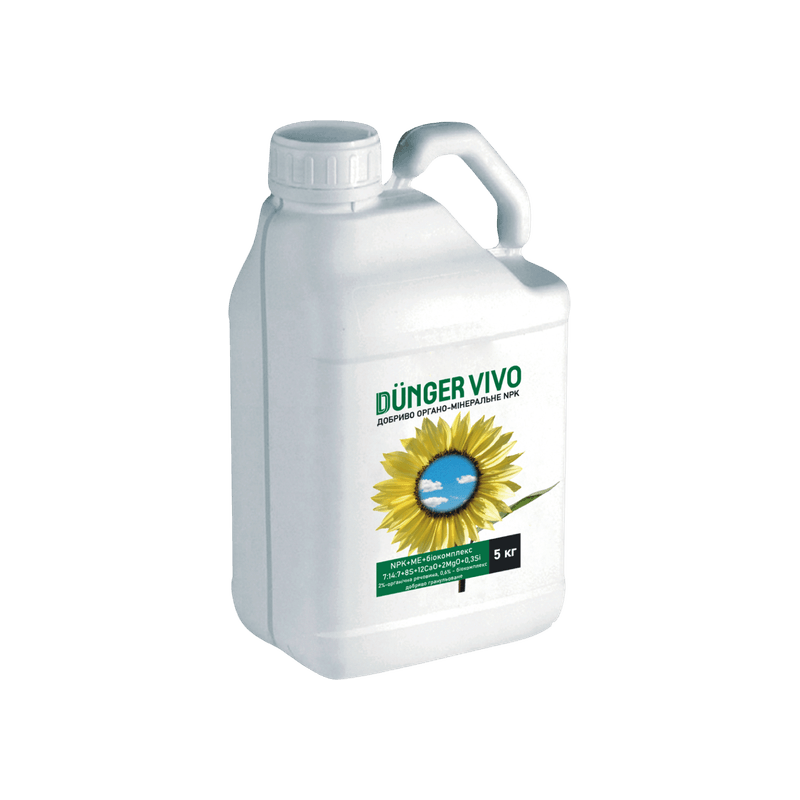
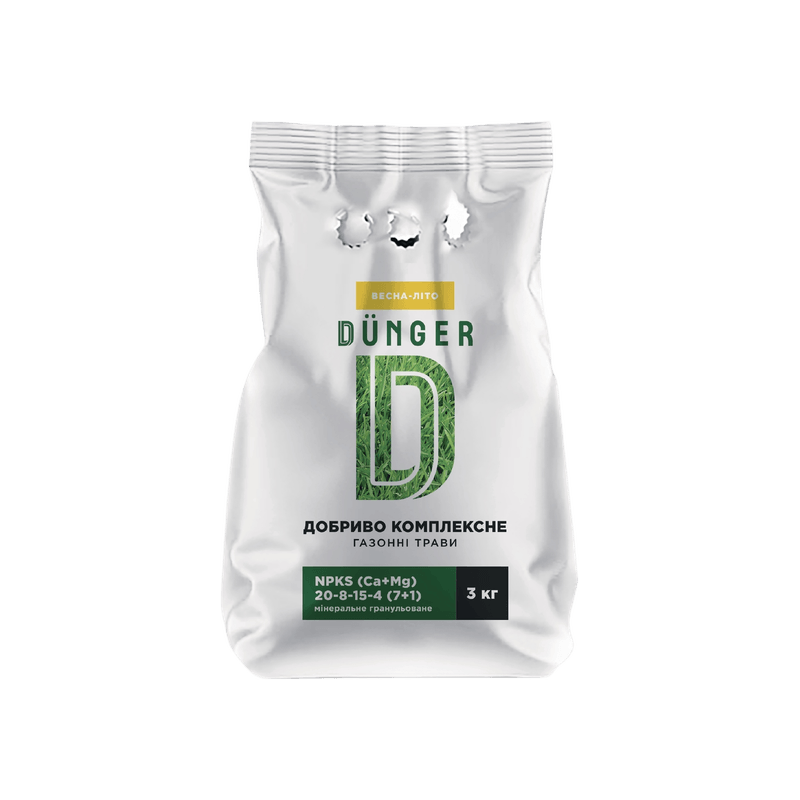
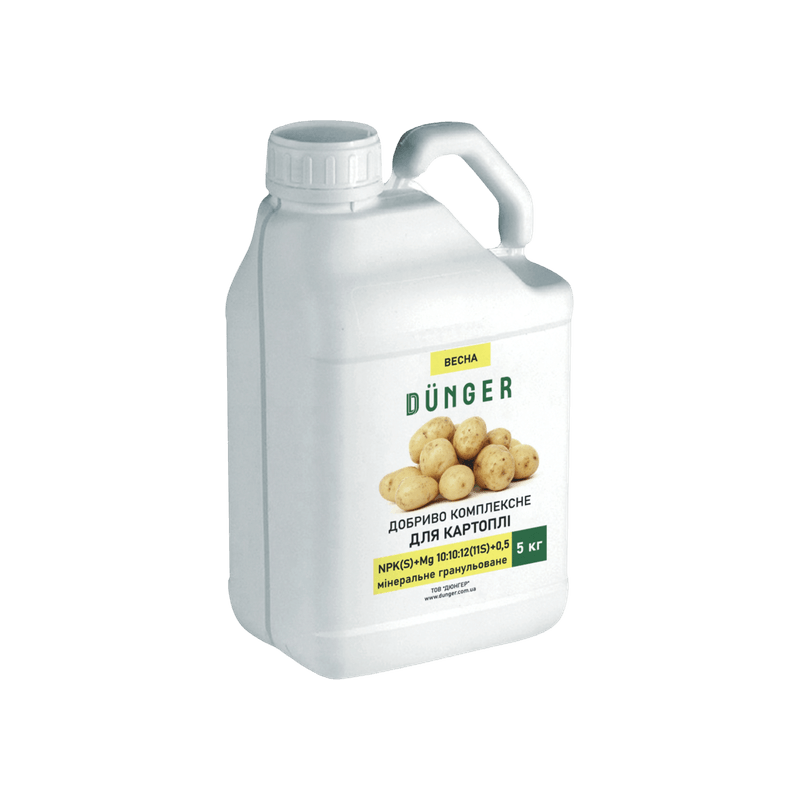
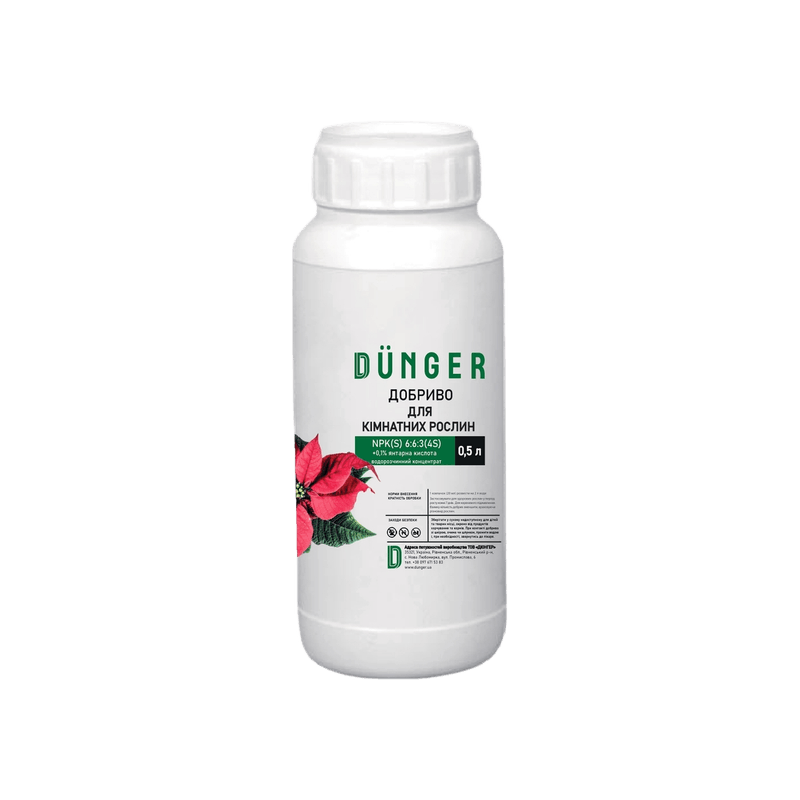
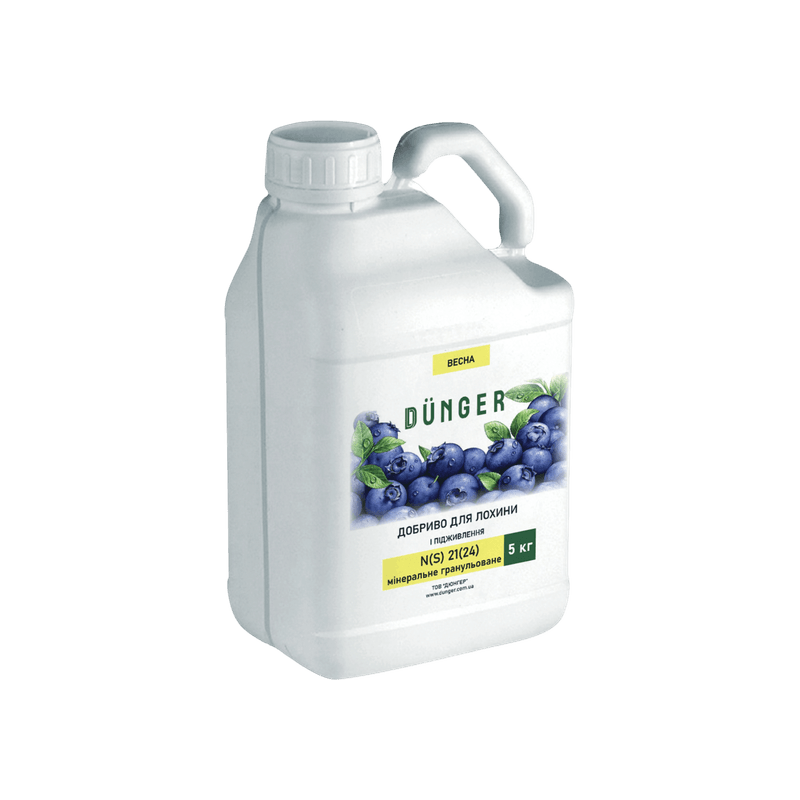
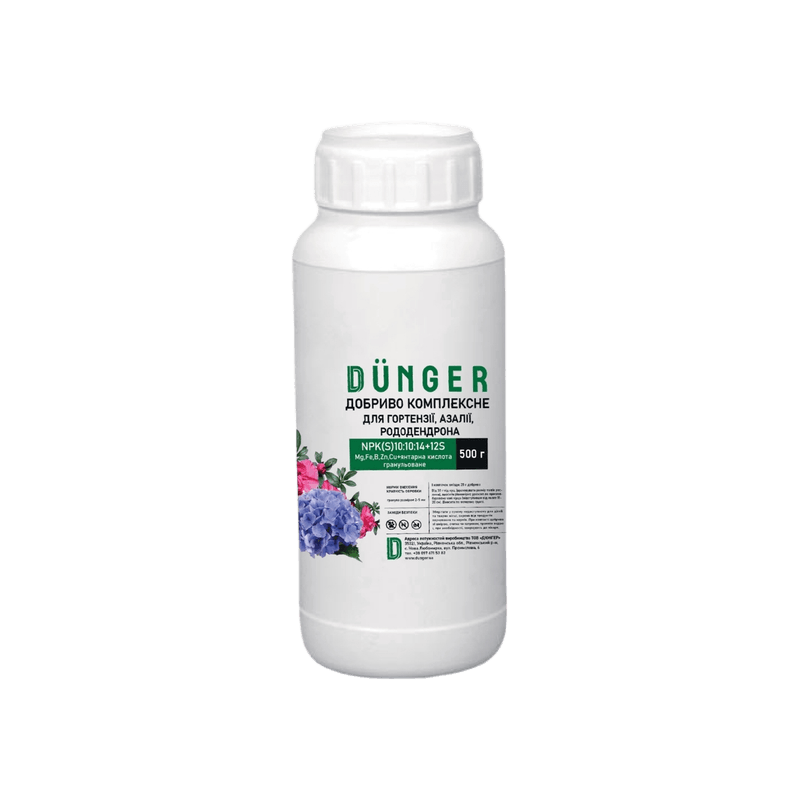
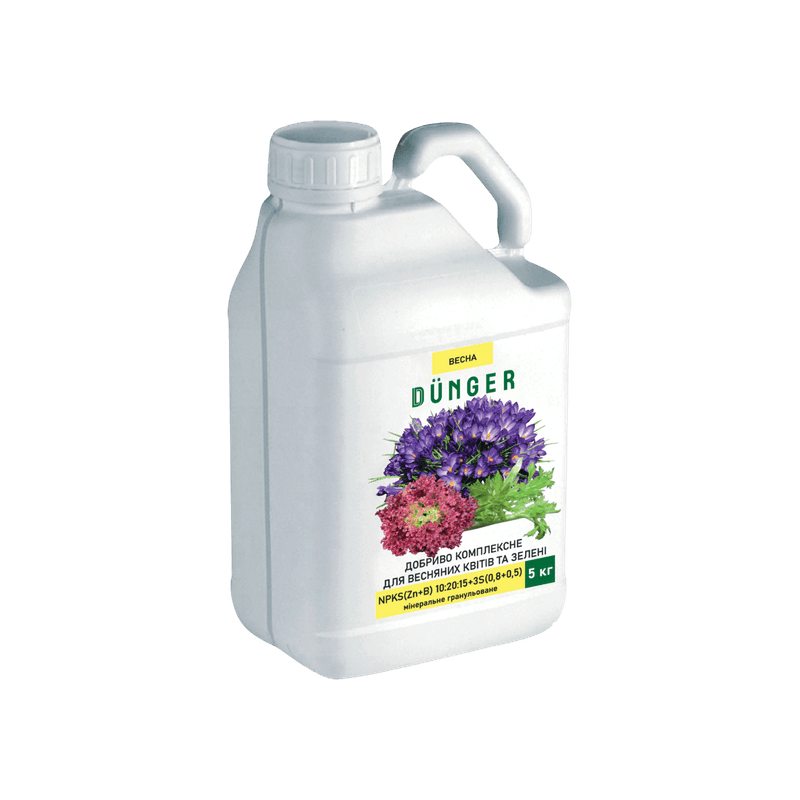
Two Phases of Flower Feeding: Growth and Bloom
All flowering plants have two fundamentally different nutrient phases. Mixing them or using the same fertilizer all season is a typical mistake that produces either lush foliage without flowers or weak, short-lived bloom.
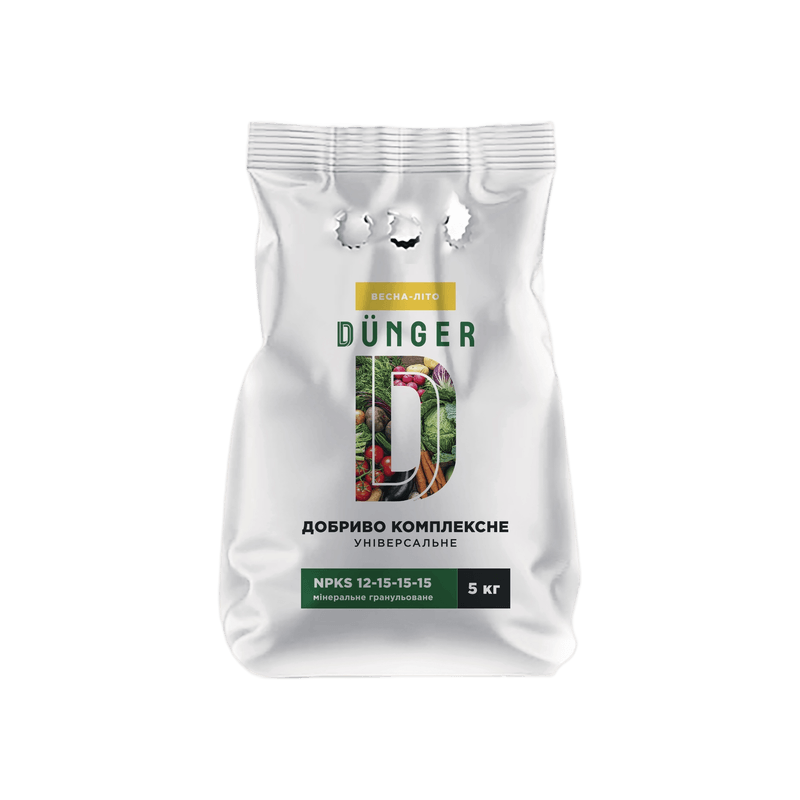
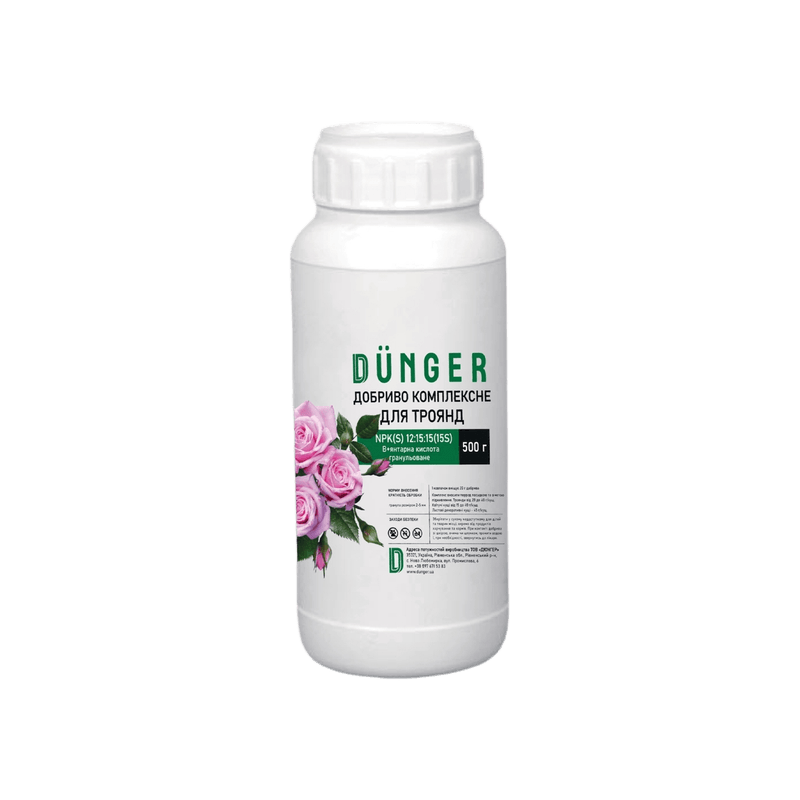
Phase 1 - Vegetative growth (spring, before buds appear): nitrogen N dominates. N builds stems, leaves and root system. Without adequate N: spindly, weak plants with pale leaves. DÜNGER SKU 1 (N12-P15-K15-S15) - ideal for this phase: 25-30 g/m² or 20 g per 10 L watering solution. Annuals: every 2 weeks; perennials: every 3-4 weeks.
Phase 2 - Budding and bloom (from first bud appearance): sharply reduce N and increase P and K. Phosphorus P: more buds, brighter petal color. Potassium K: extends bloom, strengthens stems, flowers last longer when cut. Boron B: directly stimulates new flower bud initiation. Switching from N-fertilizer to P+K 'switches on' flowering mode.
The key signal to switch: first visible buds or their swelling. From this moment, nitrogen feeding stops or is reduced to minimum.
Annual Flowers: Petunia, Marigold, Zinnia, Nasturtium
Annuals complete their life cycle in one season, from seed to death in 3-5 months. To fill this window with abundant bloom, they need frequent, intensive feeding - every 10-14 days through the season.
Feeding schedule for annuals:
- After transplanting (first 3-4 weeks): DÜNGER SKU 1 (N12-P15-K15-S15) - 20 g/10 L or 25 g/m². Nitrogen drives growth and the formation of a bushy shape.
- At first bud appearance: DÜNGER SKU 18 (N12-P15-K15-S15-B0.35%) - 20 g/m² or 20 g/10 L. Boron B0.35% directly stimulates flower bud initiation: more buds per plant, more vivid flowers.
- Active bloom (every 2-3 weeks): DÜNGER SKU 19 (P23-K30) - 15 g/m². Zero nitrogen, maximum P and K. Petunias and marigolds fed with SKU 19 bloom 30-40% longer than unfed plants. Regular deadheading combined with SKU 19 is the most effective way to extend bloom until the first frosts.
Petunias are especially sensitive to iron and magnesium deficiency: at elevated pH or in peat substrates leaves yellow. Foliar spray with chelated iron or magnesium sulfate 10 g/10 L quickly restores green color.
Perennial Flowers: Roses, Peonies, Delphiniums, Hostas
Perennials grow in one place for years, so every fertilization is an investment not only in this season but in future ones too. They need less frequent but more substantial, seasonal feeding.
Feeding schedule for perennials:
- Spring (at leaf emergence, April): DÜNGER SKU 1 (N12-P15-K15-S15) - 20-25 g per bush or 30 g/m². Wakes the plant after winter, triggers growth.
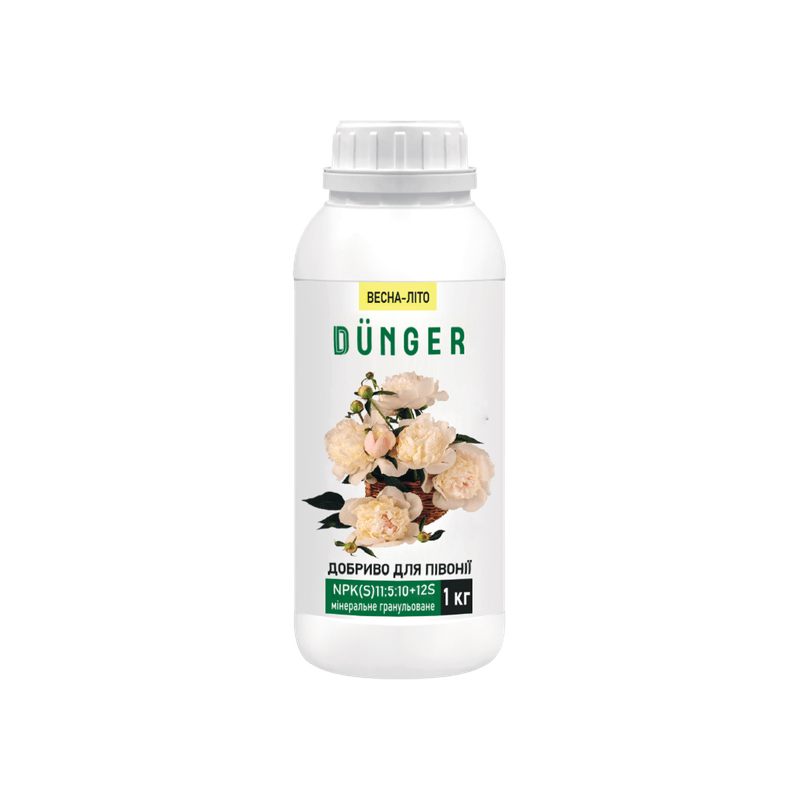
- Pre-budding (when leaf rosettes are visible, May): DÜNGER SKU 18 (N12-P15-K15-S15-B0.35%) - 25-30 g per bush. Boron B stimulates flower bud differentiation. In peonies and delphiniums without adequate B, some buds remain 'blind' and fail to open.
- During bloom (every 3-4 weeks): DÜNGER SKU 19 (P23-K30) - 20-25 g per bush. P and K extend bloom period, strengthen stems and deepen petal color intensity.
- After bloom, autumn (September): DÜNGER SKU 601 (N5-P14-K21-S6-Si0.3%) - 15-20 g per bush. Minimal N does not stimulate late-season growth. P and K strengthen the root system before winter and improve frost hardiness.
Bulb Flowers: Tulips, Daffodils, Hyacinths, Gladioli
Bulb flowers are a unique group: their next season's bloom is formed inside the bulb in the previous autumn. Therefore, autumn feeding is the most critical for bulbs - more important than spring feeding.
Autumn feeding (September-October) - most important: DÜNGER SKU 601 (N5-P14-K21-S6-Si0.3%) - 20-25 g/m² between planting holes. Phosphorus P14 stimulates bulb mass increase and flower embryo formation. Potassium K21 improves bulb frost hardiness - the more K stored in autumn, the fewer bulbs lost over winter. Sulfur S6% protects against soil pathogens.
Spring feeding: when leaves reach 5-10 cm - DÜNGER SKU 1 (N12-P15-K15-S15) at half dose (15 g/m²). Full nitrogen dose at this stage produces large leaves but smaller flowers. After buds appear - SKU 19 (P23-K30) at 10-15 g/m² for maximum flower size.
Gladioli, planted annually as corms, benefit from a foliar boron spray (1 g/10 L) at the 5-6 leaf stage - this doubles the number of flowers per spike.
When and How to Switch from Nitrogen to Phosphorus and Potassium
The wrong moment to switch between phases is the most common mistake in flower feeding. There is a precise cue: the appearance of first visible buds. As soon as first buds appear on the plant - nitrogen feeding must stop or be reduced to minimum.
If nitrogen continues during bloom:
- The plant directs energy toward growing leaves and stems.
- Flowers become smaller, paler and drop sooner.
- In some species (petunias, lobelia), excess N actually suppresses flowering.
The correct sequence:
- Spring/growth: SKU 1 (N12) - every 2-3 weeks.
- First buds: SKU 18 (N12+B0.35%) - transitional feed, stimulates bud initiation with still moderate N.
- Peak bloom: SKU 19 (P23-K30) - every 2-3 weeks, zero N.
Nutrient Deficiency Signs in Flowers and How to Fix Them
- Pale or yellowish leaves, spindly stems - nitrogen (N) deficiency. Unplanned dose of SKU 1.
- Few buds, small flowers or buds that fail to open - boron (B) or phosphorus (P) deficiency. Foliar boric acid 1 g/10 L + unplanned dose of SKU 18 or SKU 19.
- Older leaves yellowing between green veins - magnesium (Mg) deficiency. Foliar magnesium sulfate 20 g/10 L.
- Young leaves yellowing between veins - iron (Fe) deficiency (most common at pH>7.0). Foliar chelated iron spray.
- Brown leaf margins - potassium (K) deficiency. Unplanned dose of SKU 19.
- Flowers drop quickly, short bloom period - potassium (K) or calcium (Ca) deficiency. SKU 19 + calcium nitrate 10 g/10 L foliar.
Deliver DÜNGER flower fertilizers across Ukraine: Kyiv, Kharkiv, Dnipro, Odesa, Zaporizhzhia, Lviv, Kryvyi Rih, Vinnytsia, Poltava, Mykolaiv, Chernihiv, Cherkasy, Zhytomyr, Sumy, Rivne, Ternopil, Khmelnytskyi, Ivano-Frankivsk, Lutsk, Uzhhorod, Chernivtsi and other cities of Ukraine.
Flowers not blooming or bloom is weak? Call us and a Dünger agronomist will build a feeding plan for your flower crops. Free consultation.
📞 +38 (097) 671-53-83 - free consultation. Mon-Sun 8:00-20:00. Delivery from 0.5 kg.
Dünger Fertilizer Delivery Regions Across Ukraine
Buy Dünger mineral and organo-mineral fertilizers with delivery to any region of Ukraine. Select your oblast - and get fertilizers direct from the manufacturer for your garden, farm or agribusiness. Delivery via Nova Poshta and Ukrposhta to all cities, villages and district centres. Produced in Rivne Oblast, Dunger LLC.
- Order Fertilizers — Vinnytsia
- Order Fertilizers — Volyn
- Order Fertilizers — Dnipropetrovsk
- Order Fertilizers — Zhytomyr
- Order Fertilizers — Zakarpattia
- Order Fertilizers — Zaporizhzhia
- Order Fertilizers — Ivano-Frankivsk
- Order Fertilizers — Kyiv Oblast
- Order fertilizers — Kyiv City
- Order fertilizers — Kirovohrad
- Order fertilizers — Lviv
- Order fertilizers — Mykolaiv
- Order fertilizers — Odesa
- Order fertilizers — Poltava
- Order fertilizers — Rivne
- Order fertilizers — Sumy
- Order fertilizers — Ternopil
- Order fertilizers — Kharkiv
- Order fertilizers — Kherson
- Order fertilizers — Khmelnytskyi
- Order fertilizers — Cherkasy
- Order fertilizers — Chernivtsi
- Order fertilizers — Chernihiv
Fertilizers from Manufacturer in Rivne Region
Order & Inquiry
Get in touch

Order mineral and organo-mineral fertilizers directly from the manufacturer. We will help you choose the right product for your garden, farm or landscape.
Hello!
Let's get acquainted and help you
Press Enter to continue
By clicking the button, you agree to privacy policy