


When the last rhododendron flowers fade, the shrub turns to developing shoots and leaves and preparing for a later season. This is also a time when too much attention can create problems. Hard trimming, feeding without checking earlier applications and continuously wet soil do not become helpful simply because flowering has ended. Start by looking at the plant: are the leaves healthy, where is new growth appearing, how quickly does the ground dry, and is any intervention actually needed?
Distinguish fading flowers from a developing problem
Petals gradually lose colour, wrinkle and fall. This is an ordinary end to flowering when the foliage and young shoots remain healthy. A whole branch wilting at the same time, extensive patches on leaves or persistently saturated ground are different situations. Removing flowers will not resolve their cause. Examine the affected branch from its tip towards the base, check the soil and take photographs that will let you compare the condition later.
In a garden with several cultivars, one shrub may have finished while another still has unopened flowers. Do not assign the entire planting the same weekend for every task. Work with each plant's actual stage. If you are unsure whether the display is normal for your cultivar, consider rhododendron flowering times and bud condition separately. A spent flower cluster and a bud that never opened are not the same thing, even if both look brown from a distance.
Must you remove every faded flower cluster?
No. Deadheading is not a condition for the shrub's survival. It can improve appearance and reduce seed formation, but it does not guarantee another flush of flowers in the same summer. It is convenient on a small plant within easy reach. On a tall specimen, avoid breaking branches or reaching unsafely just to tidy every tip. Leaving some clusters does not mean that the rest of your care has failed.
Support the shoot with one hand and carefully detach only the old cluster at its base with the other. Look first for the new leaves and shoots around it. If the cluster will not separate easily, do not pull the whole branch towards you. Use a clean, sharp tool and a controlled cut. Avoid pinching every green growing point indiscriminately. Afterwards, check for any damaged shoots that need separate attention rather than continuing along the shrub without looking.
Prune only when you can explain the purpose
The end of flowering does not mean a rhododendron needs shearing like a hedge. If the plant is an acceptable size, receives appropriate light and leaves the path clear, inspection may be enough. Remove dead wood where necessary. A shaping cut should address a particular branch or a genuine space problem, rather than make every shoot the same length. Step back before starting and consider the shrub's natural outline within the surrounding planting.
When reducing or correcting the shape really is necessary, it is generally planned soon after flowering. Later cuts can remove some developing flower buds for the following season. This is a plant-stage decision, not one calendar date for every Ukrainian garden. Consider the cultivar, the end of its display and its current health. Major rejuvenation of an old shrub is a separate project. Do not automatically combine it with summer tidying, especially following drought, transplanting or substantial root damage.
Summer watering starts with a moisture check
The shallow root system can suffer when the ground dries out, while continuously saturated soil is also undesirable. Move the mulch aside in several places and check the root-zone soil without damaging roots. After a brief shower the surface may feel wet while the ground beneath remains dry. A dense canopy can intercept some rainfall before it reaches the soil. The weather shown on your phone therefore cannot replace a check beside the actual shrub.
Water so that moisture reaches the roots, not merely the leaves or the edge of the mulched area. Do not add another application simply because it is your usual watering day. If water remains standing, investigate drainage first. Rainwater is a useful choice for an acid-loving plant when available. However, do not let the shrub dry out solely because the water butt is empty. Consider the available water and the soil together, without inventing a household acidifying recipe.
Look after the soil surface without disturbing roots
Deep cultivation beneath the shrub can damage its shallow roots. Remove weeds carefully and inspect the mulch instead. It should remain loose, allow water through and avoid forming a compact bank against the bases of the stems. If the material has matted together or water runs off sideways, restore its useful structure before simply adding more. Do not bury the shrub's base beneath a fresh decorative layer to make the border look tidier.
Bark does not correct every soil problem by itself. If the soil acidity is unsuitable, assess the growing conditions rather than repeatedly topping up mulch and hoping it will solve everything. Do not apply lime or ash to this planting as part of a general vegetable-garden routine. Take care with the neighbouring lawn too: its treatments should not spill into the rhododendron's root area. Marking the boundary between different plantings before seasonal work can prevent a simple but avoidable mistake.
Decide whether feeding is needed
A healthy shrub in suitable fertile soil does not necessarily need extra nutrients immediately after flowering. Before buying anything, review the spring applications, any longer-lasting material already used and recent changes in watering. Short or weak growth does not prove a fertilizer shortage. Drought, waterlogging or unsuitable acidity can also interfere with growth. Adding several products at once makes it harder to understand what helped or what made the problem worse.
Where feeding is appropriate, choose a product with the relevant plant group and match its use to the complete instructions. Finishing flowering does not create a new application rate or allow an earlier repeat of an existing treatment. The separate guide to feeding rhododendrons helps distinguish product selection from assessment of growing conditions. Do not try to make an ordinary spring-flowering shrub produce an immediate second display by increasing fertilizer. A purchase should support a justified need rather than an expectation the plant cannot promise.
Feed according to the shrub's needs
A complex granular fertilizer explicitly includes rhododendrons. Plan the purchase after assessing soil, previous applications and shrub condition. Match the intended method and period to the complete instructions: the end of flowering is not an automatic instruction to apply another treatment.
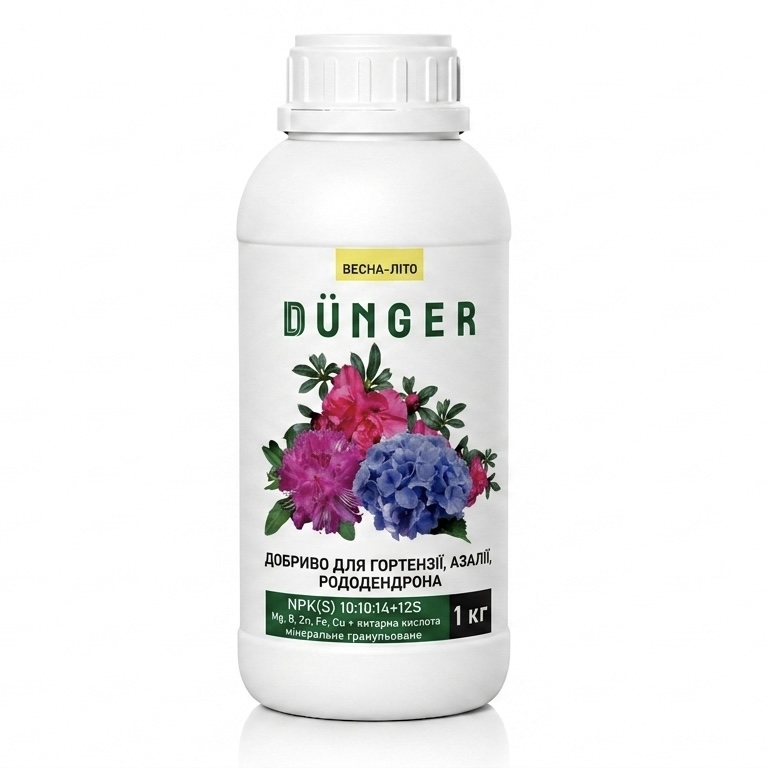
Complex fertilizer for hydrangea, rhododendron, azalea granular
DÜNGER compound granular fertilizer for hydrangeas, azaleas and rhododendrons. Choose a 0.5, 1 or 5 kg pack and review the composition and spring and summer feeding instructions.
To plan packs for a shrub group, save a supported zone and measurements, then match the calculation to the intended application in My Garden.
What to watch on leaves and new shoots
Some older inner leaves may yellow and fall after flowering while the new shoot tips remain healthy. That pattern differs from widespread yellowing of young foliage, entire branches dying back or rapidly expanding patches. Photograph both the whole shrub and an individual branch in comparable light. Keep a personal note of hot spells, prolonged rain and the last fertilizer application. Such observations make it easier to describe the problem clearly if you need advice.
Do not diagnose a particular nutrient deficiency from a single yellow leaf. The position of symptoms, condition of new growth, moisture and, where appropriate, soil testing all matter. The guide to rhododendron yellow-leaf diagnosis examines these distinctions in more detail. If a branch wilts rapidly or damage spreads, seek a diagnosis using clear photographs. A random mixture of fertilizers and plant-protection products makes the picture harder to interpret and does not guarantee a solution.
Keep the next season in mind without forcing it
Care continues after the flowers have been tidied. During dry weather, keep checking the root area: summer water shortage can affect the formation and development of future flower buds. At the same time, there is no need to prise apart the growing tips every day to inspect what is inside. Preserve healthy growth, avoid casual late cuts and watch the plant without repeatedly disturbing it. The next display depends on a combination of conditions, not on one special procedure.
In a small garden, split the work into two short rounds. First inspect flowers and shoots; later review watering, mulch and the actual need for feeding. This makes it easier to notice drying soil, avoid duplicating an application and buy only what is required. Judge the season by the shrub's condition rather than the number of products applied. A manageable care routine gives the plant suitable conditions and gives you a clear basis for planning the next purchase.
Common questions
Deadheading does not guarantee a second flush. With an ordinary spring-flowering cultivar, the main aim afterwards is healthy new growth and suitable conditions for the next season. Do not increase feeding merely to seek immediate new flowers.
There is usually no urgent action to take. Decide whether the old clusters can still be removed without harming young shoots. Some can be left on a large shrub. Soil moisture and plant health matter more than tidying every single tip.
A planned shape correction is better not postponed, because later cuts may remove future flower buds. A dead or damaged branch needs its own assessment. Removing a problem part is different from giving the whole healthy shrub a heavy trim.
Calculate the requirement from the complete instructions and the measurements of each planting, allowing for fertilizer already left from a previous purchase. Then compare the available pack sizes and number of packs. A large package should not determine how much you apply, and a leftover amount is not a reason to feed more often.


