


A lavender pot can brighten a sunny balcony, but the same plant may struggle on a shelf in a heated room. Successful care starts with choosing a suitable place, not with adding fertilizer. Check the plant's identity, how much direct sunlight reaches it and whether water can leave the pot. These three observations are more useful than copying a watering calendar from somebody else's windowsill.
Which lavender have you brought home?
The word lavender covers plants with different sizes and tolerance of cold. English lavender, Lavandula angustifolia, is generally more cold tolerant than tender types such as Lavandula dentata or Lavandula stoechas. Common names can differ between sellers, so the botanical name on the label is more useful than a description such as French or indoor lavender. A compact cultivar is easier to accommodate than a plant that will eventually crowd the window.
Ask about the plant's mature dimensions and how it was grown before purchase. A flowering plant displayed indoors is not necessarily adapted to a permanently dim room. When planning winter protection, use the cultivar's requirements and your actual conditions rather than assuming that all lavender survives the same weather.
Find light before choosing a decorative position
Lavender needs a sunny growing position. A room that looks bright to a person can still offer little direct sunlight to a plant. Watch the proposed spot during the day: nearby buildings, curtains, a balcony roof and other pots may block the light. Place the plant where its leaves receive it, rather than placing only the pot near a window while the crown remains shaded.
Indoors, light often becomes the main limitation, particularly during Ukraine's short winter days. Supplemental plant lighting may help when natural light is insufficient, but its positioning should follow the equipment instructions. A decorative lamp across the room is not an equivalent arrangement. Do not try to compensate for a weakly lit position by applying more fertilizer.
A sunny balcony can be a useful seasonal location. Leave space between plants so the foliage does not form a damp, crowded mass. When moving a plant from an indoor location, introduce the outdoor conditions gradually. Choose the timing from the forecast and the plant's cold tolerance, not from the first warm afternoon alone.
A pot must drain, even inside a cover pot
A decorative outer container is convenient, but it must not conceal standing water around the nursery pot. Check that the inner pot has drainage openings and that those openings remain unobstructed. After watering, let excess water escape and empty the saucer or outer container.
Choose a container proportionate to the root ball. A very large volume of unused wet growing medium can remain damp longer than the roots need. Terracotta and plastic both have uses: terracotta dries more readily, while a lightweight plastic pot is easier to move.
Use a growing medium intended for containers with good drainage. Dense soil lifted from a garden bed can behave poorly inside a pot. When repotting, keep the plant at its previous planting level instead of burying the base of the stems. Read the medium's packaging, including whether fertilizer has already been added, before planning any additional feeding.
Water according to the root zone
Lavender grown in a pot cannot draw water from the surrounding soil as a garden shrub can. The root ball therefore needs checking even though established lavender is drought tolerant. At the same time, persistent saturation is a serious problem. A dry-looking surface does not prove that the whole pot is dry; check below it and compare how heavy the container feels.
Water when the growing medium is drying, allowing surplus water to drain away. Do not add a small amount automatically every morning simply because the plant is within reach. Recheck the conditions after rain, a move indoors or a change in temperature. A pot beneath a balcony roof may receive little rain while another beside the railing becomes soaked.
Young plants and recently established root balls need closer attention. Do not wait for severe wilting as a routine watering signal. Equally, drooping foliage over a wet root ball is not a reason to pour in more water. First investigate the drainage and the condition of the roots.
Feeding starts with need and the growing medium
Lavender has relatively modest nutrient requirements. A large supply of nitrogen can favour leafy growth at the expense of flowering. Before feeding, establish whether the plant is actively growing, whether the potting medium already contains fertilizer and whether light or excess moisture better explains the symptoms. Fertilizer cannot restore a missing drainage outlet or replace sunlight.
For the wider question of nutrition, see how to decide when lavender needs feeding. Keep the container decision separate from a garden-bed calculation. A rate expressed per square metre of soil is not automatically a dose for a pot, a litre of substrate or one bush. If the instructions do not explain your container situation, clarify the method before measuring out granules.
A fertilizer to consider for lavender planting areas
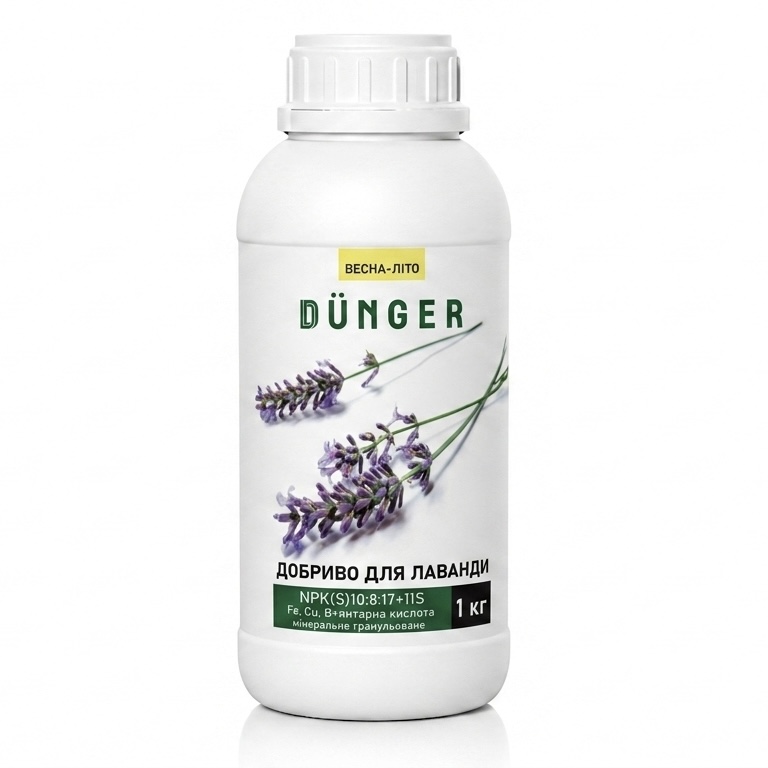
Complex fertilizer for lavender, granular
DÜNGER mineral granules with NPK(S) 10:8:17(11), copper, boron, iron and succinic acid. For soil feeding of lavender and the crops listed in the instructions. Rate: 30 g/m². Pack sizes: 0.5 and 1 kg. Do not dissolve in water.
This product has a soil-area application method. Use the complete instructions when planning feeding for a suitable planted area; do not adapt the stated rate into a homemade liquid feed or guess a dose for your windowsill pot. To discuss container use, have the pot dimensions, growing-medium information and previous feeding details ready.
If you also grow lavender in a bed, My Garden lets you keep that zone and its measurements together when planning product quantities. Keep pots and beds as separate decisions.
Keeping a compact plant without cutting into bare wood
Remove spent flower stalks and maintain the shape with light trimming of leafy growth at a suitable stage. Lavender does not readily regenerate from old bare wood. Before cutting, look for the green part of each shoot and avoid treating a woody lavender bush like an annual herb that can be cut down heavily.
If the plant is sparse on the side facing away from the window, review its lighting as well as its shape. Cutting alone will not correct the growing position.
Winter care on a Ukrainian balcony
A pot exposes roots to cold differently from a garden bed. Even a relatively hardy lavender needs its container conditions considered separately. An enclosed balcony is not necessarily frost free, and a sheltered corner cannot guarantee survival through every cold spell. Check actual temperatures and the forecast, not just whether the space is behind glass.
Tender lavender needs protection from frost. Choose a bright protected place appropriate to the plant, and check moisture there rather than continuing the summer watering routine. A warm, dim room is not automatically a good replacement for outdoor conditions. Avoid leaving the pot where winter rain repeatedly saturates the growing medium.
In spring, wait for conditions suitable for the cultivar before returning it outdoors. Ukraine's weather varies by location and season, so there is no single moving date for every balcony. The immediate forecast, the plant's condition and the protection available matter more than the month printed on a general calendar.
Questions about lavender at home
It may be grown in a suitable container, but year-round indoor success depends strongly on light and the particular plant. A dim shelf is unsuitable. Assess direct sunlight, drainage and winter conditions before deciding that a permanent indoor position meets its needs.
Check light, plant age and the normal flowering stage first. Excess nitrogen can also favour vegetative growth. Lack of flowers alone does not prove a fertilizer shortage, so review conditions and previous feeding before buying another product.
Check the growing medium first. A drying root ball and a persistently wet one require different responses. If moisture is already abundant, adding water can worsen the situation; investigate drainage and root condition instead.


