


Feed a thuja when additional nutrients are justified and its soil and watering allow the roots to use them. For a garden plant, a granular conifer fertilizer can be a suitable choice when the application matches the plant's size and stage. A thuja in a container needs a separate assessment: the rate for a large shrub growing in open soil cannot simply be transferred to a pot.
Start by deciding what you want to improve. A healthy hedge growing normally for its cultivar may not need extra fertilizer. If the concern is browning foliage or dying branches, first read how to investigate yellowing thuja. This guide is about making a feeding decision, calculating a purchase and carrying out the work carefully once the need is clear.
Garden soil and containers call for different decisions
In the ground, roots have access to a larger growing space. Nutrients may already come from organic matter, previous applications and fertilizer used on nearby lawn. A green hedge alongside regularly fed turf should therefore be assessed with the whole surrounding area in mind. Write down what has been applied nearby as well as what was scattered directly beneath the thuja.
A container holds a limited amount of growing medium, and its starting nutrient supply depends on the mix. Keep the bag label, repotting date and details of any fertilizer already included. For a newly purchased plant, ask the nursery about previous feeding. Seeing granules in the pot does not reliably tell you their identity or how much longer they are intended to supply nutrients.
Check that water can drain freely from the container. Fertilizer cannot repair persistently waterlogged roots or replace watering a dry root ball. For a garden shrub, inspect soil beneath the mulch. A dry-looking surface alone is not enough to decide whether water is needed. Record what you actually find around the roots before adding another treatment to the routine.
Collect the information that makes buying easier
A cultivar name helps set sensible expectations for growth. A compact thuja should not be compared with a vigorous hedging cultivar and pushed to match it. Note plant height, approximate crown size, planting year and the appearance of new shoots. Photographs from the same position make a more useful comparison than remembering that the hedge once looked fuller.
For a long row, number plants from the gate to the far corner. Mark young replacements, established shrubs and dwarf forms separately. This lets you distinguish a whole-hedge requirement from a small group needing attention. Counting plants becomes useful for purchasing only after you have chosen the appropriate application for each group, rather than assuming every plant receives the same amount.
If poor development remains unexplained, a soil test can help assess pH and the nutrients included in the chosen analysis. Laboratory packages differ, so ask what the report will contain before collecting samples. Explain that the planting is a conifer hedge and agree a sampling method appropriate to that area. The aim is to answer a specific question about your soil.
Compare the product and its method together
Compare full product names and formulations. A conifer label helps narrow the choice but does not make different fertilizers interchangeable by weight. Granules, soluble products and liquid concentrates may have different directions. If the selected product specifies surface application, do not turn it into a foliar spray using a dilution copied from another fertilizer.
DÜNGER's range includes a compound product for conifers and evergreens. Its full directions distinguish planting from feeding during the growing season and account for plant maturity and size. The following is the application text for that product. Select the relevant situation before measuring the granules; the different ways of calculating an application are not additional portions to combine.
Pay attention to the units. An amount per plant and an amount linked to plant height are different ways of describing the requirement. Do not add the two calculations together. If the correct choice for a particular thuja remains unclear, have its height, age and a photograph ready when requesting advice instead of choosing the largest figure as a precaution.
Choose suitable conditions for the work
For the selected conifer fertilizer, start with the season and method in its directions. Do not automatically repeat last year's calendar date without looking at the ground. Spring conditions differ across Ukraine, and a shaded row may remain wet longer than an open sunny area. The practical decision needs to fit the soil you will actually work on.
Do not feed a plant showing clear drought stress. Address watering and assess the root zone first. Delay application on frozen ground or before heavy rain as well. The aim is to distribute the product where it is needed under workable conditions, rather than letting granules or dissolved nutrients move away with surface runoff.
For a container, do not build a feeding schedule from the garden rate. First establish what nutrients were already included in the medium, then identify a product and application suitable for container growing. A useful enquiry includes the plant, pot volume, growing mix, repotting date and intended feeding method. Those details make the question answerable without guessing from the plant's height alone.
Measure and apply without losing your place
Prepare scales, a separate container for the measured product and a way to mark completed plants. Weigh the total for a uniform group, then distribute it according to the selected calculation. A handful is not a reliable measuring tool: hand size varies and granules from different products do not have the same mass. Keep the original labelled pack beside the work area.
Work along the hedge in one direction. If interrupted, mark the last shrub completed before leaving. Collect granules that fall on a path instead of washing them into a drain. Afterwards record the date, full product name, actual amount and treated group. A short factual note is more useful next time than an approximate memory that something was applied in spring.
Before feeding again, revisit that record and assess new growth and current conditions. Product remaining in a pack is not a reason for another application. If the expected improvement has not appeared, do not automatically increase the amount. Return to the original reason for feeding and reconsider watering, soil conditions and the plant itself, obtaining an assessment when needed.
Choose a pack for the calculated requirement
The conifer product has 1, 3 and 4 kg pack options. Choose after calculating the required mass, rather than judging the size of the container in a photograph. The bottle and canister for this product contain granules. For mixed ages, add the separately calculated group requirements before comparing purchase options, and check the current price of the particular pack selected.
Fertilizer for your planned care
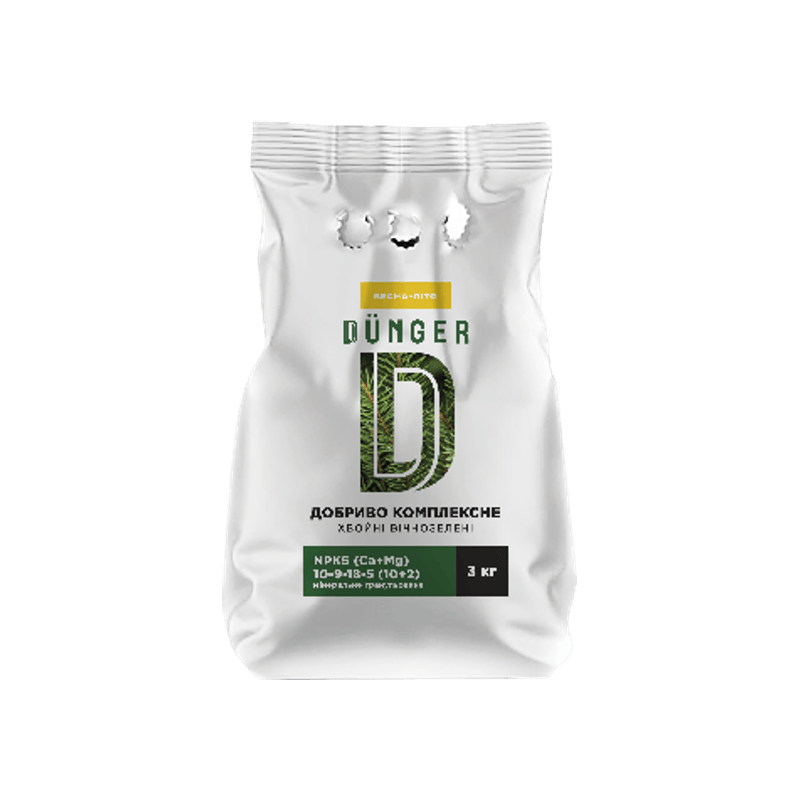
Complex fertilizer for coniferous evergreens, granules
For an established need in garden conifers, compare the 1, 3 and 4 kg packs. Keep the complete product name and selected application so the next purchase is not confused with a different formulation.
Add your plants to My Garden and prepare your purchase calculation.
If other ornamental shrubs grow nearby, do not include them in the conifer calculation without checking intended use. Explore the conifers and shrubs section for related care decisions and read how to assess garden soil for the site itself. One order can include several products while their application rates and records remain separate.
Frequently asked questions
Not necessarily. Assess growth, site conditions and previous applications, including nearby lawn fertilizer. A well-supplied plant does not need another product merely because a new season has begun. If nutrient supply is uncertain, investigate the soil rather than creating an automatic annual purchase.
Do not increase the rate to chase speed. Growth also depends on the cultivar and growing conditions. Dwarf forms need particular attention to the cautions in the full directions and should not be judged against tall hedging plants.
First check its full directions and permitted plant groups. Similar-looking granules do not make a lawn product equivalent to a conifer fertilizer. Keep the complete name, pack information and previous application record so that products do not become confused when you buy again.


