


The purpose of autumn planting is to establish roots before winter. Planting during prolonged warmth and planting immediately before the ground freezes present different problems. Start by checking the sets, forecast and drainage. Choose fertilizer for the prepared bed after considering previous applications. Feeding cannot compensate for unsuitable planting conditions or a site that collects water throughout winter.
Choose a date for your own garden
First establish whether the variety you bought is intended for autumn planting in your conditions. Then compare the forecast with the weather you actually observe near the garden. A single frosty night after a warm week does not describe the whole autumn pattern. Equally, a sunny afternoon does not necessarily signal a long return to warmth. Watch the sequence of days before committing the whole bed.
Begin these checks earlier on a site that usually cools early. A garden that stays warm longer may have a different window. Polissia, central Ukraine, the south and foothill locations should not all share one compulsory planting date. Neighbouring plots can also differ in shade, exposure and water flow. Use a regional calendar to organise purchases and preparation, then make the planting decision at the bed itself.
Keep a short garden record of the variety, the source of the sets, soil condition and temperature observations. In spring, add the actual number of surviving plants and any problems you find. This allows comparison between seasons without confusing different beds. If you plant several batches together, label each one so that the success or failure of a single batch is not attributed to the whole growing method.
Is November too late?
November can still be suitable where the variety and local conditions allow time for establishment. The name of the month alone cannot tell you whether planting is timely. If the soil is already frozen and sustained cold is approaching, planting sets into frozen clods does not recreate a workable autumn bed. When uncertain about the window, ask the supplier for guidance on the particular variety and region before changing the planting method.
Sets for bulbs and onions for greens
Onions from a kitchen basket are not automatically suitable for a crop of mature bulbs after winter. Look for planting material with an identified variety and an autumn planting designation. Small sets are used for overwintered bulb production; larger planting material is more liable to bolt. Sort a mixed batch by size, so that you can keep track of what was planted instead of treating every onion as equivalent.
Inspect the sets in good light. Separate anything soft, rotten, damaged or otherwise suspicious. The main bed needs healthy material without visible injury. If you also want a separate crop for green onions, label that area clearly. Pulling young plants for the kitchen and growing mature bulbs use the bed differently. Decide which plants will be harvested young before planning the final space needed by those left to grow.
Seeds and sets also represent different starting stages. A late sowing of seed cannot simply replace ready-grown small sets with the expectation of reaching the same stage before winter. Where the packet describes transplant production or an earlier sowing period, follow that method. When buying, ask about the intended growing system and suitability for overwintering, as well as the colour and flavour of the eventual bulb.
Sunlight, drainage and the history of the bed
Choose a sunny location with well-drained soil. Inspect it after rain: look for puddles and water arriving from a path or roof. Autumn planting is risky in heavy soil that stays waterlogged through winter because the sets can rot. Adding more soil directly over each set does not deal with the underlying drainage problem. Select a suitable site or reserve the main planting for spring if the bed remains too wet.
Remove perennial weeds and prepare a loose soil surface in advance. Use well-rotted organic matter when improving the soil, while accounting for materials already applied. Fresh manure is unsuitable for this preparation. If you have a soil test, use its recommendations to decide whether additional nutrients are needed. Several products described as useful for a vegetable garden do not automatically belong together in one planting programme.
Plant carefully and clarify what depth means
Read the instructions supplied with your sets before making furrows. Depth depends on the planting material and growing conditions. Ordinary onion sets are planted relatively shallowly in loose ground; do not transfer a garlic planting depth to onions. If the supplier of your overwintering variety specifies another method, check that it suits the bed. Establish whether a stated depth describes the furrow, the position of the base or the covering above the set.
Mark the rows with enough access for later care. A common bulb-onion layout leaves 10-15 cm between sets and 20-30 cm between rows. This is a general set-planting guide to compare with the variety's requirements. Plan an area intended for bunching onions separately, so that pulling young plants later does not repeatedly disturb neighbouring bulbs that you intend to leave until maturity.
- Level the prepared surface and mark the rows.
- Place healthy sets with their bases downward at the selected spacing.
- Plant in loose soil without forcing the sets into hard ground, then firm the soil around them.
- Label the variety, planting date and intended harvest so that you can assess the planting in spring.
Water and winter protection
A fixed watering schedule is less useful than checking the bed. Prolonged dry weather during establishment may require watering, while a bed already wet from rain does not need another soaking. Check the soil below the surface instead of judging only by the colour of its crust. Pay particular attention to the lower end of the bed, where water may gather even after the upper end appears dry.
Mulch can reduce winter injury to overwintered onions, but choose protection in the context of the local site. Sealing a wet bed under a cover cannot replace drainage. Inspect the planting after strong winds and heavy rain: check for exposed sets and blocked water outlets. A cover needs subsequent attention and adjustment. Putting it down in autumn should be the beginning of observation, rather than the last time the bed is checked.
Fertilizer for soil preparation
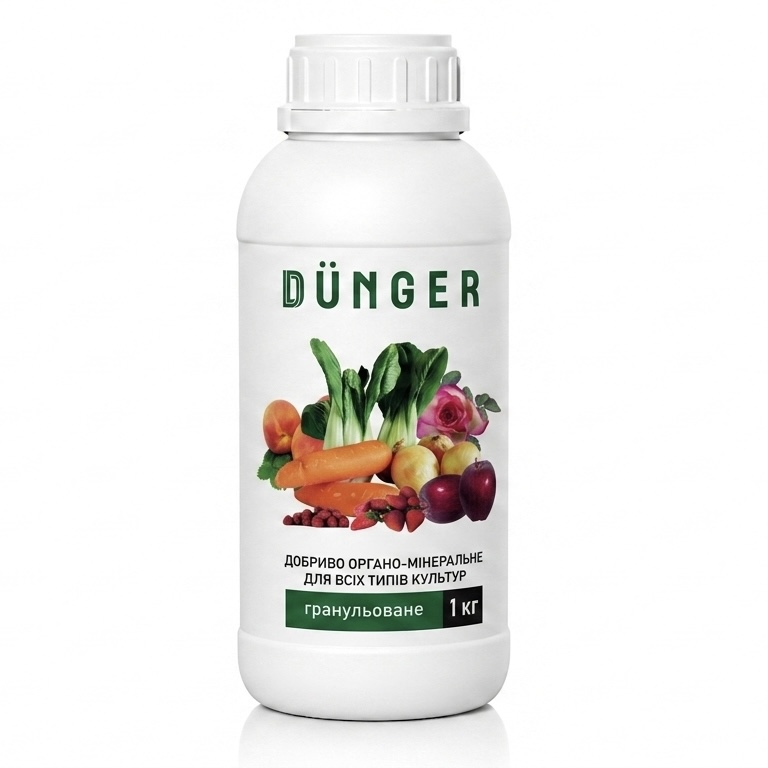
Organo-mineral fertilizer for all types of crops granular
This DÜNGER granular product, in 1 and 5 kg packs, is an option to consider when preparing the soil. Its instructions include main application in autumn. Decide whether it is needed after reviewing the soil and earlier feeding. The full application method is:
The fertilizer is used for the main application for plowing, digging in autumn or spring, as well as for fertilizing plants in the spring-summer period of active vegetation, the fertilizer is also used for laying greenhouse and seedling soils and soil mixtures. Apply the scattering on the site or in the root zone on loose, moist soil, as well as in planting holes when planting plants and seeds. Application rates are calculated depending on the species, characteristics, size and age of plants. Feeding is recommended 2-3 times a season.
Check establishment again in spring
After winter, assess how many plants remain, their condition, soil moisture and weeds before deciding on further feeding. Onion roots are shallow, so cultivate carefully. Remove weeds by hand when they grow very close to the bulbs. An increased fertilizer dose cannot explain or correct every gap in a row. Where plants are rotting or failing, first establish whether healthy roots remain and whether the site is still suitable.
Compare affected plants with healthy plants in the same garden. Note whether gaps are concentrated in a wet hollow before planning the next season. If entire labelled batches differ, check the variety and planting-material details. For a consultation, prepare photographs of the plant, bulb base, roots and the whole bed. A description of the site and previous care helps you ask specific questions before choosing fertilizer solely from leaf colour.
Questions before planting and buying
Plan to use a different bed. Onions and garlic are related crops and can share problems. A place with previous signs of rot deserves particular attention and diagnosis before another allium crop is planted.
Nutrition does not replace establishment time, an appropriate variety and suitable soil. If the planting window has closed, reconsider the growing method instead of increasing the rate. The number of days left before frost is not a way to calculate a fertilizer dose.
Work out the treated area first, then identify the product's appropriate application method and rate. Compare the required mass with the 1 and 5 kg packs. Exclude paths from the calculation and do not build unneeded repeat applications into the order simply to use a larger pack.