


Growing strawberry seedlings from seed starts with choosing suitable seed, rather than finding an early sowing date. This is a familiar way to raise small-fruited alpine strawberries. Seed lines of large-fruited garden strawberries are also available, including hybrids intended for seed propagation. However, seeds collected from a delicious shop-bought berry do not promise a plant with the same characteristics. Decide whether you want reasonably predictable planting material or a gardening experiment before filling your trays.
Understand what your seed packet contains
Alpine strawberries and large-fruited garden strawberries differ in more than the size of their berries. For a home grower, an important question is whether the particular variety is offered for growing from seed. A picture of a large berry does not answer that question. Read the plant name and description, propagation guidance and storage instructions. Keep the packet so that you can return to those details after the seedlings emerge.
Seed is produced through sexual reproduction, so the resulting plants can differ from the parent. A rooted runner, by contrast, is vegetative offspring of its parent plant. That distinction matters when you want another plant of a favourite named variety. Seeds taken from fruit can be an enjoyable experiment, but they are not a sound basis for promising identical plants, flavour or yields across a whole bed. Buying a named seed line and collecting unknown fruit seed are different starting points.
Choose the conditions before the calendar date
Germination, true-leaf development, establishment in individual pots and hardening off are separate stages. They do not take exactly the same time in every tray. A date on the calendar cannot show that your seedlings are ready for the garden. In Ukraine, use the local forecast, the condition of your bed and your ability to protect young plants from a sharp change in weather when deciding about outdoor planting.
An early start is useful only if you can provide suitable light and steady conditions throughout the indoor period. A dim windowsill above a hot radiator is not improved simply by sowing sooner. Check the temperature near the glass at night, watch how quickly the tray dries during the day and reserve space for larger pots. The guide to growing seedlings at home explains how to organise a practical indoor growing area.
Check whether your seed needs preparation
Do not transfer a cold-treatment instruction from a different packet to your own seeds. Look for the supplier's preparation directions and any statement that the seed has already been treated. If the instructions are unclear, ask the supplier before adding another step. A freezer, hot water or a strong home-made solution is not a necessary precaution just because strawberry seed is small.
Dry-seed storage and a prescribed pre-sowing treatment are different procedures. Keep a simple note of what you actually did and retain the packet. If one tray emerges before another, compare their seed and conditions before repeating a treatment. The first visible seedling is useful information, but it does not prove that every remaining seed needs intervention.
Sow without burying the tiny seeds
Moisten the growing mixture before sowing and let surplus water drain away. Level the surface without pressing it into a hard layer. Work with small quantities of seed so that you can distribute it rather than emptying everything into one corner. Packet instructions may specify surface sowing or a very light covering. Follow the directions for your particular seed rather than hiding it beneath a thick layer of garden soil.
- Label the tray before handling the seed.
- Bring the seed into contact with the moist surface without pushing it deeply into the mixture.
- Water gently so that the seed is not washed into clusters or buried.
- If using a clear cover, monitor moisture and heat; do not leave a closed tray in scorching sunshine.
- Check moisture below the surface as well as at the top.
Watering from below can help wet the mixture evenly, but remove water left standing after it has been absorbed. Keeping the tray permanently flooded is different from maintaining moisture. The opposite mistake is misting the surface repeatedly while the lower mixture remains dry. Both problems are easy to miss when seedlings stand close to indoor heating.
Look after the seedlings as they emerge
The first tiny leaves do not turn a seedling into an established strawberry plant. Small cells have limited water reserves, and the young plants still need careful management of light and moisture. Make sure their position remains bright enough as they grow. If seedlings become elongated and lean towards a window, assess the lighting first. More fertilizer does not make up for inadequate light.
Emergence may be uneven. Do not flood the whole tray simply because some seeds have not appeared. Compare actual conditions with the packet directions and consider whether the surface previously dried out. Collapsing seedlings with a thin, soft or water-soaked stem base are a different issue from slow germination. Separate affected plants, review watering and equipment cleanliness, and do not attempt to solve the problem by feeding them.
Pot on while protecting roots and the growing point
Move seedlings when they are sufficiently developed to handle carefully, rather than giving every batch the same deadline. Prepare the new pots first. Lift each seedling with a small amount of surrounding mixture, supporting it from below. Avoid pulling or squeezing the delicate stem. If you need to steady a plant from above, a light hold on a leaf is safer than gripping its growing point.
Allow the roots to fit comfortably in their new container. Keep the centre of the leaf rosette uncovered without leaving roots exposed. Water gently, then check whether the mixture has settled enough to alter the planting depth. Give individual pots enough room that neighbouring plants do not shade each other. Moving to larger pots should not mean moving the plants into a substantially darker corner.
When additional nutrition may be appropriate
Seeds use their own reserves during germination. Do not add concentrate to a freshly sown tray to speed emergence. Consider nutrition after seedlings have developed true leaves, taking account of the fertilizer already present in their growing mixture. Check light, water and root condition before treating slow growth as a feeding problem.
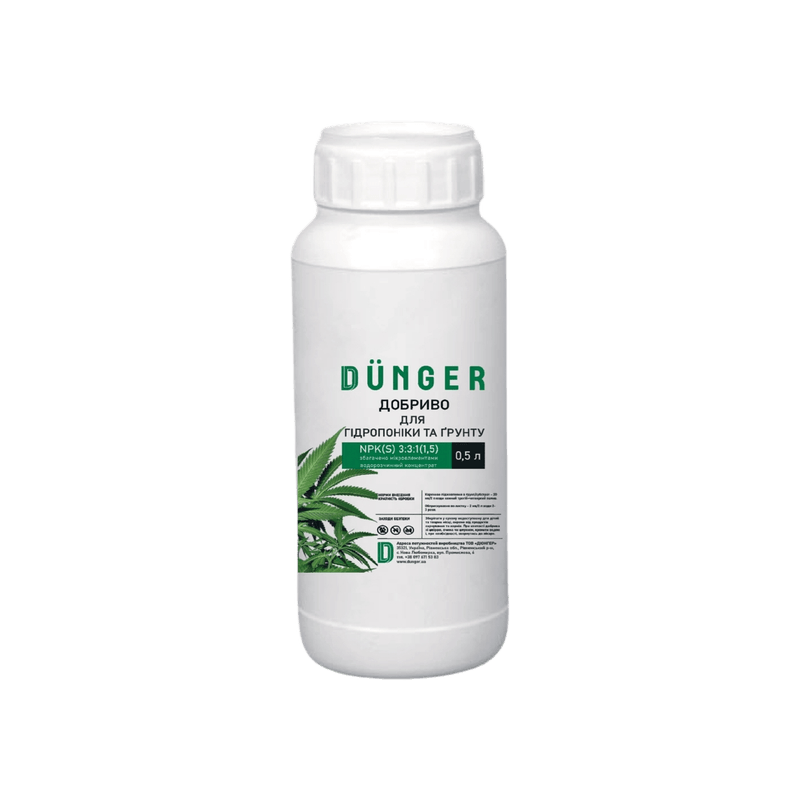
COMPLEX FERTILIZER FOR HYDROPONICS AND SOIL
For developed seedlings that need additional nutrition, COMPLEX FERTILIZER FOR HYDROPONICS AND SOIL is an option whose instructions include seedlings. Pack size: 0.5 L. Its soil or substrate root-feeding instruction is:
When root feeding in soil / substrate, dilute 20 ml (1 cap) in 2 liters of water, use with every third or fourth watering.
This is a particular product instruction, not a reason to water more frequently. Water demand still depends on the conditions and the growing mixture. Never pour the concentrate directly onto roots. Read the complete method and useful memo on the product page before buying or applying it.
Harden off before planting outside
Indoor seedlings have not experienced full outdoor sunshine, wind or fluctuating temperatures. Begin with short periods in a sheltered position without harsh direct sun. Increase exposure gradually while watching the leaves and pot moisture. Return plants to protection when the forecast is unsuitable. Hardening off does not mean deliberately drying seedlings out or testing whether they can survive a frost.
Prepare the permanent bed before the plants need it. Consider light, drainage and access for watering. Give particular attention to soil for garden strawberries if water remains on the surface after rain. Plant seedlings with a well-developed root system, keeping the crown at the surface. Afterwards, check that the original root ball receives water rather than looking only at the surrounding soil.
In My Garden, create a strawberry zone, specify the crop and its measurements, and plan suitable products. Treat newly planted seedlings separately from an established fruiting bed: their needs should not automatically be assumed to match.
Questions about strawberry seedlings
Not reliably. Seed-grown offspring can differ from the parent plant. For a more predictable starting point, choose a named variety or hybrid sold for seed propagation, or obtain verified vegetatively propagated plants.
Do not prescribe the same treatment for every packet. Check the supplier's directions and whether any preparation has already been carried out. Ask for clarification before adding a treatment that is not specified.
Some can, but this depends on the strawberry type, timing and development of the plants. A healthy, well-rooted plant is a better measure of progress than a promise of berries by a fixed date.


