


Sow annual China asters outdoors in spring when the bed is workable and conditions suit germination and early growth. Choose the sowing opportunity from local soil and weather, then check that the selected variety has enough season left to develop and flower. A date printed for another region is not a guarantee for your garden, and sowing earlier into unsuitable ground does not necessarily produce an earlier display.
This concerns Callistephus chinensis, the annual China aster. Perennial plants sold under the name aster belong to different groups and need their own propagation decisions. Before opening the packet, confirm the botanical name, variety and instructions. Do not transfer the sowing depth, cold tolerance or care of a perennial border plant merely because its common name sounds similar.
Decide whether direct sowing serves your aim
Direct sowing lets plants begin in the bed where they will grow, but you must manage moisture, weeds and seedling spacing there. It is useful when you can visit the bed regularly and the chosen variety suits the available season. If your priority is a particular early flowering date, compare that aim with the variety's own development information before buying seed.
Seed already started under protection and seed placed outdoors on the same day do not face identical conditions. A packet's general description should not be treated as a promise that both methods reach flowering together. If the outdoor opportunity has become too short, consider suitable young plants or a different seasonal plan rather than trying to compensate with extra fertilizer.
Read the packet before planning the bed
Check the variety's mature height, intended use and recommended spacing. A low border variety and a taller cutting variety need different places in a design. Tall stems may need support; leave access to provide it without trampling the sowing area. A mixture offers a different degree of colour and height predictability from a named single variety.
Prefer seed with clear identity, a traceable supplier and current viability information. Check the packet's sow-by information and storage condition. Do not assume that a half-open packet stored somewhere warm and damp is equivalent to properly stored seed. For seed kept from hybrid plants, the next generation may differ from the parent; keep that uncertainty separate from a failure of watering or feeding.
Choose a local spring opportunity
Look at the bed itself: is the ground workable, draining and no longer frozen or saturated? Assess the coming conditions rather than one warm afternoon. A sheltered southern plot, a low frost pocket and a cool northern or upland garden can offer different opportunities. The aim is a suitable seedbed and manageable seedling conditions, not winning a race to use the earliest calendar date.
China aster is not a reason to borrow the temperature requirement of every other annual flower. Match the species and packet guidance to the site. In late autumn, use the time to plan the bed and keep seed appropriately stored for the intended spring sowing. A late-season warm day alone does not establish a complete outdoor growing window.
Prepare a sunny bed that drains
Choose a suitably sunny, sheltered place with moisture-retentive but well-drained soil. Check where water collects after rain and where weeds are already established. Avoid treating a repeatedly waterlogged patch as a nutrition problem. Correct the site choice or drainage before sowing, because a fertilizer cannot create air space around roots in persistently saturated ground.
Remove competing weeds and large debris, then prepare a level crumbly surface when the soil can be worked without compacting it. Break up large clods without turning the top layer into dust. Keep a route for watering and later thinning. Broader decisions about soil for flower beds and pots belong before you put small seed into the ground and make deeper work awkward.
Sow at the packet depth and mark the area
Decide whether rows or small marked groups will be easier to care for. Rows can help you distinguish the intended plants from surrounding weeds. Use the depth and distribution recommended for the seed you bought; do not make a deep trench by default. Keep the packet so that its spacing and aftercare information remain available when seedlings appear.
Spread seed thinly rather than emptying the whole packet into a short groove. Cover and firm as appropriate to its directions. Label the variety and sowing area before watering, especially if several varieties share one bed. Handle the packet above a dry container or hand so that damp soil and water do not enter the remaining seed.
Maintain moisture without washing seed away
Use a fine watering rose or other gentle delivery so that the surface is moistened without moving the seed into piles. Check the seedbed regularly through germination. Its surface can dry even when deeper soil remains moist, particularly in exposed, windy conditions. Repeated forceful watering can create a different problem by displacing seed or leaving an uneven surface.
Watch for crusting after rain or watering. A hard surface can interfere with emergence; do not rake deeply through a newly sown row in an attempt to fix it. Consider the surface condition and whether the water delivery is appropriate. There is no need to prescribe a fixed number of watering cans for every bed, regardless of soil, rain and wind.
Thin before crowding becomes the permanent layout
When seedlings have developed enough to handle and identify, assess their density against the packet's eventual spacing. Thinning gives the plants you retain room, light, moisture and nutrients. A dense carpet is not a substitute for a well-filled flower bed later. Work carefully so the roots of the seedlings you keep are not pulled up with those being removed.
Allow the mature variety to determine the final arrangement. Do not use one small spacing for all China asters merely to avoid removing seedlings. Clear young weeds carefully and avoid deep cultivation beside developing roots. If an area is bare, first check what happened to its moisture and seedbed before sowing again or deciding that fertilizer is missing.
Notice wilt and damaged seedlings early
China asters can suffer from wilt and other plant problems. Inspect a failing patch rather than assuming that every collapse is a dry-soil signal. Check moisture, stem condition, pests and the distribution of affected plants. Where the same site has previously had unexplained aster losses, include that history when choosing a bed and asking for advice.
Changing the growing location between seasons can help reduce disease problems, but it does not guarantee disease-free plants. Do not prescribe a household seed soak or a routine pesticide mixture. Identify the cause and use only an appropriate permitted product if a treatment is justified. Nutrition does not cure an infected seedling or restore a damaged stem.
Flower-bed nutrition when needed
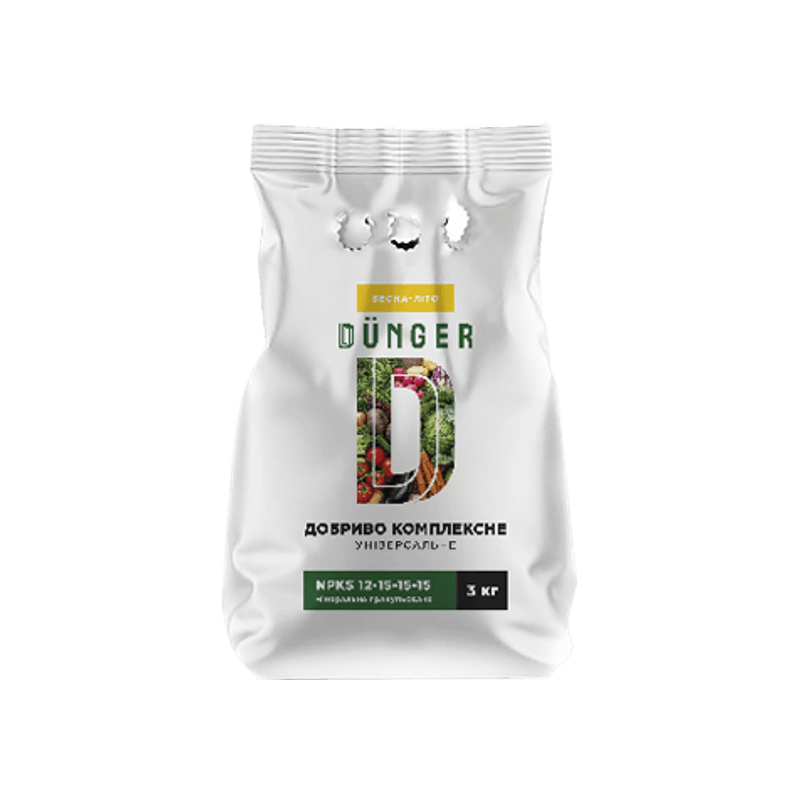
Complex fertilizer universal granular
The universal granular complex includes floral and decorative crops. Consider it where nutrition is needed after accounting for soil preparation and previous inputs. The quoted rate belongs to the instruction group, not to one aster seedling.
Apply fertilizer before sowing or planting, as well as for feeding. Fertilizer is evenly distributed in the aisles or over the soil surface, applied to rows (when sowing seeds - 2/3 g / running meter of a row) or planting holes (for seedlings up to 3g / plant).
Floral and decorative crops: 30-40 gr/m²
The 3 and 5 kg bags and 4 kg canister contain granules. Choose the appropriate method from the complete instructions; do not add area, row and planting-hole quantities together or transfer tree rates to flowers. Fertilizer does not replace a suitable seedbed or thinning.
Plan the whole flower bed
Compare products in the flower fertilizer range after reviewing soil condition and previous inputs. Separate seedbed preparation from later decisions about growing plants; do not stack several product rates for the same area. In My Garden, prepare the zone, crop, measurements and product plan so the planned area and chosen plant group are clear.
If another part of the bed contains Tagetes, use its separate guidance on sowing marigolds outdoors. A shared sowing day does not make these plants botanically identical. Keep each packet's needs, spacing and remaining season in view, and evaluate successful establishment before adding further interventions.
Frequently asked questions
No. Confirm Callistephus chinensis for this annual-seed method. A perennial aster label can refer to another botanical group. Identify the plant before choosing its sowing or division method, winter expectations and final position.
Assess the local bed and forecast instead. Soil wetness, cold pockets, exposure and the variety's development period matter. Do not transfer a southern garden date to a cool upland site or use one warm day as proof that the whole growing opportunity is suitable.
Check seed identity and storage, sowing depth, surface crust, water distribution and exposed parts of the bed. Uneven emergence alone does not identify a nutrient deficiency. Find the cause before sowing again, and do not try to make unsprouted seed grow by increasing fertilizer.
No. Thin to the variety's recommended spacing while protecting the roots of retained plants. Crowding changes access to light and water and makes later care harder. The final aim is a useful arrangement of healthy plants, not preserving every seedling in one crowded strip.


