


Products sold as orchid soil can contain bark, moss and other materials in different combinations. The important point is the environment they create around the roots. It must support the plant, retain suitable moisture and provide air. Choosing a growing medium and choosing a fertilizer are separate parts of looking after your collection.
First identify the orchid you are growing
Phalaenopsis, the moth orchid, is a common indoor orchid often sold in a transparent pot. In nature it grows as an epiphyte, attached to other plants rather than rooted in a dense layer of garden soil. A porous medium therefore matters. Some roots may grow above the surface, and their presence does not automatically mean that something is wrong.
The orchid family contains both epiphytic and terrestrial plants. Their moisture requirements and suitable mix structures vary. Do not carry a Phalaenopsis recommendation over to every orchid in a shop. Keep the plant label, genus name or information provided by the grower. If the plant is unidentified, establish what it is before completely changing the material around its roots.
Consider the growing position too: light, warmth, air movement and your normal watering habits. The same medium can behave differently under different conditions. A recipe that succeeds for another grower is not an exact formula for your plant. Match the orchid's needs with the conditions in your home and the way you actually provide care.
Bark, sphagnum and additions: what each changes
Bark as an airy framework
Prepared bark is a common ingredient in media for indoor epiphytic orchids. Spaces between the particles allow air movement and the drainage of excess water. Particle size and the amount of fine material both matter. Do not assess a bag only by its colour or by a few attractive large pieces visible near the top.
Choose material intended for growing plants, with an explanation of how to use it. Decorative landscape mulch and bark of unknown origin are not automatically equivalent to prepared orchid bark. Processing and material properties may differ. Avoid attempting to turn an unidentified material into a growing medium through improvised boiling, added salts or household mixtures.
Sphagnum and moisture management
Sphagnum holds more moisture than a typical coarse bark mix. It can be used alone or as part of a blend, but watering must suit the actual medium. An orchid growing well in moss does not need urgent repotting simply because moss is present. First inspect the roots and how moisture changes within the pot.
Do not add sphagnum solely to forget about watering for longer. An excessively wet root environment can create problems. At the other extreme, rapid drying calls for a review of the growing conditions and care habits. Compare materials by their behaviour after watering rather than by a promise that one blend suits every orchid and every home.
Check moss and peat as different materials
Long-fibre sphagnum and fine peat are not interchangeable names for the same component. Processing and particle structure matter alongside the material's origin. Fine, highly decomposed peat can hold substantial moisture with relatively few air-filled pores, while coarser structural materials behave differently.
If peat is listed in a blend, check its type, structure and suitability for your orchid. Do not buy a garden-soil amendment as an automatic substitute for orchid moss. Assess the entire mix together with the pot and watering. Adding a handful of bark does not establish that an otherwise dense material now provides an appropriate Phalaenopsis root environment.
| Component | What to check when choosing |
|---|---|
| Bark | Structure, particle size and suitability for orchid cultivation. Coarser and finer blends retain moisture differently. |
| Sphagnum | Greater moisture retention. Assess watering needs inside the pot rather than from the surface alone. |
| Perlite and other additions | May be included to change a blend's physical properties. An ingredient list alone does not establish suitability for a particular orchid. |
Choosing a prepared mix without a random recipe
Read which orchids the mix is intended for and what it contains. An orchid label does not by itself describe moisture retention or particle grade. Follow any preparation or premoistening instructions supplied with the material. Do not add ordinary soil or fertilizer to a ready-made medium simply because those materials are already available at home.
Compare the new medium with the one in which the plant previously grew. Changing from moss to bark changes moisture behaviour, so the old watering calendar needs review. Record the composition and replacement date. This helps you assess whether a change in drying is related to the material, the season or conditions within the room.
How much growing medium to buy
Begin with a pot that fits the root system. Medium fills the spaces around the roots, so flower-spike height or the number of blooms does not determine the volume required. For several plants, list the containers and mix types separately. Keep different orchids' requirements distinct when preparing the order.
Compare pack units and composition together. Equal volumes of bark and a moss-containing blend do not behave identically after watering. Keep the name, particle grade and ingredient list for a repeat purchase. A similar orchid photograph on another bag does not establish that the contents are equivalent.
The pot and watering affect the medium
A transparent inner pot is useful for Phalaenopsis because it lets you see some roots and moisture below the surface. The growing container needs drainage openings. A decorative outer pot can surround it, but check after watering that water has not collected at the bottom with the roots left standing in it.
Avoid increasing the pot size without a reason. Excess moist medium can remain wet for longer, increasing the risk of overwatering. Assess the living root system and the space needed to accommodate it without damage. If the roots still fit properly in the previous container after inspection, a larger pot is not an essential part of repotting.
Do not give bark and moss an identical watering schedule. Check moisture within the pot, its weight and root condition alongside the requirements of the orchid. Let surplus water drain freely. A dry surface does not necessarily mean that all the contents are dry, especially where materials with different water-holding properties are combined.
When the growing medium needs replacing
Organic components break down over time. A mix can become finer, denser and slower to release water, losing its former air spaces. This is a reason to assess replacement. Inspect the condition of material throughout the pot rather than judging from a few good-looking pieces of bark on the surface.
Phalaenopsis aerial roots are not automatically a reason to bury them in the medium or cut them off. Preserve healthy roots. During inspection, distinguish firm living tissue from soft, hollow or clearly dead sections. If roots show signs of rot or infection, assess the cause rather than relying on a new bag of bark alone.
For planned work, take root activity and plant condition into account. How to repot an orchid also depends on the type and the medium in which it is growing. A new purchase of potting mix is not itself a reason to disturb the plant. Where roots are failing, their condition should guide the decision rather than a convenient date on the calendar.
For other houseplants in your collection
Complex fertilizer for house plants
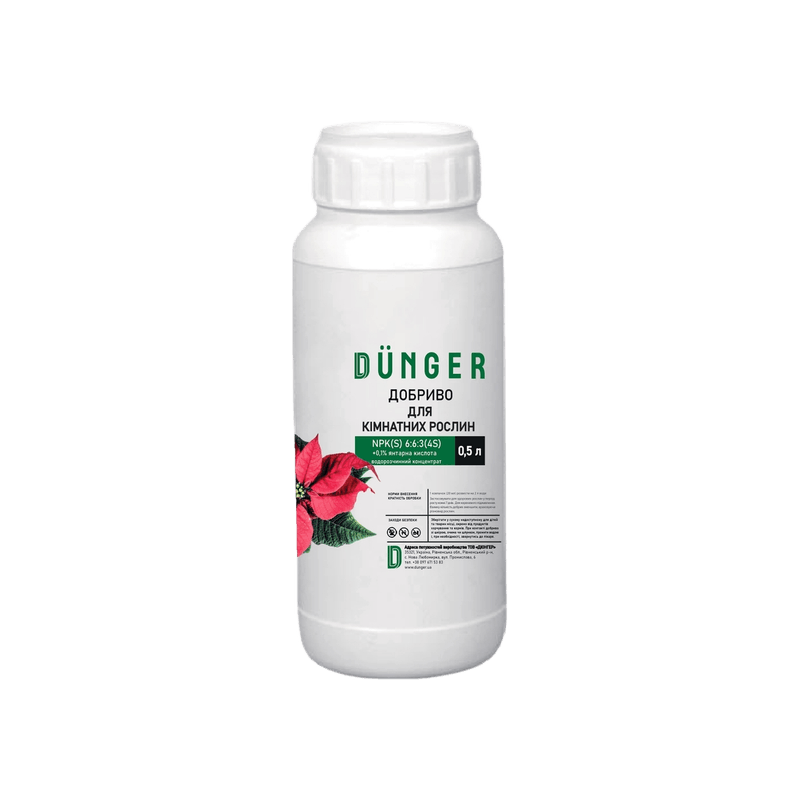
For healthy houseplants named in the instructions, such as ficus, dracaena and dieffenbachia, consider this concentrate in a 0.5 L bottle. It is intended for root feeding. When choosing care products for the collection, keep nutrition for those plants separate from the purchase of an orchid growing medium.
The application method and periods for the houseplants covered by the product instructions are:
It is used for healthy plants during the growing period every 7 days. Dilute 20 ml of concentrate (1 cap) in 2 liters of water, feed the plant after watering, taking into account the size and age. In winter, reduce the concentration of fertilizer.
Do not exceed the recommended doses of fertilizer, as this can lead to injury or death of plants. Do not use with other fertilizers. Under no circumstances should plants be fertilized when the soil is dry.
Do not automatically transfer this regime to a Phalaenopsis growing in bark or use it as an orchid foliar-spray recipe. For product selection, specify the orchid, its medium and the intended application method. Browse other options for your home collection in the indoor plant fertilizer range.
Questions about orchid growing media
Choose a prepared, airy medium suitable for Phalaenopsis. Dense soil or multipurpose compost for ordinary houseplants does not provide the root environment it needs. Identify the orchid before selecting the mix because different orchid groups have different requirements.
Assess the plant, the roots and the condition of the material. Moss is an established orchid growing medium. A reason for changing it should come from the plant's requirements and growing conditions rather than the ingredient name alone. Check how moisture behaves in the existing pot before making the decision.
Fresh material, particle grade and component proportions can hold water differently. Check the contents of the pot and adapt ordinary watering to the orchid's needs. Increasing fertilizer is not a way to compensate for a change in the physical behaviour of a growing medium.